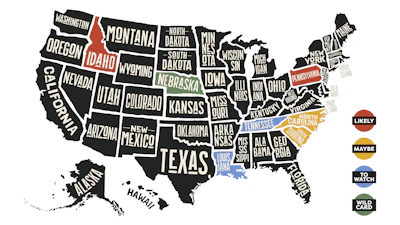

The race is still on for seven state cannabis legalization hopefuls in 2026, with legislative and signature-gathering deadlines more quickly approaching for some than others.
Idaho activists, for instance, are up against a May 1 clock to collect 70,725 valid signatures for a medical cannabis legalization initiative to land on the November ballot, and the numbers are looking strong.
By contrast, the Pennsylvania Legislature has until its Nov. 30 adjournment date to decide whether to take up adult-use proposals. Perhaps with the biggest appetite for reform this year, bipartisan leaders in both chambers of the commonwealth’s government are backing proposals to create a commercial marketplace as the governor continues his yearslong demand for it.
Also in the reform fight:
- Louisiana has a May 29 crossover deadline to advance legislation that aims to create a three-year pilot program for adult use;
- Nebraska cannabis advocates have until July 3 to gather roughly 125,000 signatures for a ballot proposal to create a constitutional right for adults to use cannabis;
- North Carolina’s legislative session begins April 21, with a medical cannabis legalization bill carrying over from last year;
- The South Carolina Legislature has a May 7 adjournment date to pass a medical cannabis legalization bill; and
- Tennessee’s Legislature has until April 24 to take up an adult-use legalization proposal and medical cannabis-related bill measures.
Meanwhile, 2026 legalization contenders Florida, Wisconsin, Hawaii and New Hampshire are no longer in the running for reform this year.
Florida’s adult-use legalization campaign failed to secure a November ballot position after Secretary of State Cord directed local election officials to invalidate nearly 71,000 signatures, and after the state’s Supreme Court declined to review the case.
The Wisconsin Legislature adjourned on March 17 without taking up a Republican-sponsored medical legalization bill or a Democratic-sponsored adult-use legalization bill.
Hawaii’s March 12 crossover deadline for a Senate-originated “low-dose” adult-use cannabis legalization bill to reach the House has come and gone.
And New Hampshire’s Senate refused to debate a House-passed adult-use legalization bill, effectively killing it along a party-line vote on March 6.
While these four states have been heavy favorites to reform their cannabis policies in recent years, that doesn’t mean the seven other states in this report can’t beat them to the punch in 2026.
So, what are their chances?
1. Idaho (Medical Legalization) – Likely
Idaho remains one of the nation’s last eight holdouts on legalizing a medical cannabis program, but Boise-based Natural Medicine Alliance of Idaho (NMAI) is hoping to change that narrative in 2026.
The group has until May 1 to gather 70,725 valid signatures to land its citizen-initiated petition, the Idaho Medical Cannabis Act, on the statewide ballot in November. The act would allow medical cannabis cardholders diagnosed with qualifying conditions to access licensed dispensaries in a commercial marketplace.
Idaho Attorney General Raúl Labrador (R) cleared NMAI to circulate its petition in October, and the group launched its signature-gathering campaign at the end of that month.
Three months into the campaign – the halfway point – NMAI announced that it had gathered more than 45,000 signatures; however, it’s up to county clerks to determine whether those signatures are valid.
As of mid-March, the group’s website lists 73,000-plus signatures collected with six weeks left in the petition drive.
“This is about giving families and individuals options when nothing else has worked,” NMAI Communications Lead Amanda Watson said when the signature-gathering campaign launched. “This initiative was created with Idaho values in mind. It would require strong oversight, measures to prevent recreational use, and, most importantly, it would provide relief for thousands of Idahoans suffering from serious medical conditions. It’s a compassionate, conservative approach to health care.”
The proposed statute would allow patients with conditions like cancer, AIDS, multiple sclerosis, epilepsy, Crohn’s disease, post-traumatic stress disorder, anxiety, chronic pain, Alzheimer's disease and other health conditions to purchase up to 113 grams (roughly 4 ounces) of smokable cannabis (flower) or 20 grams of THC in inhalable form (vape). Ingestible cannabis products (edibles) would be limited to 10 milligrams of THC per serving.
Under the proposal, the state Board of Pharmacy would initially issue three vertically integrated licenses to experienced businesses in Idaho’s hemp industry, allowing them to cultivate, process, sell and deliver medical cannabis to cardholding patients. Each licensee would be limited to two cultivation and production facilities and no more than six dispensaries.
In addition, public use and impaired driving would be prohibited. And the act would reclassify cannabis from a Schedule I to a Schedule II drug under state law to bolster expanded research opportunities.
“This is not a pathway to recreational legalization,” Watson said in early February. “This is designed specifically to give the people of Idaho dignity in their pain management process.”
Should NMAI collect enough valid signatures to land its proposed statute on the ballot, it would require a simple majority vote to pass, which spells good news for the campaign.
According to an NMAI-commissioned survey of 400 likely voters conducted in October, 83% of Idahoans support medical cannabis legalization, including 74% of Republican voters.
However, this could be the last year for Idaho voters to legalize medical cannabis through citizen-initiated statutes.
Last year, Idaho lawmakers passed a joint resolution to place a constitutional amendment on the 2026 ballot that would grant the state Legislature exclusive authority to legalize cannabis, narcotics and other psychoactive substances. If Idaho voters approve this ballot measure in November, it would prohibit all future citizen-initiated measures aimed at legalizing cannabis.
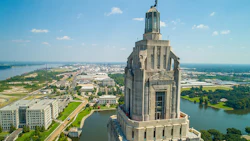
2. Louisiana (Adult-Use Pilot Program) – To Watch
Louisiana has a robust medical cannabis program, with nearly 150,000 qualified patients, or roughly 3.2% of the Pelican State’s population, participating in a marketplace that launched sales in August 2019.
Now, one state lawmaker is hoping to “test the waters” of adult-use cannabis legalization under a three-year pilot program that would allow those 21 and older to purchase cannabis from 10 of the state’s existing medical cannabis dispensaries.
Rep. Candace Newell, D-New Orleans, introduced House Bill 373, the “Adult-Use Cannabis Pilot Program Regulation and Enforcement Act,” on Feb. 25.
Under the legislation, limited adult-use sales would run from July 1, 2027, to July 1, 2030, providing state lawmakers the opportunity to evaluate the “practicality of a potential permanent program in a real-world environment to determine if it works as intended,” according to the bill.
The Louisiana Department of Health would oversee the pilot program, from assessing a 3.5% fee on gross wholesale receipts to collecting a $5,000 annual license fee from program participants and utilizing the Louisiana Medical Marijuana Tracking System to ensure compliance.
Adult-use dispensary sales would be subject to state and local sales and use taxes.
The measure was referred to the House Committee on Health and Welfare in the Republican-controlled Legislature, where a similar proposal failed to advance last year.
3. Nebraska (Adult-Use Protection) – Wildcard
While Nebraska cannabis advocates still have their hands full in ensuring the rollout of their 2024 voter-approved medical cannabis legalization measure, another advocate is attempting to create a constitutional right to adult-use cannabis in 2026.
Bill Hawkins, a farmer who founded the Nebraska Hemp Co., a nonprofit organization, filed an initiative to legalize cannabis for the November 2026 ballot. The proposal would simply add a new section to the Nebraska Constitution: “All persons twenty-one years of age or older have the right to use all plants in the genus Cannabis.”
Cannabis advocates behind the initiative would need to gather signatures from 10% of the state’s registered voters by July 3 to qualify for the statewide ballot. As of March, Nebraska has more than 1.25 million registered voters, meaning the campaign would need to collect signatures from roughly 125,000 of them.
Hawkins filed four previous initiatives to legalize adult-use cannabis since 2018, but none of them landed on the Nebraska ballot.
4. North Carolina (Medical Legalization) – Maybe
The North Carolina Legislature won’t convene for its 2026 legislative session until April 21, but a handful of bills related to cannabis will carry over from the 2025 session, including a comprehensive medical legalization bill.
Rep. Aisha Dew, D-Mecklenburg, filed the House Bill 1011, the North Carolina Compassionate Care Act, last April. The legislation would allow patients with any of 14 debilitating medical conditions – ranging from cancer and epilepsy to post-traumatic stress disorder and multiple sclerosis – to access medical cannabis from licensed dispensaries.
Dew also sponsors House Bill 413, the Marijuana Legalization and Reinvestment Act, an adult-use legalization bill that he filed with Rep. Jordan Lopez, D-Mecklenburg, last March. The legislation would allow those 21 and older to possess up to 2 ounces of cannabis, 15 grams of concentrate or 2,000 milligrams of THC, and grow up to six plants at home. The bill would also establish a licensed market to regulate adult-use cannabis with a 30% excise tax on sales.
Other House Democrats are proposing to legalize medical cannabis through a research program that would allow patients participating in a registered cannabis research study to possess up to 1.5 ounces. The legislation, House Bill 984, which Rep. Julia Greenfield, D-Mecklenburg, and nine of her colleagues in the lower chamber filed last April, would allow hospitals, universities, laboratories, pharmaceutical manufacturers or private medical research corporations that register with the state’s Department of Health and Human Services (DHSS) to conduct the research.
While Republican majorities control both chambers of the North Carolina Legislature, Democratic Gov. Josh Stein suggested in June 2025 that the state legalize and regulate THC for adults 21 and older just like it does for alcohol, a policy shift he said would bring order to the “Wild West” of intoxicating hemp products. At that time, he announced that he would create a State Advisory Council on Cannabis through an executive order to help establish new rules in hopes of prodding GOP lawmakers toward enacting reform.
The North Carolina Senate passed medical cannabis legalization bills in 2022 and 2023, but former House Speaker Tim Moore refused to bring those bills to the floor, saying there wasn’t enough Republican support to call a vote.
In this legislative biennium, Senate President Phil Berger, R-Guilford, said North Carolina Republicans continue to entertain legalizing medical cannabis, but, given past efforts, he’s going to “wait and see what comes out of the House,” WXII 12 News reported.
Rep. Destin Hall, R-Caldwell, now controls the keys to the House as speaker, and that may not bode well for legalization advocates: In 2020, Destin said he was against legalizing medical cannabis.
Hall’s opposition comes at a time when 71% of North Carolina voters support medical cannabis legalization, according to a February 2025 survey conducted by Meredith College pollsters.
5. Pennsylvania (Adult-Use Legalization) – Likely
With Florida out of the race, Pennsylvania represents the most meaningful medical cannabis market that could potentially move toward adult-use legalization in 2026.
Representing the fifth-most populous state in the nation, Pennsylvania’s medical cannabis market reported $1.8 billion in dispensary sales in 2025, according to the commonwealth’s Department of Health.
While Pennsylvania’s medical program has continued to grow each year since sales first launched in 2018, state lawmakers in a divided government have been unable to reach an agreement on further reform, despite Democratic Gov. Josh Shapiro calling for adult-use legalization in each of his past three budget addresses.
Shapiro pointed out that the commonwealth “keeps falling further behind” its neighbors, including Ohio, New York, New Jersey, Maryland and Delaware, which have all legalized adult-use cannabis and are happy to accept Pennsylvanians’ tax dollars to fund their state coffers.
While House Democrats “rammed” an adult-use legalization bill through the lower chamber on a 102-101 party-line vote last May – one that would have allowed the Pennsylvania Liquor Control Board to oversee state-run cannabis dispensaries – state Sen. Dan Laughlin, R-Erie, who supports legalization, helped kill that bill in the Law and Justice Committee, which he chairs.
“I’ve made it pretty crystal clear that I do not believe that the state store model that is included in House Bill 1200 has a path through the Senate, let alone through this committee,” Laughlin said from his leadership position in the GOP-controlled upper chamber.
In July 2025, Laughlin and Sen. Sharif Street, D-Philadelphia, introduced Senate Bill 120, legislation that would allow adults 21 and older to possess up to 30 grams of cannabis flower (roughly 1 ounce), 5 grams of cannabis concentrate or 1,000 milligrams of THC in an infused cannabis product. It would also establish a Pennsylvania Cannabis Control Board (CCB) to oversee a licensed, regulated and taxed industry for commercial business operations.
That bill carried over to 2026, and remains active, but Laughlin has yet to call a hearing on it in the Law and Justice Committee that he chairs. That’s because he indicated he will not do so until the House passes companion legislation mirroring his proposal first, the Erie Times-News reported.
“The expectation is that a state rep. will copy our legislation and pass it through the House,” Laughlin told the news outlet last July. “This will accomplish two things: It will prove the House has the ability to pass our language, and it will give me the opportunity to sit down with the governor and Senate leaders to discuss if a tax increase to balance the budget is more palatable than cannabis revenue.”
Laughlin has accused the governor of failing to make a genuine effort to work across the aisle with him or other Senate leaders on a bipartisan reform package in the past. While the state’s Republican champion for adult-use cannabis reform is sponsoring a bipartisan bill, he has yet to secure a fellow GOP co-sponsor for that bill.
Pennsylvania remains a medical-only state at a time when 56% of the state’s voters support adult-use legalization – only 37% oppose it – according to a February 2026 survey conducted by Quinnipiac University pollsters.
6. South Carolina (Medical Legalization) – Maybe
The South Carolina Compassionate Care Act, to legalize medical cannabis, awaits a committee hearing in 2026, with Sen. Tom Davis, R-Beaufort, continuing to lead the charge on reform in the Palmetto State.
Davis filed the legislation, Senate Bill 53, in January 2025, and it carried over to 2026. There is no crossover deadline for the legislation to move to the House, but the South Carolina General Assembly is scheduled to adjourn on May 7 this year, leaving less than two months to get things moving.
The legislation would create a licensed and regulated market for commercial businesses to cultivate, manufacture and dispense cannabis to medical patients who have a “bona fide” relationship with their physician and qualify under a list of a dozen conditions.
Smoking cannabis and home cultivation would be prohibited under the proposal, but patients could receive a 14-day supply under the following product formats and caps: 1,600 milligrams of THC for edibles and tinctures; 8,200 milligrams of THC for vaporization oils; and 4,000 milligrams of THC for topicals.
“It is a very conservative bill because that’s what South Carolinians want,” Davis said when he filed it last year.
South Carolina is one of eight states in the country without a medical cannabis program, despite 83% of the state’s voters supporting medical cannabis legalization, according to an April 2024 survey conducted by Mason-Dixon Polling & Strategy. Instead, patients with debilitating conditions can land behind bars for possessing any amount of cannabis under current law.
Meanwhile, hemp-derived THC products represent an estimated $1.5 billion industry in South Carolina for as many as 1,800 small businesses, the Charleston City Paper reported.
Davis sponsored previous renditions of the Compassionate Care Act, including versions that the Senate passed in 2022 and 2024 – both efforts were stymied by the House. In 2022, the legislation died on a procedural anomaly because all revenue-raising bills must originate in the House. While Davis excluded a tax provision on cannabis sales from the 2024 legislation, the House never acted on it.
Both the 2022 and 2024 Senate passages came in February of those respective years.
7. Tennessee (Adult-Use Legalization/Medical Decriminalization) – To Watch
Tennessee Democrats are once again trying to go straight to adult-use cannabis legalization without a medical program in place, something no state has done before.
Rep. Aftyn Behn and Sen. Heidi Campbell, both of Nashville, filed companion bills earlier this year to allow those 21 and older to possess up to 60 grams of cannabis flower (roughly 2.1 ounces) or 15 grams of a cannabis concentrate and cultivate up to 12 plants at home for personal use.
The legislation would also establish a licensed and regulated commercial marketplace under the Department of Agriculture.
Dubbed the “Pot for Potholes Act,” the proposal would impose a 15% excise tax on dispensary sales, with 75% of tax revenue from that tax going toward the state highway fund, while 20% would be redistributed to counties, and 5% would be retained by the Department of Revenue to cover administrative costs of the legislation.
According to the Pot for Potholes campaign, Tennessee has a $58 billion project backlog for highways and bridges.
“Our highway funding law is completely broken, and the controlling party has no real plan to fix it,” Behn said. “The Pot for Potholes Act gives us a sustainable, new source of revenue that boosts our agriculture economy, takes profit away from dangerous black market dealers and gets people out of jail for nonviolent offenses. It’s time for Tennessee to step into the 21st century.”
Behn and Campbell introduced similar legislation in 2025, but the Republican-controlled General Assembly killed the proposal in a House subcommittee, despite 63% of Tennessee voters being in support of adult-use legalization, according to a December 2024 survey conducted by Vanderbilt University.
If that survey isn’t proof enough, the Tennessee Senate State and Local Government Committee is scheduled to consider legislation on March 24 that would place three nonbinding cannabis-related legalization questions on the November 2026 ballot.
While there is no crossover deadline in Tennessee, the state’s Legislature has an April 24 adjournment date before outstanding bills die.
In the meantime, Tennessee remains one of eight states in the country without a medical cannabis program, even a restrictive program as seen in Texas, Georgia and Iowa.
Although Sen. Janice Bowling, R-Tullahoma, and Rep. Iris Rudder, R-Winchester, sponsored a medical cannabis legalization bill last year, their GOP colleagues in the Senate Judiciary Committee rejected the proposal.
In perhaps a more modest approach in 2026, Rep. Johnny Shaw, D-Bolivar, and Sen. Page Walley, R-Bolivar, introduced bipartisan legislation in January to decriminalize possessing medical cannabis for those who obtain it directly from a physician licensed under the state’s Board of Medical Examiners or the Board of Osteopathic Examination for a qualifying medical condition.
The lawmakers introduced the legislation “in recognition” of President Donald Trump’s executive order directing U.S. Attorney General Pam Bondi to reclassify cannabis as a Schedule III drug.
While Tennessee Republican leaders indicated federal rescheduling would help move the needle on their state’s reform for medical cannabis, Rep. Jeremy Faison, R-Cosby, who supports legalization, said that medical legalization is still likely two or three years away in the Volunteer State.
“It’s going to happen soon,” Faison told WKRN. “The federal government has realized that they’ve been in the way for a long time.”