
Tennessee Senate Republicans acknowledged the need to reform their cannabis prohibition laws, but they declined to stand behind their colleague’s attempt to legalize personal cultivation, aka home grows, for adults 21 and older.
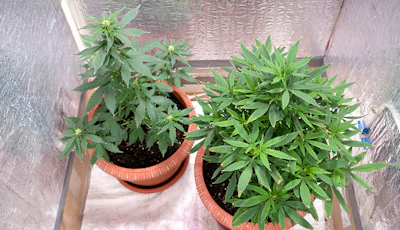
Sen. Janice Bowling, R-Tullahoma, introduced her legislation, the Freedom to Farm Act, on March 11 before the Senate Energy, Agriculture and Natural Resources Committee in hopes of allowing Tennesseans to grow up to 15 cannabis plants (no more than five mature) at their private residences and possess up to 1 pound of dried flower from those plants.
Although the Senate committee voted, 4-3, to defeat her bill, the bipartisan legislation remains active in the House, where Rep. Antonio Parkinson, D-Memphis, is sponsoring it. The House companion could be voted on as soon as March 18 in the Criminal Justice Subcommittee.
The legislation, Senate Bill 2486/House Bill 2479, would require prospective home growers to pay a three-year $100 registration fee to the state’s Department of Agriculture. A fiscal summary for the bill estimates that the registration program would generate $31 million in revenue in the first year while requiring minimal administrative costs for the department.
As Tennessee remains one of eight states in the country without a medical cannabis program, Bowling made it clear that her bill would not legalize commercial cannabis cultivation or retail sales, nor would it permit extracting concentrates or oils. She also explained that there would be strict guardrails to prevent youth access to where cannabis is grown and stored under her bill.
“It creates a controlled compliance system that protects property rights, supports law enforcement clarity, generates revenue dedicated to property tax relief for Tennessee veterans,” Bowling said. “The property rights and limited government at the core of the bill recognize a simple principle: Adults should have limited rights regarding what they do on their own property, provided strict guardrails are in place.”
Bowling said that by establishing a registration framework for home growers, law enforcement would have a secure verification capability and could shift their resources toward the state’s $1 billion illicit drug markets that are “frequently tied” to broader drug trafficking networks.
She also said Tennessee cannabis users, who otherwise have no access to the plant, could eliminate their interactions with “black-market dealers” by growing their own. Under the legislation, home growers could share their cannabis, without remuneration, with other adults on the premises where the plants are grown, but it could not be transported off the premises.
Not all of Bowling’s GOP colleagues on the committee were convinced.
Sen. Page Walley, R-Savannah, commended Bowling for being a “tireless champion for this whole issue” of cannabis policy reform.
“I, too, believe that we have, as a legislative body, underperformed in addressing the whole issue, particularly of the medicinal availability of marijuana. And I think we need to be doing something,” he said. “So, I’m for you, but [not] this bill. I just think we need to be looking at a more comprehensive approach to this, that we have to be able to look at how we address the marketplace here. We know what the demand is. We know what’s happening in Tennessee, and we need to address that. I just think that this is going to be, at this time, a bit unwieldy and just might not be the remedy that I know we both are looking for.”
Committee Chair Shane Reeves, R-Murfreesboro, also acknowledged that he was open to reforming the state’s cannabis policies, where even a terminal medical patient faces the possibility of jail time for possessing any amount of cannabis.
“My real job – I’m a pharmacist – and my whole life is spent taking care of patients with chronic, complex, and rare diseases,” he said. “So, finding a model somewhere down the road where we can get medical cannabis into the hands of those people, I would love to find a way to do it. Not sure this is the answer.”
The political pushback toward loosening Tennessee’s cannabis prohibition policies comes at a time when 63% of the Volunteer State’s voters support legalizing adult-use cannabis, according to a December 2024 survey conducted by Vanderbilt University pollsters.
Committee Vice Chair Adam Lowe, R-Calhoun, said while Tennesseans are waiting for “something to change with regard to THC and THC-derived products,” whether that be social acceptance or political will, what has not changed is law enforcement’s ability to assess the degree of inebriation in real time for an impaired driver who consumed cannabis.
Bowling closed with a final argument in support of her bill.
“This [bill] balances individual liberty, public safety and fiscal responsibility,” she said. “It protects property rights, provides law enforcement clarity, reduces interaction with illegal drug markets and directs revenue toward property tax relief for veterans.”
But when push came to shove, Bowling failed to acquire a single GOP committee member to support the legislation.
She was joined by two Democrats in voting “aye,” while four Republicans voted no, including Lowe and Reeves, and two other Republicans did not cast votes, including Walley.