
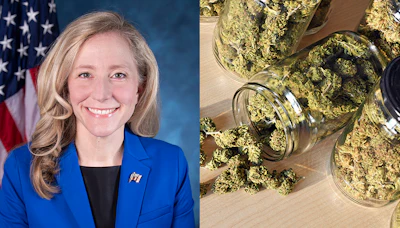

Virginia will remain in cannabis legalization purgatory after Democratic Gov. Abigail Spanberger vetoed an adult-use sales bill on May 19, marking the third time such legislation was rejected in the commonwealth.
This means adults 21 and older, who have been permitted to possess up to 1 ounce of cannabis and grow up to four plants at home since 2021, might not be able to legally purchase licensed products until 2028. And that’s if there’s a favorable outcome for legalization advocates next legislative session.
The governor said Tuesday that had she signed the bill, she would have been supporting the establishment of an adult-use marketplace “without the timeline, structure or resources” for successful implementation.
“I share the General Assembly’s goal of establishing a safe, legal and well-regulated cannabis retail marketplace in the commonwealth,” Spanberger said in her veto statement. “Virginians deserve a system that replaces the illicit cannabis market with one that prioritizes our children’s health and safety, public safety, product integrity and accountability.”
Spanberger’s veto comes after Virginia’s Democratic-controlled Legislature rejected the governor’s amended substitute on April 22, with the bill’s sponsors taking issue with her proposed amendments to criminalize public cannabis use and underage possession, in addition to creating a new felony offense for transporting certain amounts of cannabis that would have been punishable by life in prison.
Sen. Lashrecse Aird, D-Henrico, who spearheaded the legislation in the upper chamber, said the governor’s substitute would have introduced “harsh escalating” penalties and risked repeating harms meant to be corrected by legalization.
“Once again, Virginia’s efforts to establish a safe, regulated and equitable adult-use cannabis marketplace has been halted despite years of work, public input and broad recognition that the status quo is failing Virginians,” Aird said on Tuesday. “The governor’s decision leaves the commonwealth exactly where we have been since 2021: with an unchecked illicit market, hurting our communities, harming our youth and putting adults at risk. Virginians deserve better than continued inaction veiled behind excuses about getting it right.”
The governor’s substitute also would have increased the Legislature’s proposed cannabis excise tax on retail sales from 6% to 8%; delayed the dispensary sales launch from Jan. 1 to July 1, 2027; reduced the proposed possession limit from 2.5 ounces to 2 ounces; and reduced the dispensary license cap from 350 to 200 stores, among other provisions.
In addition, it would have removed tax revenue allocations for specific programs, including 30% that the Legislature intended for a Cannabis Equity Reinvestment Fund.
While Virginia lawmakers have been working behind the scenes since 2021 to follow up on the legalization of possession and home grows with legislation to create a licensed marketplace, the first-year governor indicated in her veto message that their 2026 proposal didn’t quite hit the mark.
“As Virginia pursues a legal retail market, it is critical that we incorporate lessons learned by other states and ensure that our regulatory framework is fully prepared to provide strong oversight from day one,” Spanberger said. “That includes clear enforcement authority and sufficient resources for compliance, testing and inspections, and robust tools to crack down on bad actors who continue to profit from the illicit market.”
Without a licensed marketplace for at least another year, as a result of the governor’s veto, Virginia’s unregulated cannabis market remains free from competition.
Del. Paul Krizek, D-Fairfax, who sponsored the legislation in the House, said Spanberger’s proposed substitute would have redirected demand for regulated products back to the illicit market, and that her veto blocks “years of policy development, stakeholder engagement and extensive deliberation” that led to a bill that offered a “balanced and thoughtful approach” shaped by Virginians impacted by the state’s cannabis policies.
“Five years ago, Virginia legalized cannabis in recognition that the war on drugs has caused disproportionate harm to Black families and communities,” Krizek said Tuesday in a joint statement with Aird. “The question now is whether Virginia will continue allowing an unregulated illegal market to thrive, or finally establish a safe, transparent system that protects consumers, keeps products away from children and keeps our commitment to ending racially discriminatory marijuana policing in Virginia.”
Aird and Krizek said Spanberger’s veto “ignores the reality” that cannabis sales are happening and will continue to happen every day throughout the commonwealth.
Stephanie Shepard, executive director of the Last Prisoner Project, a nonprofit organization that works to repair the harms of prohibition policies, called Spanberger’s veto “a serious mistake,” despite the governor signing separate legislation on May 14 to provide people with cannabis-related convictions with resentencing justice.
“It does not make sense for Virginia to recognize the harms of cannabis prohibition by signing marijuana resentencing into law while continuing to block a regulated market for the same substance,” Shepard said. “Without legal adult-use sales, consumers remain unprotected, small businesses are left waiting and communities most impacted by prohibition are denied a fair opportunity to participate in the legal cannabis economy.”
Spanberger’s veto follows former Republican Gov. Glenn Youngkin’s back-to-back vetoes of similar sales bills in 2024 and 2025. The main difference is that Youngkin made his anti-legalization stance known throughout his four-year term, while Spanberger indicated along her 2025 campaign trail that she would work with state lawmakers to support an adult-use sales bill.
The governor indicated in her veto message that she remains committed to working with lawmakers heading into 2027.
“I greatly appreciate the patrons’ time crafting this important piece of legislation, as well as our continued dialogue and collaboration to strengthen this framework ahead of the next legislative session,” Spanberger said. “I remain committed to working with members of the General Assembly, stakeholders and law enforcement to get this right.”
Aird and Krizek did not share the same sense of collaboration.
“This veto and its consequences belong to the governor and governor alone,” they said.