
Forty-seven Wisconsin Democrats are hoping to legalize adult-use and medical cannabis and regulate intoxicating hemp products in one fell swoop.
Authored by state Sens. LaTonya Johnson and Chris Larson, both of Milwaukee, Senate Bill 1045 would allow those 21 and older possess up to 2.5 ounces of cannabis flower in public places or up to 2 pounds in their private residence, up to 1 gram of THC in an infused product, up to 15 grams of a cannabis concentrate, and up to 12 mature plants per household.
The bill would also restrict intoxicating hemp products to those 21 and older, defining those products as containing a concentration level of 1 to 10 milligrams of cannabinoids per 12 fluid ounces for beverages or per serving or per package for edibles. Hemp products containing more than this limit or in other formats would be regulated as cannabis. Under current Wisconsin law, there is no age restriction on hemp-related activities.
In addition, the legislation would legalize medical cannabis for patients, requiring the Wisconsin Department of Health Services to establish a medical cannabis registry program for those with medical conditions or undergoing treatments that qualify for the registry, including cancer, post-traumatic stress disorder and several others.
S.B. 1045 comes at a time when Wisconsin’s cannabis laws remain among the most restrictive in the nation, including the possibility of jail time for possessing any amount. This is despite 67% of Wisconsin voters supporting adult-use legalization, according to a June 2025 survey conducted by Marquette Law School pollsters.
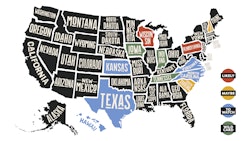
Today, Wisconsin remains one of eight states nationwide that does not have a medical cannabis program, even a highly restrictive program as seen in Texas, Iowa and Georgia.
“Wisconsinites have been clear for years that they support legalizing cannabis, and it is past time the Legislature listens,” Johnson said in a statement provided to Cannabis Business Times. “Senate Bill 1045 reflects that reality by establishing a responsible, regulated framework that prioritizes public safety, supports local businesses and delivers real economic benefits for our state.”
Overall, 14 Senate Democrats and 33 House Democrats sponsor the legislation in Wisconsin’s GOP-controlled Legislature. In particular, Republicans control an 18-15 majority in the upper chamber, meaning Democrats would need to flip two or three votes from across the aisle. Sen. Robert Wirch, D-Pleasant Prairie, is the lone Senate Democrat who doesn’t sponsor the bill.
Although Wisconsin Republicans appear more likely to take up a limited medical cannabis bill sponsored by their party’s leadership, the possibility of a Democrat-sponsored legalization bill gaining traction is the best it’s been in more than a decade after Democrats picked up four Senate seats and 10 House seats in the November 2024 election.
“The buzz around the state is that it’s high time we legalized cannabis,” Larson said in a statement provided to CBT.
“Unfortunately, a few out-of-touch Republicans are either too beholden to their buddies in the Tavern League or still believe the ‘Reefer Madness’ lies of the so-called ‘war on drugs’ to take meaningful action,” he said. “Either way, I’m proud to be a co-author of S.B. 1045, which would finally bring Wisconsin in line with our neighbors in Minnesota, Michigan, and Illinois – providing jobs, economic development and tax revenue to move our state forward. With fairer maps in place for this fall’s elections, we may very well have the opportunity to finally puff, puff, pass legal cannabis in 2027.”
Although Democratic Gov. Tony Evers has repeatedly called for and proposed cannabis legalization measures in his state budgets, he announced last year that he won’t seek reelection for a third term in November 2026. Should the Legislature send Evers a legalization bill this year, he would almost certainly sign it.
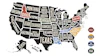
S.B. 1045 would make Wisconsin the 25th state to legalize adult-use cannabis.
“This bill allows adults 21 and older to legally possess cannabis, creates a structured licensing system for production and sales, and ensures products are tested, labeled and kept out of the hands of minors,” Johnson said. “It also creates a medical cannabis program for patients who need it and provides a path to expunge past convictions for low-level cannabis offenses, helping address long-standing disparities in our justice system.”
According to the American Civil Liberties Union, Black Wisconsinites are 4.2 times more likely to be arrested for cannabis possession than white people, despite similar usage rates.
While Wisconsin continues to criminalize cannabis possession, its neighboring states have built robust programs, including a $2 billion licensed marketplace in Illinois and a $3 billion marketplace in Michigan. Minnesota, which launched adult-use sales in mid-September, had $82 million in total cannabis sales in its first 4 1/2 months.
Under S.B. 1045, Wisconsin would levy a multi-stage tax structure across the supply chain of a commercial cannabis market, including:
- A 10% wholesale excise tax from cultivator to processor;
- A 10% wholesale excise tax from processor to retailer;
- A 5% retail excise tax on adult-use dispensary sales;
- A 10% occupational tax on microbusinesses on gross receipts;
- Up to a 5% local excise tax on adult-use dispensary sales; and
- A 3% retail excise tax on adult-use flower sales, with revenue from this specific tax earmarked for a Cannabis Research Fund, to be used by the Department of Health Services to research the effect of cannabis consumption on public health.
Under the bill, local municipalities could enact an ordinance prohibiting the operation of a licensed cannabis microbusiness, cannabis dispensary or cannabis lounge within their city, village, town or county limits.
The legislation would separately create a 5% excise tax on retail sales for “low-dose cannabis-infused products,” which would replace intoxicating hemp products when provisions regulating intoxicating hemp products are repealed, in accordance with a change to federal law. These low-dose cannabis-infused products could be sold at any retailer, not just at a dispensary.
“Legalization also strengthens Wisconsin’s economy,” Johnson said. “We already have proof of demand in our state through the hemp THC industry, where farmers, processors and retailers have built a successful supply chain and created thousands of jobs. With federal changes putting that industry at risk, doing nothing could mean losing those businesses altogether. Legalizing cannabis would provide a stable, regulated path for these operators to transition, protect local jobs and keep that economic activity here in Wisconsin. At the same time, our neighboring states are already seeing the benefits while we continue to fall behind.”
In addition to legalizing the purchase and possession of adult-use and medical cannabis, S.B. 1045 would create a Division of Cannabis Regulation (DCR) within the state’s Department of Agriculture, Trade and Consumer Protection to oversee cultivation, processing, testing and transportation in a licensed, commercial marketplace.
Those wishing to operate a dispensary or lounge to sell cannabis in a retail setting would need to obtain a license from the state’s Department of Revenue (DOR).
The legislation would require applicants for a cannabis license – whether issued by the DCR or DOR – to be a Wisconsin resident for at least 90 continuous days before the application date. The bill includes a $250 applications fee, plus the cost of background checks. The annual licensing fee would be $3,000 for all business types.
Cannabis cultivation licensees would be limited to 50,000 square feet of canopy, while cannabis microbusiness licensees could have up to 20,000 square feet of canopy in addition to their processing and retail operations under the vertical license.
“At the end of the day, this is about doing what is practical, what is fair and what Wisconsinites are asking us to do,” Johnson said. “Senate Bill 1045 is a comprehensive approach that brings regulation, accountability and opportunity to a space that has gone too long without it.”