
Florida’s elected officials 2; citizen-initiated adult-use legalization campaigns, 0.
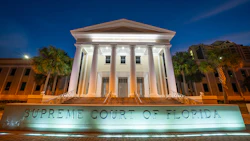
The Florida Supreme Court, on March 9, declined a motion to rehear Smart & Safe Florida’s lawsuit against Secretary of State Cord Byrd, stemming from nearly 71,000 disqualified signatures for a petition to legalize adult-use cannabis in the November 2026 election.
Five justices concurred that “no motion for rehearing will be entertained by the court.” They provide no further explanation.
Smart & Safe Florida asked the high court to consider the case on Feb. 16, after a three-judge panel for Florida’s 1st District Court of Appeal determined that Byrd acted lawfully when he directed 67 county supervisors of elections to invalidate 28,752 of the legalization campaign’s signatures that were collected by non-U.S. citizens or non-Florida residents and another 41,894 petitions that were signed by “inactive” voters.
The 67 county supervisors validated more than 833,000 of the campaign’s signatures. The nearly 71,000 invalidated signatures represented the difference in pushing Smart & Safe Florida’s legalization proposal across the 880,062-signature threshold required to secure a ballot position in the state’s 2026 election.
Smart & Safe Florida argued that the secretary of state “contravened decades of Florida statutes” when he ordered the “inactive” voters’ signatures to be wiped out.
“The great irony of [Byrd’s] inactive voter directive is that it prohibits counting the petition of an inactive voter who is nonetheless able to show up at the polls, show their driver’s license or other proof of address, and vote for the initiative,” Smart & Safe Florida’s general counsel, Glenn Burhans Jr., wrote in the emergency motion in January.
The campaign’s legal team also argued that the signatures collected by non-U.S. citizens/non-Florida residents were obtained during an injunction period that had blocked a new state law from going into effect: The Florida Legislature passed legislation in 2025 amending the state Constitution, requiring circulators to be U.S. citizens and Florida residents.
Now that the Florida Supreme Court declined to hear the case – a decision that comes more than a month after state officials announced Smart & Safe Florida failed to file enough signatures ahead of the Feb. 1 deadline – the 2026 legalization campaign has come to the end of its road.
Smart & Safe Florida’s campaign was primarily bankrolled by more than $32 million in contributions from Tallahassee-based medical cannabis operator Trulieve, according to campaign finance activities reports through the end of 2025.
Trulieve also contributed more than $145 million to Smart & Safe Florida’s 2024 legalization campaign, when voters backed a proposed constitutional amendment with a 56% majority but failed to reach the 60% supermajority required to pass the amendment.
The 2024 campaign fell short despite numerous polls leading up to the election showing enough support for Smart & Safe Florida’s amendment. Many cannabis legalization advocates felt that Florida Gov. Ron DeSantis’ use of tax dollars to launch a “public service announcement” blitz against the campaign in the weeks ahead of the election may have steered the course.
While DeSantis hasn’t changed his tune on adult-use legalization in the Sunshine State, he wasn’t forced to exercise his clout with the 2026 campaign failing to reach the ballot.
Instead, Byrd and Attorney General James Uthmeier, who intended to challenge the ballot language in the Supreme Court, were the reform efforts’ main adversaries.
Leading up to this week’s announcement that the Florida Supreme Court won’t entertain Smart & Safe Florida’s motion for a rehearing on the invalidated signatures, the state made three arguments that discretionary review would be unwarranted, including that the 1st District’s opinion did not meet the criteria for review, the 1st District’s decision was correct, and the Feb. 1 signature deadline has passed, making the case “moot.”
“Even if this court granted discretionary jurisdiction and determined that Smart & Safe’s claims are procedurally proper and meritorious, the petition still failed to attain the requisite determination from the Secretary by February 1 and cannot appear on the 2026 General Election ballot,” Uthmeier and Byrd’s legal team argued in a March 2 filing. “Neither can this case affect any attempt to place the petition on the ballot in the future. All signatures submitted for the petition dated on or prior to February 1, 2026, are now expired and invalid.”
In underscoring that argument that all of the 2026 signatures are now “expired and invalid,” the Florida Division of Elections’ website now shows Smart & Safe Florida’s signature tally to be zero.