
This week my team has to decide how much product to build for a portfolio that may be illegal to sell on Dec. 12. That isn't a thought experiment. It's a purchase order with a number on it, and somebody has to sign it.
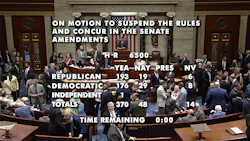
When President Trump signed the stopgap spending bill last week, the federal ban on most hemp products containing THC moved from Nov. 12 to Dec. 11. The extension has been described as giving producers and retailers certainty while Congress works toward a long-term fix. I'll take the time, and I'm grateful to the people who fought for it. But 29 days isn't certainty. It's time, which is worth something. Certainty is a different thing entirely.
Here is the arithmetic that makes them different. We buy raw material about six months ahead of the products it goes into. Co-packing runs are booked 90 days out or more. Packaging prints in runs of tens of thousands. Distributors order on their own calendars. Retailers set shelves months in advance. Nothing in that chain moves in 29-day increments. A one-month extension isn't long enough to make product, and it isn't long enough to hold inventory either.
RELATED: US House Offers Intoxicating Hemp Products 4-Week Reprieve From Ban, Trump Signs Off
The other idea that doesn't survive contact with a short deadline is that a company prepares for a ban on Dec. 10. Everyone upstream and downstream of us decides earlier than that, and they decide conservatively. Square has already told sellers to clear CBD and hemp items out of their catalogs by Oct. 15, nearly two months before the ban takes effect. At least one national carrier is cancelling hemp policies with October effective dates. Banks and national retail buyers are running the same calculation. They aren't being unreasonable. They're managing risk against a date, and the date is the problem.
So, the questions on my desk this month aren't really about the 0.4 milligram threshold for total THC per container. They are:
· How much full-spectrum CBD and hemp THC inventory do we produce?
· Do we place the next six-month raw material buy?
· Do we print another packaging run?
· Do we ask distributors to take inventory they may have to pull off shelves?
· Do we launch the SKU that's been in development since March?
· Do we hire the salesperson we budgeted for?
· And what do I tell the people who already work here?
We're answering some of those questions by spending money on products that don't depend on the federal hemp definition at all, including formulations built around botanicals like kava and kanna. We started that work in January, which should tell you how long this has been hanging over the business. I'd rather be spending that time and capital on what customers want than on what Congress might do. That isn't a complaint about having to innovate. Innovation is the job. It's an observation that a dollar spent defensively is a dollar not spent growing the business we already built, and a company our size doesn't have many spare dollars of either kind.
Diversification also has a limit that tends to get lost in these conversations. You can reformulate. You can cut expenses, preserve cash and slow everything that isn't essential. What you can't do is stand up a replacement revenue line on a 90-day timeline, because new products need the same raw material lead times, co-packing slots and distributor cycles as the ones they're replacing. Pivoting is not a switch. It's the same supply chain, run again from the beginning.
Something else is true of companies like mine that I think gets missed in Washington. Small businesses don't have a regulatory affairs department. In a company our size, the regulatory affairs department is the owner. The same person deciding whether to reformulate a product is deciding whether to renew the warehouse lease, approve the next packaging order and make the next hire. Larger operators can spread that uncertainty across departments. Small companies absorb it by making slower, more conservative decisions everywhere else in the business. That cost doesn't show up on anyone's ledger.
The conversation I find hardest is the one with employees. There are 35 of them, four of them family: my wife, my brother, my sister and my mother-in-law. The rest chose this company, and some moved here to do it. I can tell all of them what I know, which is that Congress moved the deadline by 29 days and is still working out what replaces it. I can't tell them what I actually owe them, which is what their jobs look like in February.
And Upstate Elevator isn't unique. Every small hemp business is running its own version of this exercise right now. Farmers are deciding what next year's crop looks like. Manufacturers are deciding what equipment to buy. Distributors are deciding what inventory they're willing to own. Retailers are deciding how much shelf space to commit. Employees are deciding whether they should be looking for another job. Twenty-nine days doesn't resolve any of those decisions. It just moves the date attached to them.
Which brings me to what I'd ask for, and it's smaller than what my industry usually asks for. I'm not asking Congress to guarantee that hemp survives or to hand this business the rules it would write for itself. Intoxicating products should be regulated like intoxicating products. Age restrictions, real potency limits per serving and per package, independent batch testing, labeling a customer can actually understand, and packaging nobody would mistake for a children's product. We already do most of that, voluntarily. To do it costs money, and today it buys us nothing but a higher price on the shelf than the operators who skip it. Making those rules mandatory would turn that cost from a penalty into a baseline. Write them, and I'll sign up tomorrow.
What businesses need is certainty about the rules, even when we don't like all the rules. Tell us what they are and give us enough runway to live by them. We can reformulate products. We can change packaging, change how we sell, build new categories, and meet the federal standard this industry has been asking for.
What we can't do is rebuild a company every 29 days.
Dylan Raap is the Founder and CEO of Upstate Elevator Supply Co., a Vermont-grown, family-owned company that operates in both the state-regulated cannabis industry and the hemp market, offering high-quality, clean THC, CBD, and botanical wellness products to consumers.