
The clock remains ticking for intoxicating hemp products in the U.S., but a pair of bipartisan House lawmakers threw the industry a lifeline on July 22 through new legislation.
Reps. Andy Barr, R-Ky., and Angie Craig, D-Minn., introduced the Lawful Hemp Protection Act to change the definition of hemp and divert the federal government’s forthcoming product ban that’s scheduled to go into effect on Nov. 12, 2026.
The legislation intends to establish a comprehensive regulatory framework for hemp-derived consumer products, aiming to “promote responsible industry growth, protect consumers and reinforce confidence in lawful hemp commerce,” according to the bill’s findings.
Barr specifically called attention to protecting his state’s farmers, many of whom turned to hemp as a new agricultural commodity amid tobacco industry struggles following the 2018 Farm Bill.
“Kentucky farmers helped build America’s hemp industry, and they deserve certainty,” Barr said. “The Lawful Hemp Protection Act protects Kentucky agriculture, safeguards consumers and establishes a commonsense regulatory framework that allows this important industry to continue to grow while ensuring products are safe and kept out of the hands of children. Kentucky has demonstrated that hemp can be successfully regulated while supporting farmers and protecting consumers. This legislation builds on that success by creating a national framework that rewards responsible producers, eliminates bad actors and ensures consumers have confidence in the products they purchase.”
While the 2018 Farm Bill federally legalized the commercial cultivation of hemp, it also opened the floodgates to intoxicating cannabinoid products, such as delta-8 THC and HHC edibles, being sold in unregulated retail settings, from gas stations to smoke shops and convenience stores.
In November 2025, as part of a deal to end the longest government shutdown in U.S. history, Congress attached language to an appropriations package to close the 2018 Farm Bill loophole by redefining hemp as containing no more than 0.3% total THC (including THCA) or other cannabinoids with similar effects starting in November 2026.
That law also bans products containing synthesized (delta-8 THC) or unnatural (HHC) cannabinoids, as well as products with more than 0.4 milligrams of total THC per container.
Since then, President Donald Trump and the White House have called on Congress to either delay the law’s implementation or to revise the definition in a manner consistent with the Lawful Hemp Protection Act’s proposal – which Barr previously attempted to attach a shorter version of as an amendment to must-pass legislative packages.
Updating the November 2025 law would “ensure that Americans can continue to access the full-spectrum CBD products they have come to rely on,” Trump said in April.
Barr and Craig’s proposal would redefine hemp to include a 1% total THC threshold on a dry-weight basis, but that THC concentration would be required to be measured on the finished consumer product, as well as throughout the manufacturing supply chain, and would exclude cannabinoids not found in or capable of being naturally produced by the plant. (More on whether this legislative intent matches the bill’s language below).
“Minnesota became the model for responsible hemp regulation when it established a regulatory framework that complied with federal law and enabled local farmers and businesses to thrive,” said Craig, the ranking member on the House Agriculture Committee. “My commonsense legislation will give regulatory clarity to Minnesota farmers, brewers and small business owners and provide an alternative to short-sighted federal policies that threaten Minnesota jobs and consumer choice.”
The congresswoman said that the legislation provides a solution that protects American farmers and small businesses while also keeping children and communities safe.
According to Barr and Craig, the 60-page standalone bill would also:
- Create separate regulatory categories for industrial hemp and consumable hemp products;
- Require consumable hemp products to be cultivated, processed, finished and packaged in the United States;
- Restrict the sale of all consumable hemp-derived cannabinoid products to individuals 21 years of age and older;
- Establish strict packaging, labeling and marketing standards to deter youth access and deceptive advertising;
- Direct the Food and Drug Administration (FDA) to establish maximum cannabinoid content limits for hemp-derived consumable products with “fallback” limits in case the FDA does not act within 12 months after passage;
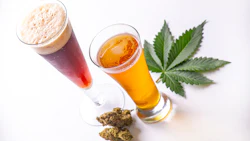
- Instruct the Secretary of the Treasury to establish a three-tiered system for hemp-derived beverages – manufacturers, distributors and retailers – with strict tied-house restrictions to maintain separation among tiers; and
- Instruct the Treasury Department to collect a tax of 5 cents per milligram of THC in hemp-derived consumable beverages and 5% of the retail price on all other consumables that contain THC.
The legislation’s “fallback” limits include the following maximum allowable amounts for total THC content:
- 5 milligrams per serving of a hemp-derived product for oral consumption;
- 50 milligrams per serving for an inhalable hemp-derived cannabinoid product; and
- 50 milligrams per serving for a topical hemp-derived cannabinoid product.
While the legislation is backed by the U.S. Hemp Roundtable, the Hemp Industry & Farmers of America, the Hemp Beverage Alliance and other associations, not all industry groups support it.
Cory Harris, a lobbyist for the American Trade Association for Cannabis and Hemp (ATACH), an organization that promotes licensed markets, provided the following statement:
“Congress overwhelmingly voted in November to close the loophole that allowed synthetic THC products to proliferate across the nation, often without regulation and available to minors. Unfortunately, Rep. Barr is trying to reopen the matter with a proposal that would protect synthetic drugs, so long as they’re derived from hemp. Congress doesn’t want to legalize knock-off marijuana and synthetic THC, and that’s exactly what Rep. Barr’s new bill would do.”
According to Barr, the legislative intent is to prohibit synthetic cannabinoids in finished hemp-derived products.
However, Harris’ statement indicates that ATACH may interpret the bill’s language differently.
Part of the genesis of the 2018 Farm Bill’s loophole is that nonintoxicating CBD can be extracted from federally compliant hemp and synthetically altered into intoxicating compounds, such as delta-8 THC, which only occurs naturally in trace amounts in the cannabis plant.
Chris Lindsey, vice president of policy and state advocacy at ATACH, elaborated.
“In their version of synthetic, if a compound can be found in the plant, you can make it in a lab and call that hemp. We disagree,” he said. “We think that if a nonintoxicating molecule (CBD) is transformed into an intoxicating one (THC) in a lab, that constitutes a synthetic process. The real issue is not the term, but the risk associated with the process. The chemical processes used to convert CBD into THC are unregulated and potentially very harmful. This is exactly why most states have banned synthetic conversions from CBD into THC in their own cannabis and hemp programs.”
In other words, the trade association believes a loophole for synthetic cannabinoids would still exist under the Lawful Hemp Protection Act, because testing a finished product’s THC concentration asks what the end molecule looks like, not how it was produced.
In announcing their legislation, Barr and Craig said the Lawful Hemp Protection Act preserves states’ ability to enact stricter regulations while ensuring lawful interstate commerce for compliant hemp products.