
In November 2025, Congress passed, and President Donald Trump signed, the Agriculture, Rural Development, Food and Drug Administration, and Related Agencies Appropriations Act, 2026 (aka the FY2026 Agriculture Appropriations Bill).
Tucked in the bill is a section criminalizing the majority of cannabis seeds sold in the U.S. by amending hemp’s definition in the Agricultural Marketing Act of 1946.
The 2018 Farm Bill first redefined hemp as “the plant Cannabis sativa L. and any part of that plant, including the seeds thereof and all derivatives, extracts, cannabinoids, isomers, acids, salts, and salts of isomers, whether growing or not, with a delta-9 tetrahydrocannabinol concentration of not more than 0.3 percent on a dry weight basis.”
Because seeds contain little to no THC – certainly not enough to put them past the 0.3% THC threshold – seed and genetic companies could strongly argue their products fell into this definition of hemp and could be legally sold interstate, even if they came from plants containing more than 0.3% THC.
Section 781 of the FY2026 Agriculture Appropriations Bill redefines hemp in a way to curb the proliferation of hemp-derived intoxicating products. However, it also explicitly excludes from the definition of hemp "any viable seeds from a Cannabis sativa L. plant that exceeds a total tetrahydrocannabinol concentration ... of 0.3 percent in the plant on a dry weight basis."
This removal of ambiguity directly prohibits interstate commerce in seeds destined to produce plants with more than 0.3% THC, dealing a potential death blow to seed growers and plant breeders.
The bill conflates seed genetics with finished psychoactive products. Under this law, cannabis seeds will become a Schedule I drug despite containing 0% THC unless they can be traced to a parent plant that tested below 0.3% THC. Banking and payment processing will become prohibited for cannabis seed businesses and breeders. Shipping carriers such as USPS will no longer ship cannabis seeds. And thousands of cannabis genetics, including rare landraces and others with extraordinary medicinal and/or agricultural value, could be lost forever.
Section 781 is scheduled to take effect on Nov. 12, 2026, after which we can expect collapsing cannabis breeding programs and major disruptions to the overall hemp industry, which generated $739 million in 2025 (according to the U.S. Department of Agriculture’s 2026 National Hemp Report) and supports more than 300,000 American jobs.
RELATED: Senate Votes to Delay Intoxicating Hemp THC Product Ban, Keep Delta-8 THC on Shelves Longer
The Kenyan Hope
I have anticipated this “seed criminalization” for a long time. I have been closely watching a benchmark ruling by the High Court of Kenya that declared portions of the country's Seeds and Plant Varieties Act unconstitutional, opening the door for selling, saving, and sharing indigenous, non-certified seeds. Although the act addresses commercial agricultural seeds and is not specific to cannabis, I believe it is a highly significant ruling.
While Kenya’s 2012 seeds law intended to deter the counterfeit seed industry, the court ruled that the sanctions were unconstitutional and recognized the rights of small-scale farmers over those of commercial and corporate interests. The judge stated that giving officials the power to raid community seed banks was a violation of constitutional rights.
I believe the same should apply in the U.S. regarding the rights of an individual to sell, share, and save cannabis seeds.
If this seed reclassification is allowed to take effect, I can see on the horizon further provisions requiring:
- that legal cannabis for medical and adult use be sourced only from patented genetics (controlled by a select few, well-connected groups), or
- that all genetics have a capped THC limit, or
- that all rights would be rescinded to cultivate at home or for personal use without a license or permit.
And if you can't legally cultivate at home nor legally purchase seeds, it makes it more likely that consumers will be forced to purchase from a licensed dispensary and pay a tax.
Put differently: If you control the seeds, you control the production.
Who Is Pushing Back?
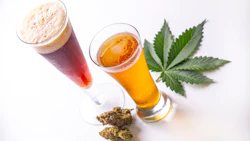
The redefinition of hemp in the funding bill was heavily influenced by trade groups representing those in the alcohol beverage industry who consider intoxicating hemp-derived products as unregulated competition.
While companies like Trulieve, Curaleaf, Verano, and Green Thumb Industries have spent millions directly and indirectly lobbying the government in support of cannabis rescheduling, I must ask: Where is the uproar from the cannabis industry on this issue?
Is the majority of the cannabis industry silently resigned to losing the right to sell seeds? Why is there no collective fund paid for by current seed companies to lobby and save the right to sell seeds, or to file a lawsuit to preserve their future existence?
It disappoints me that all current seed companies worldwide have not unified to protect and ensure their future and the future of cannabis diversity.
In fact, most American seed companies I have spoken with or come across do not intend to challenge the law, choosing instead to capitulate and pivot to selling clones or tissue cultures in an attempt to circumvent the upcoming regulations.
Others planned to return to the past and sell novelty seeds not intended for germination, but for collector purposes only, similar to a trading card. Some plan to sell an item such as a T-shirt and give away free seeds with the shirt. All of these routes seem destined for failure and can be obliterated by the stroke of a pen.
So, what is being done to protect the right to sell seeds?
The American Seed Innovation and Growth Alliance (ASIGA) is the leading organization trying to prevent the implementation of Section 781 of the FY2026 Agriculture Appropriations Bill. ASIGA is taking a stand to protect legitimate seed innovation from regulatory overreach – working to ensure that all seeds continue to be defined as hemp, as they contain less than 0.3% THC.
The North Atlantic Seed Co. (NASC), a woman-owned seed company, helped launch ASIGA alongside other seed purveyors and breeders to advocate for sensible revisions to the statute before it takes effect. The company and ASIGA launched the “Keep Seeds Legal” campaign and have so far raised $20,000 through a GoFundMe and via sales of sponsored products whose proceeds go to the fight.
What You Can Do
In a conversation with a knowledgeable friend, they expressed that they believe all of this will be repealed at the 11th hour. Unfortunately, I am pessimistic about that statement; the only way I see to make it come true will be through financially supporting ASIGA and directly protesting the implementation of the Agriculture Appropriations Bill’s section that excludes seeds from the definition of hemp.
To help overturn this legislative decision, I join ASIGA in asking you to reach out to your U.S. representatives and senators. A Change.org petition calling for the removal of cannabis seeds and genetics from the bill has garnered more than 3,600 signatures as of early August.
Additionally, Democracy.io is an online platform that facilitates citizen communications with elected officials, and NASC has a list of recommended talking points to communicate available on its website.
Also, please consider donating to ASIGA by purchasing a sponsored product or by donating to the “Keep Seeds Legal” GoFundMe.