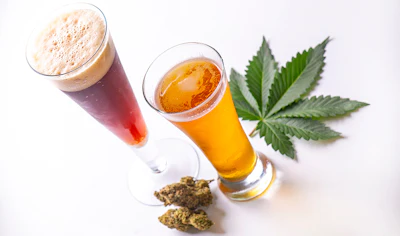

A pair of bipartisan U.S. House members from Texas and Ohio are hoping to regulate hemp-derived beverage products under a system that’s comparable to alcohol.
Reps. Beth Van Duyne, R-Texas, and Greg Landsman, D-Ohio, introduced the Beverage Regulatory Parity Act on Aug. 10, legislation that intends to establish a federal framework they say is geared toward protecting children and states’ rights, ensuring fair competition, and providing certainty for “responsible hemp beverage companies” to operate under clear standards.
The 27-page bill would task the Alcohol and Tobacco Tax and Trade Bureau (TTB) with regulating hemp-derived beverages by establishing a three-tiered distribution system for manufacturers, wholesalers and retailers after consulting with the U.S. Food and Drug Administration (FDA).
The regulations would include standards for labeling and advertising, as well as trade practices that have governed the alcohol industry since the end of Prohibition. The proposal would also impose a nationwide 21-and-older standard to possess, consume or purchase hemp-derived beverages. Those beverages would be subject to mandatory testing, TTB permits, THC limits and risk warnings.
“I’ve heard directly from people across North Texas who consume hemp-derived beverages, and businesses who sell them, that they need clarity, not a ban that pushes this market underground,” Van Duyne said. “The Beverage Regulatory Parity Act brings long-overdue certainty to the industry by regulating these beverages with the same proven structure that has successfully governed alcohol for decades. I am glad to introduce this bipartisan legislation alongside Rep. Greg Landsman, because American families and responsible businesses deserve structure and sensible regulations that protect children while allowing adults to choose beverages they prefer.”
The legislation is the latest attempt to avert the federal government’s forthcoming ban on intoxicating hemp products that’s scheduled to go into effect Nov. 12; however, the Beverage Regulatory Parity Act is silent on products other than hemp-derived beverages.
Under current law, hemp-derived products containing more than 0.3% total THC, more than 0.4 milligrams of total THC per container, or any amount of a synthetic or unnatural cannabinoid will be prohibited on Nov. 12.
Under the Beverage Regulatory Parity Act, a hemp-derived beverage could contain up to 5 milligrams of total THC per serving, defined as a single-use 12-ounce container or a multi-serving container with a total volume of 750 milliliters.
“There are people all over Southwest Ohio who have invested significantly in these products, and they’ve done so safely,” Landsman said. “Now the federal government is telling them they can’t sell these products anymore. Our bill is bipartisan and very straightforward. It will keep people safe and let these folks stay in business.”
Nothing in the bill prevents states from adopting their own rules with more stringent standards or from prohibiting hemp-derived beverages entirely.
The legislation would define a hemp-derived beverage as a non-alcoholic liquid intended for human consumption that:
- contains one or more naturally-occurring cannabinoids;
- does not contain any naturally-occurring cannabinoids extracted, sourced or processed from hemp plants cultivated outside of the United States;
- does not contain any synthetically-derived cannabinoids or other intoxicating molecules or compounds, or any molecules or compounds that are structurally identical or intended to mimic the effects of an intoxicating molecule or compound;
- is a final product intended for sale to a consumer;
- is packaged and labeled within the United States;
- is not a tincture, isolate, powder or distillate;
- does not contain more than 5 milligrams of total intoxicating tetrahydrocannabinol content per serving;
- is not intended to be consumed, labeled or advertised as a dietary supplement;
- does not contain more than 5 milligrams of non-tetrahydrocannabinol naturally occurring cannabinoids; and
- does not contain a drug that is the subject of an application for FDA approval.
According to the bill’s sponsors, the Beverage Regulatory Parity Act would ban products from containing synthetically derived cannabinoids to “ensure only natural plant-based compounds end up in these beverages, eliminating any unpredictable lab-made substances.”
The legislation would also impose a tax rate of 8 cents per milligram on intoxicating THC content within a hemp-derived beverage.
The Beverage Regulatory Parity Act is supported by: Beverage Alcohol Merchants Coalition (BAMCO), Wine and Spirits Wholesalers of America (WSWA), Texas Package Stores Association (TPSA), Specs Wine, Spirits & Fine Foods, Coalition of Adult Beverage Alternatives (CABA), Hemp Beverage Alliance (HBA), American Alternative Care Policy Network (AACPN), Total Wine & More, American Beverage Licensees (ABL), Beverage Wholesalers for Responsible Regulation (BWRR), and Texas Food & Fuel Association.
“The Hemp Beverage Alliance strongly supports the Beverage Regulatory Parity Act,” Hemp Beverage Alliance founder and President Christopher Lackner said. “The alcohol regulatory system is a proven success that consumers trust. The three-tier system will protect public health, require strong product testing and quality control, ensure products are kept away from children and allow responsible adults to enjoy hemp beverages as they would any other adult beverage.”