
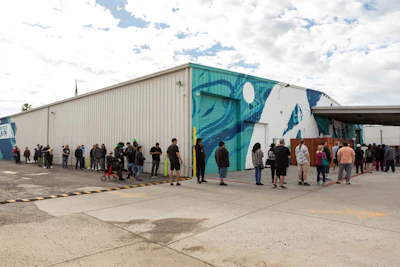

Cannabis holidays have become big events and big business for most cannabis operators in the U.S. and Canada, and even in many overseas markets. April 20 (or 420) this year topped the charts as the highest cannabis sales day of the year in the U.S., raking in $135.3 million, twice the average day’s draw of $67.5 million, according to cannabis data firm Headset. And while the July 10 (or 710) holiday pales in comparison, and data is harder to find, sales on the “OIL Day” holiday are growing, according to POS software company Sweed. “The day’s lift over a normal matched day jumped from +1.5% in 2024 to +6.3% in 2025,” with net sales of $28.2 million, according to the company.
It’s no wonder cannabis businesses clamor for a piece of the holiday-revenue pie, from hosting party-like events with entertainment and games to special guests, vendor meet-and-greets, swag giveaways, product discounts and other promotional offers.
But is there a playbook to help retailers make the most of these high-sales cannabis holidays?
Tom Sheridan, CEO at MWG Holdings Group Inc., says there is. MWG, which operates Perfect Union and Wild Seed Wellness dispensaries throughout California, has seen year-over-year sales growth during its 420 and 710 holidays for four consecutive years, according to a press release the company issued in July. The company’s 420 event this year saw year-over-year gains of more than 66% in net revenue, 67% in guest transactions and 88% in units sold; its 710 event saw a 61% increase in net revenue, 53% in guest transactions and 78% in units sold. Tom SheridanPhoto courtesy of MWG Holdings
And that “growth is built on a strong, time-tested playbook,” Sheridan said in the release.
So what’s in this playbook? Cannabis Business Times talked with Sheridan to find out and shares eight strategies from MWG’s playbook that have helped it achieve sustainable growth.
1. Maximize the ‘Fun’ While Tapping Holidays’ Ability to Connect People
Like many dispensaries, MWG creates what are essentially cannabis-holiday parties. Outside, visitors will find everything from food trucks to games (such as axe throwing and basketball), DJs and often prizes.
Inside, they’ll find vendors who “set up tables and give away swag and product information and all that kind of stuff,” Sheridan told Cannabis Business Times.
MWG’s corporate team “rotates through the events” and talks to customers and dispensary staff, he said.
“Basically, we want to create an event where people want to come hang out and spend time with us. We can spend time with them, visit with the staff. And so, it's an opportunity to just reconnect,” he said. “That's one of the cool things about holidays in general, is the opportunity to reconnect with everybody. So, we look at it as that. It's kind of a big deal for us every year.”
2. Offer Specials, But Build on Your Company’s Overall Strategy
One aspect of the 420 and 710 holidays for MWG is to “offer people the opportunity to get something that they might not otherwise be able to afford or buy – kind of treat themselves,” Sheridan said.
While the company may offer specials and discounts on the holidays to facilitate that opportunity, it is not a far cry from business as usual. “Those days we go a little over the top, but it actually just kind of fits within our global strategy, which is trying to provide the best value on the best products,” he said. “We're trying to get people value, especially in today's climate with diesel being $8, $9 a gallon, gasoline being $6, $7 a gallon; people are super price conscious. … But when we have these holidays, we get the opportunity to push our numbers a little harder.”
Another part of the company’s strategy is what it refers to as a “community first retail and marketing model,” which “is in the company’s DNA,” Sheridan said.
Part of the model is looking at how the business can give back to the communities where it operates, he said.
Sheridan said MWG looks at the cannabis holidays as part of that opportunity to give back to its customers.
But when it’s not cannabis-holiday season, the company still places a priority on giving back. “We've participated in food drives, toy drives, turkey drives for Thanksgiving, blood drives, mammograms – anything we can do to make people's lives a little bit better,” he said.
The ‘Time-Tested Playbook’ Key: Ensure Operational Discipline
When it comes to year-over-year holiday growth in revenue, transactions and units sold, and the time-tested playbook Sheridan mentioned, some elements crucial to MWG are disciplined operations, building a growth-minded team, earning long-term guest loyalty and leaning into technology.
Unpacking those elements sheds light on important aspects of ensuring not only successful and scalable holiday events, but also overall business success.
3. Create a Competitive Business and Team-First, Mission-Oriented Environment
“I think everybody knows now that cannabis is a tough business. It's highly regulated. It's been difficult, especially in California,” Sheridan said. “What I tell people is that regular business is hard. Cannabis business is hard on steroids. There's so much that goes into it that you really have to lock in on general business principles where you're trying to not only cut costs, but also follow regulatory frameworks to the letter, while also managing all the same issues that everybody else has with respect to employment laws and everything else.”
From an operational standpoint, Sheridan said, that includes everything from cost discipline to marketing strategies, product selection and customer service. And then on top of that, “You’ve got to provide a really competitive price,” he said. “You’re competing on so many different frameworks that you have to be lean and scrappy, but you also have to be really business-minded and good at what you're doing.”
Weaving those things together has proven challenging, Sheridan said, but that’s where a team-first environment comes into play, including for the cannabis holidays, which involve 13 retail locations and can require the team members to go well above and beyond their day-to-day roles.
“Everybody on my team lives, breathes and dies by this stuff. They don't go home until the job is done,” he said. “Everybody comes out and supports these events. So, you'll see me at 420. You'll see all the members of my corporate team at 420. It’s really kind of a family. We all have each other's backs. And I wouldn't ask anybody to do something that I'm not willing to do myself, all the way from cleaning up the parking lot to supervising events.”
Sheridan said that crucial to a team-first environment is treating “everybody the way we want to be treated,” from the team to patients and customers. “That's kind of the golden rule around here.”
As far as how to take that team-first environment to a growth-minded team, Sheridan said, “Some of it is just the way people are wired.” But you can help cultivate it by “fostering an environment where people are excited about coming to work and passionate about what they're doing,” he said. “When you find a group of people that actually care about the mission, you really don't have to do much else to foster a growth mindset. So, let's create passion about what we're doing. And then the rest takes care of itself.”
 Outside the Perfect Union Marysville dispensary during its 710 celebrationPhoto courtesy of MWG Holdings
4. Look at Building Customer Loyalty Through Multiple Lenses
Building long-term customer loyalty is no simple task. Sheridan said both tangible and intangible components are at play – or at least should be.
“Our mantra is customer service, good selection and good prices. And there's several different things inside of the customer service side of it. There's the facility itself. People don't want to come to somewhere where it doesn't look clean or sanitary, it's not safe, doesn't have good parking, good layout,” Sheridan said. “We run an open concept at most of our stores, anywhere that's allowed. … That provides people the opportunity to touch, feel, look around without feeling like they're inconveniencing anybody by asking to see something that's behind the counter.”
Having a great and consistent selection is also crucial, Sheridan said.
“If I go to an ampm [convenience store], I want to know that I can find the brand of chips or the soda that I want, and I want it to be there consistently every time I go in. And if it's not there, I find that frustrating,” he said. “So, we want to have stuff in stock all the time so people can get what they're looking for and not have to settle for something that they didn't want. And then finally, we try to give them that at the best value.”
This is where disciplined operations and reliable partnerships come into play as well. Sheridan said it’s key to be able to depend on the company’s brand partners to ensure that Perfect Union and Wild Seed Wellness can always provide customers with a reliable selection, including on the cannabis holidays, when demand can skyrocket. “And so that's been a huge key to our success is just making sure that we have that selection that people count on,” he said.
5. Lean Into Technology
Technology has played an important role for MWG in scaling and growing. This year, the company rolled out self-checkout with RFID automation, which has helped expedite the customer experience and leads to greater customer loyalty, Sheridan said.
“You take your basket to the counter and set it in this bin, and it automatically, using RFID tags, rings you up, so you don't even have to actually scan anything. And then you can pay with your credit card right there on the spot,” Sheridan said. “The cool thing about that is that not only do consumers like it; it's actually really important on the event days because people don't like waiting.”
During special events, Sheridan said the company “tries to roll out more of these self-checkout locations so that we can get people through our lines faster. That allows us to get more people through the door and provide better value.”
Another upside of the self-checkout is that because it uses RFID tags, Sheridan said, “it actually reduces theft and diversion. So governmental agencies really like that as well. Because if you walk out and you haven't paid for [a product], it'll flag the security guard.”
In addition to reducing shrinkage, the RFID capabilities also significantly help with taking inventory. “We take inventory often, obviously. And what used to take a week, now takes a day and a half,” he said.
MWG is also leaning into artificial intelligence (AI) to simplify accounting functions and customer communications (e.g., text and email), as well as exploring tools for budtender training and improving customer experiences, Sheridan said. “We're still in the planning phases and the rollout, but we're excited about it. We think it's going to … actually move the needle; we're constantly looking for ways to differentiate ourselves and make the shopping experience better somehow, whether that’s by getting people cheaper prices, better selection, more information, or just generally a better shopping experience and quicker wait times.”
6. Consider Limiting New Product Launches or Form Factors
While launching new products or forms at special events may seem like a good way to pique curiosity and add appeal, Sheridan said that doing so can be challenging, “mainly because there's so much traffic. These stores are well maxed out on those days. So, we try to do things that are tried and tested. We want people to spend the time there, but we also do have to get people through the door.”
New products and forms can require more time spent on customer education.
With lines usually wrapped around the building for the cannabis holidays, Sheridan said, “there's a fine line between getting people in and out, and also getting people to hang out. So, we try to do most of the hanging out outside. There are times where people will roll out new products on the holiday days, but it's not as often as you might think.”
7. Don’t Underestimate the Power of Flyers for Marketing
For MWG, distributing flyers ahead of the cannabis holidays has been the most effective way to market the events, said Sheridan, “because then you're targeting the people that are coming to your spot anyway, and you give them a heads up that there's all these cool things happening. But we also use Google and some other things, like texting and email. We’ve even done some TV ads recently. But flyers have proven to be the most beneficial.”
8. Prepare Well in Advance … and Prepare for the Worst
A key to pulling off successful cannabis holidays in terms of sales/revenue and customer experiences is the purchasing, distribution, marketing and retail teams – the teams themselves – as well as how they work together to deliver a stellar brand experience, Sheridan said.
“It does really take everybody, but mostly because we're moving so much volume on these days that we have to start months in advance,” he said. “From a coordination standpoint, we're moving so much more product that has to get in. And not only is it more product for our sources [to provide], it's more product everywhere.”
Beyond the coordination and extra work, the sheer volume of customers and product passing through on cannabis holidays could be compared to a flood putting pressure on a dam, and something is more likely to give. “When you're seeing the volume that we see, more things just happen. Point-of-sale systems go down, credit card networks go down, things break. So, it's an all-hands-on-deck type experience,” Sheridan said. “420 is the busiest retail day of the year. There's nothing incredibly different about the shopping day, other than that it's just a lot of volume and there's a lot that goes wrong when you're pushing that many people through the doors.”
To Sheridan, the worst thing that can happen is “when you can't serve people and get them what they want,” especially because many customers wait in line to get into the dispensary. “And when they get there, and you have a cash register that breaks or your credit card machine goes down, or you're out of a product that they want to buy that they've been waiting for; those are the types of things that I hate to see because of the disappointment to people,” he said. “We were talking about customer loyalty earlier; I want to disappoint people as few times as possible. People are only going to give me so many shots. There are a lot of places to buy cannabis these days on the legal market. So, I don't want to give people a reason to go somewhere else.”
Sheridan acknowledges that “sometimes you just can't avoid it,” so when something does go wrong, he said, “it turns into a 911 fire drill. I don't care what time of day it is. I don't care what's going on. If point-of-sale systems go down, we're getting those things back up, and we're getting people served.”
The Value Beyond the Sales Boost
As for continuing the track record of year-over-year holiday growth, Sheridan said he feels the team is in a constant state of planning. “We're always working on the next big thing. I think that every year we try to take it up a notch and provide better value and a more fun experience.”
But while the events are important for sales as well as for giving something back to customers, they also present an opportunity, Sheridan said, “to show off a little bit and to make people feel special, not only the customers, but also my team. It's a huge camaraderie thing. When we can pull something like this off, and everybody's in the trenches working together, it just generates a sense of teamwork, a sense of accomplishment. We’re all on the same mission.”
Trying to beat last year’s records is part of the fun, he said.
On a broader level, the events also can be an important barometer for how the company is doing “as a whole from a culture standpoint, from a field standpoint; are we all still rowing the boat the same way?” Sheridan said. “I think the financial metrics are a result of that more than anything. Ultimately, at the end of the day, if you can't execute day in and day out, 420 is not going to help you.”