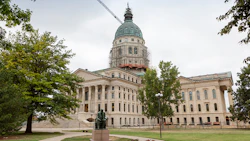
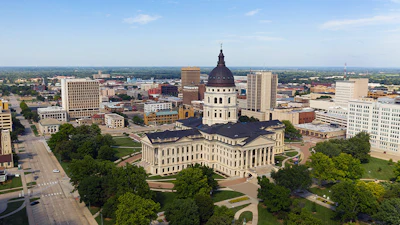

Kansas remains one of the nation’s last medical cannabis legalization holdouts, despite the state’s constituency overwhelmingly favoring reform for several years now.
Sixty-five percent of Kansas adults support enacting compassionate medical cannabis laws, including 72.4% of Democrats, 58.7% of Republicans and 68.8% of Independents, according to an annual Kansas Speaks survey conducted Sept. 23 to Oct. 16 by the Docking Institute of Public Affairs at Fort Hays State University. Just 15% of respondents oppose the policy reform, while others took neutral positions or did not know.
Likewise, 58.3% of Kansas adults believe cannabis should be legal for anyone 21 and older, including 63.3% of Democrats, 54.2% of Republicans and 60.3% of Independents, while 21.3% of respondents oppose legalizing adult-use cannabis.
Meanwhile, 61% of respondents said they’d support legalizing adult-use cannabis as a means to allow state taxation, and more than 59% said they were highly or somewhat likely to vote for a candidate who supported medical cannabis legalization as they decide who to represent them in the Kansas Legislature.
While support for cannabis reform in the annual survey slipped slightly this year, the 2026 results primarily follow a four-year trend of Kansas adults backing legalization since October 2023, when the statewide public opinion poll first incorporated cannabis-related questions.
Kansas is one of 24 states that don’t allow citizen-initiated ballot measures, meaning reform policies rest on the shoulders of elected officials. So far, the state’s lawmakers have fumbled in delivering what a majority of their constituents support.
In 2021, the Kansas House passed a medical cannabis bill by a 79-42 vote. The legislation carried over to 2022’s legislative session, when the Senate killed it. Specifically, Kansas Senate President Ty Masterson, R-Andover, never called the bill for a vote, and has since blocked follow-up reform proposals, calling medical cannabis reform a “nonstarter.”
In late 2024, Kansas lawmakers formed an interim committee on medical cannabis, allowing state officials, law enforcement, business leaders and medical professionals to weigh in on the policy issue. That October, Sen. Cindy Holscher, D-Overland Park, moved to endorse medical cannabis legalization heading into the 2025 session, but the committee rejected her motion.
“I just feel like we keep circling here by doing interim committees and never really moving forward on the issue,” Holscher said at the time. “We keep rehashing this information. We keep hearing the same debunked theories over and over.”
Masterson and Holscher are now squaring off in the state’s hotly contested 2026 governor’s race, with the nonpartisan Cook Political Report on Oct. 27 moving its projection from “Lean Republican” to “Toss Up.” The winner will replace term-limited Democratic Gov. Laura Kelly, who has taken a pro-cannabis stance against the backdrop of a GOP supermajority in the state Legislature.
“I think it’s time for the Legislature to finally legalize medical marijuana, giving the Kansans suffering from chronic pain or post-traumatic stress disorder, and children suffering with Dravet’s syndrome (epilepsy) the choice of the treatment they and their doctors determine best suits their needs,” the governor said last year.
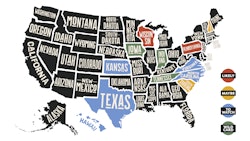
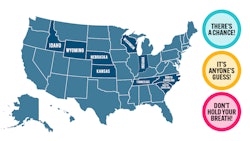
In the meantime, Kansas’ prohibition policies on medical cannabis remain in line with Idaho, Indiana, North Carolina, South Carolina, Tennessee, Wisconsin and Wyoming. Forty-two other states have adopted licensed programs for those with qualifying health conditions.
Although Kansans can drive across the border and legally purchase cannabis in Missouri or Colorado, the consequences of bringing it back home are significant.
Whether seeking medical relief or adult use, Kansas residents are criminalized for possessing any amount of cannabis, facing a misdemeanor punishable by up to six months in prison and $1,000 in fines. Possessing 1 pound of cannabis is a felony punishable by up to a $100,000 fine and 42 months in prison.