

Worcester Mayor Joe Petty and fellow council members representing Massachusetts’ second-largest city passed a resolution on Oct. 20 opposing a ballot measure that would repeal the state’s adult-use cannabis laws. The resolution urges city and state voters to do the same.
The ballot measure, which will appear as Question 8 on the statewide ballot on Nov. 3, 2026, would effectively wipe out the state’s commercial industry, including cultivation, manufacturing, laboratory testing and dispensary sales, that has served those 21 years and older since Massachusetts voters approved a legalization measure 10 years ago.
The prohibition proposal would also cut off a stream of tax revenue that has provided the commonwealth roughly $1.7 billion since December 2018. It also threatens to put roughly 27,000 industry workers in the unemployment line and recriminalize home cultivation for those 21 and older who, under current laws, can grow up to six plants for personal use.
“It’s only been a decade ago [since] the voters made a deliberate choice to take cannabis out of the shadows and replace an unregulated illicit market with a strict, accountable and aggregated system,” Petty said during Tuesday’s city council meeting. “Question 8 would wipe all of this framework away. [It would] recriminalize local businesses and hand the market, along with all of its profits, right back to unlicensed street dealers. From a public safety and public health perspective, going backward makes absolutely no sense.”
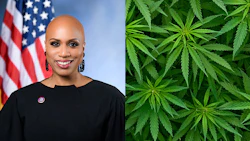
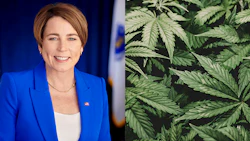
Petty, who sponsored the resolution, which passed, 6-0, with five councilors abstaining, joins Massachusetts Gov. Maura Healey, Boston Mayor Michelle Wu, U.S. House Rep. Ayanna Pressley, D-Mass., and 63 state senators and representatives, among others, in opposing the prohibitionist ballot measure.
The proposed statute, “An Act to Restore Sensible Marijuana Policy,” is sponsored by the Coalition for a Healthy Massachusetts Inc. and financially backed by prohibitionist group Smart Approaches to Marijuana (SAM) Action Inc., which has contributed more than $3.7 million in dark money to the initiative after its latest $250,000 contribution on Oct. 14.
Petty said during Tuesday’s meeting that regulations work better than probation.
“Right now, licensed Massachusetts retailers must check IDs not once, but twice, under video surveillance before a single sale is even made,” the mayor said. “In fact, since regulation took effect, youth cannabis use among Massachusetts high school students have fallen 57%. Keeping this system regulated lets our police department focus on resources where they truly belong: investigating violent crime, seizing illegal firearms and fighting [the] deadly fentanyl crisis.”
Economically, Petty said shutting down the state’s taxed and regulated adult-use marketplace would deal a blow to local budgets throughout the state, impacting funding that supports infrastructure, police and fire departments, and substance addiction treatment and recovery programs.
“Voting ‘No’ [on Question 8] is not about promoting cannabis; it’s about demanding accountability, keeping products tested, protecting people [and] preserving vital public safety funding our neighborhoods,” Petty said. “So, let’s not turn the control back to the illicit market and just ask people to vote ‘No’ on Question 8 to keep cannabis safe, tested and regulated.”
The pushback on Question 8 among Worcester’s elected officials comes as the ballot measure faces an expected overwhelming defeat for prohibitionists.
In September, a CommonWealth Beacon/MassINC Polling Group survey projected 61% of likely voters plan to oppose the measure and 27% plan to support it, while a Bay State Poll of likely voters that the University of New Hampshire conducted found 71% of voters plan to oppose it and 24% plan to support it.
Two more polls released this month show similar projections.
According to a University of Massachusetts Amherst/WCVB poll of more than 800 registered voters conducted Oct. 5-14, 61% of respondents said they plan to vote against the ballot measure, while 31% said they would vote for it.
“Supporters of repealing legal marijuana sales face a steep uphill climb,” said Raymond La Raja, a UMass Amherst political science professor and the poll’s co-director. “A decade after legalization, Massachusetts voters show little appetite for going back.”
Meanwhile, a Suffolk University/Boston Globe poll of 500 likely voters conducted Oct. 14-18 found that 71% of those surveyed oppose Question 8 while 21% support it
“Question 8, to repeal the state’s 2016 marijuana legalization laws, is trending to be overwhelmingly rejected,” the pollsters stated.