For a decade, hemp-derived CBD has stood as a rare success story in American health and agriculture. Not only has it provided non-intoxicating health products to vulnerable populations but it also rebuilt the American hemp industry and created tens of thousands of jobs. It bridged a gap among science, agriculture, and public health that highlighted the immense possibilities of modern medical innovation.
But language in the new agricultural FDA spending bill threatens to put that success at risk. If passed, this bill would ban nearly all hemp-derived products, including full-spectrum CBD oils with even trace amounts of THC. It would redefine hemp so narrowly that nearly every product on the market would become illegal.
Over the past decade, we’ve witnessed what’s possible for CBD and THC products when innovation and compassion meet good science. Ten years of families finding relief, veterans reclaiming peace, seniors seeking quality sleep, and children with epilepsy, like Charlotte Figi, rediscovering life. That progress is worth protecting and perfecting, not reversing.
Charlotte’s story lit the path. Her seizures were so relentless she was placed in hospice care, suffering heart failure not once, but twice. Then, a hemp-derived CBD oil, containing non-intoxicating trace amounts of THC, finally brought her seizures under control and gave her a chance at living. Her story made headlines around the world and sparked a movement that led to the 2018 Farm Bill, which recognized hemp as a distinct, non-intoxicating plant that was separate from marijuana and full of promise.
Since then, we’ve seen rigorous science, safety studies, and toxicology reports. We’ve watched an industry grow responsibly, ethically, and with purpose. Today, that industry is worth over $25 billion and employs scientists, engineers, veterans, professionals, and farmers across the country.
Yes, there are bad actors. The 2018 Farm Bill left loopholes that some have exploited, flooding the market with synthetic, intoxicating, and untested products masquerading as compliant hemp products. These products mislead consumers and threaten public trust, and we support banning unsafe, unregulated products.
But equally banning safe, science-backed CBD products that help vulnerable communities would result in nothing short of a public health crisis. It would shut down 95% of the hemp industry, destroy tens of thousands of jobs, and devastate American farmers. It would leave millions of Americans without access to safe, non-intoxicating wellness products they’ve come to rely on.
The proposed 0.4 milligram total THC container limit is not based on science. According to a recently published study by Dr. Ryan Vandrey of Johns Hopkins University, low oral doses of THC, up to 2.8mg, do not cause intoxication or impairment.
As the industry leader, we understand the need for regulation. But regulation must be rooted in science, facts, and action—not fear.
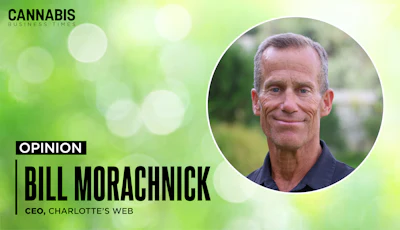
Bill Morachnick is CEO of Charlotte's Web.