
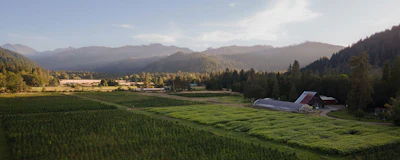
If you ask Mason Walker what he’d like to teach business leaders about mergers and acquisitions (M&A) strategies in the cannabis sector, don’t expect a curt answer. Expect a five-minute meaty assessment from the CEO of Oregon-based East Fork Cultivars on what makes a successful acquisition. Don’t blink or you’ll miss a vital detail Walker learned from experience.
The cannabis and hemp company acquired Peak Extracts in 2022, eventually phasing out the brand. “We should’ve focused on the assets not the products,” Walker said in an interview with Cannabis Business Times.
But he wasn’t done after that acquisition. Recently, East Fork acquired Tweedle Farms, a hemp e-commerce brand attracting a loyal following with its hemp-derived CBD and THC products. (East Fork’s own sun-grown product lineup includes high-CBD/low-THC categories, and the company sells CBD and CBG products through its East Fork Hemp business.) But this time, he had learned many lessons from the years following the Peak acquisition.
“The [Tweedle Farms] deal adds $1.3 million-plus in accretive revenue and a dynamic hemp storefront to East Fork's existing strength in breeding, cultivation, manufacturing, and wholesale distribution,” he told CBT.
 Mason WalkerPhoto courtesy of East Coast Cultivars
Walker considers this the first step in a “roll up” strategy focused on consolidating legacy operations. In this exclusive interview, he reveals more on what he’s learned from pursuing acquisitions, why he opted for the Tweedle deal amid the uncertainty of hemp-derived cannabinoid’s legal status, and what he hopes to accomplish through the strength of consolidation.
David Silverberg: Can you share the key lessons you learned from the Peak acquisition?
Mason Walker: There’s a lot we learned. We stuffed Peak products into East Fork, which I think was the right call, because part of the strategy of that acquisition was combining the overhead of both these operations. Let’s jam together things like staffing, professional services, administrative.
Then there are the hard lessons. Sometimes, it’s better to just buy the assets, and phase out their entities sooner. We had to deal with the long tail of tax compliance, governance issues, so a lot of administrative annoyance.
We also learned it’s better to move faster when it comes to market messaging and product design. East Fork has a lot of market trust in Oregon and beyond, and we should have relied on that a bit more. We saw how the Peak brand had been in decline for a few years. We should’ve pulled off the Band-Aid sooner.
Silverberg: Turning to your latest acquisition, how did your experience with Peak influence your approach to buying Tweedle?
Walker: After the dust settled on our deal with Peak, we still had the deep conviction that the strategy was right. Our basic pitch is looking at the smattering of OG, original craft brands, single-state brands most often, who don’t have the resources to become multistate brands.
A single-state brand cultivates trust, retailer relationships, but the field in the U.S. is more sophisticated and developed now. And so many of these craft operators simply disappear. They run out of capital, they sell their equipment and facilities. So, I wanted to create an alternative path to give them so they won’t disappear.
As for the deal structure, we did it differently with Tweedle. Instead of acquiring the entity, we just purchased the assets, such as IP, inventory, equipment, standard operating procedures (SOPs), and we offered jobs to four of their seven employees.
So far, it’s being going a lot more smoothly than it did with Peak.
Silverberg: Doubling-down on hemp is an interesting move for East Fork. The Farm Bill update is changing the definition of hemp, set to take effect in November, so will your business be impacted by these changes? Are you worried about the future for the hemp segment of your business?
Walker: It’s an enormous risk, it's an existential risk for us. This would be in our top five threats, up there with wildfires almost burning our farm down.
RELATED: 3 US House Republicans Attempt to Thwart Intoxicating Hemp Product Ban
Half of our revenue is on the hemp side of our business, and half is in the adult-use [cannabis] market, so why would we double down on the hemp side? I see this as an insurance policy against the threat of the changing definition of hemp. We’ve kept our noses clean. We’ve been producing full-spectrum CBD and CBG hemp brands, so we’re not THCA-Delta 9 companies. I have deep faith we’re going to still be in operation in the lanes we’ve cultivated for ourselves.
Silverberg: Can you explain more about your confidence in the future of the hemp side of your business (including Tweedle), with the 0.4 mg THC per container cap reportedly threatening to wipe out the vast majority of CBD products on the market? Do your products have such low THC that wouldn't be an issue?
Walker: There are many legislative efforts underway to preserve hemp farming and full-spectrum CBD products. While East Fork is preparing for all scenarios, I remain hopeful that we’ll either get a legislative fix—in the form of a bill that redefines hemp again to properly allow farming and full-spectrum CBD products with low THC—or a bill to delay enforcement of the "hemp ban" set to go into effect in November to buy more time for a proper legislative fix.
If November comes and the tighter definition of hemp goes into effect, East Fork will manage to make it through with a more limited assortment of products, primarily our line of broad-spectrum products that have had THC removed. In that scenario, we’d likely have to carry out a round of layoffs and may need to sell our primary hemp farm property, both of which would be lousy.
Silverberg: Let's talk about your roll-up strategy. What’s your key goal and how does it align with your long-term intention for East Fork’s success?
Walker: Consolidation is inevitable in any maturing industry. It's happening in cannabis. There's going to be fewer operators in this space.
I want to offer a blueprint for a type of consolidation that honors, that values those in the OG craft space. And I don’t want to be cute about it.
I still want to make a pragmatic business, and I believe there are enough strong segment leaders out there that could really grow and benefit and become legitimate multistate operators (MSOs).
We're looking at different kinds of deal structures. Some would just be an asset purchase, some would be stock deals.
In three years from now, I want East Fork to be a family of brands that means something, who all have a real story. And who will also be competitive in the cannabis space.
Silverberg: Can you explain a bit more how Tweedle fits in with your strategy to combine craft, "OG"/legacy businesses?
Walker: Tweedle Farms is squarely an OG, legacy craft cannabis company. Tweedle was one of the first companies to sell smokable Type 3/Type 4 (CBD/CBG) flower directly to consumers via ecommerce. Hemp is cannabis, after all, and Tweedle is a trailblazer of cannabis culture and responsible cultivation. East Fork's acquisition of Tweedle Farms is the latest step in our strategy to combine cannabis pioneers into a consolidated company with "OG" craft values intact.
David Silverberg is a freelance journalist who writes about cannabis and the cannabis industry.