
The federal government’s upcoming prohibition on intoxicating hemp products may not work, according to congressional researchers who cast a shadow of doubt over enforcement mechanisms.
The nonpartisan Congressional Research Service (CRS) issued a report Dec. 3 covering implications for federal enforcement related to Congress passing a provision in last month’s budget deal that changes the federal definition of hemp.
The new definition, which aims to ban products with certain cannabinoids, like delta-8 THC and HHC, as well as high-THCA flower and any other consumable product containing more than 0.4 milligrams of total THC per container, is set to go into effect on Nov. 13, 2026.
“While the change to the hemp definition will seemingly alter the legal status of many hemp products currently available on the market, it remains unclear if and how federal law enforcement will enforce the new prohibitions when the new definition goes into effect,” congressional researchers wrote in the report.
“It also remains to be seen whether [the Food and Drug Administration] will pursue additional options to remove these items from the market,” they wrote. “Both FDA and DEA may lack the resources to broadly enforce the laws prohibiting intoxicating hemp products on the market.”
The report points to how federal law enforcement agencies have “largely” allowed states to implement their own cannabis legalization programs with commercial cultivation and dispensing operations, despite these activities violating the Controlled Substances Act, under which cannabis is a Schedule I drug.
Specifically in response to disparities between state-sanctioned cannabis laws and federal law, Congress has a long-standing appropriations rider in place that prohibits the Department of Justice from using tax dollars to interfere with states that choose to legalize medical cannabis. This federal approach has largely extended to states with adult-use legalization as well (although nothing in the rider shields adult-use operations from federal prosecution).
“If intoxicating hemp products persist on the market after the change to their legal status, it is possible they could be subject to the same criminal and collateral issues as marijuana,” according to the Dec. 3 CRS report.
In other words, the federal government’s pending prohibition on intoxicating hemp products could largely mirror adult-use cannabis products, which depend on state and local law enforcement agencies to carry the load.
And, much like medical cannabis activities, Congress could exercise oversight priorities or limitations on intoxicating hemp product enforcement through future appropriation measures.
Absent meaningful enforcement mechanisms, hemp industry stakeholders who have advocated for regulation over prohibition have argued that the pending ban will primarily allow “bad” actors to thrive. Companies that package their consumable hemp products to mimic popular candy that’s attractive to children are less likely to follow the rules, according to stakeholders who promote product testing and age-gating for consumers over an outright ban.
While the new definition aims to close the so-called loophole in the 2018 Farm Bill that has allowed intoxicating hemp products to proliferate nationwide, many states have already enacted laws to regulate and/or ban certain cannabinoid hemp products. While some of these states may change their laws to align with the federal definition, others may not.
Whether or not states challenge the federal government’s new hemp definition, interstate commerce will remain in the federal government’s jurisdiction. This means shipping intoxicating hemp products across state lines will be prohibited.
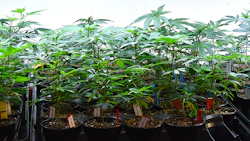
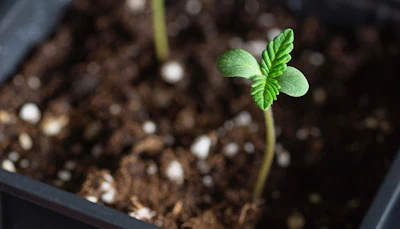
The implications for interstate commerce also apply to seeds.
Congressional researchers interpreted the new hemp definition to prohibit seeds that are produced from a cannabis plant if the plant exceeds a total THC concentration of 0.3%. Previously, under the 2018 Farm Bill, all cannabis and hemp seeds were legal for interstate and international commerce because the seeds themselves are below 0.3% THC.
Jason Edelstone, an attorney at Harris Sliwoski, highlighted this change last month, writing in his cannabis law blog that seeds from plants that can grow into high-THC cannabis or produce high-THCA flower will no longer be considered legal hemp.
“This is a seismic shift that will affect countless operators around the country,” he wrote. “Previously, the seeds themselves weren’t considered marijuana by DEA and others, simply based on the genetics they carried. Now, if those seeds will produce plants exceeding the total 0.3% THC threshold, they’re federally illegal. Some companies operating within the U.S. will now find [themselves] in violation of both federal and state law starting Nov. 13, 2026.”
Still, the question comes down to enforcement mechanisms. Will the federal government start seizing cannabis seeds and growing them to see which ones produce low-THC hemp plants and which ones produce high-THC marijuana plants?
According to the CRS, the if and how remain “unclear.”