
UPDATE: U.S. House Reps. Thomas Massie, R-Ky., Zoe Lofgren, D-Calif., and James Baird, R-Ind., signed on as original co-sponsors for this bill.
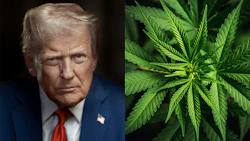
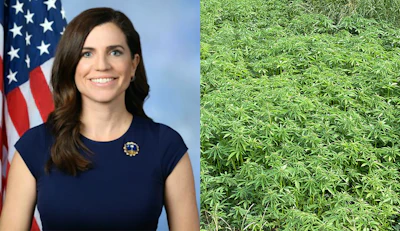
A Republican congresswoman from South Carolina is spearheading the first attempt to overturn federal legislation to ban intoxicating hemp products that President Donald Trump signed last week as part of a deal to reopen the government.
U.S. House Rep. Nancy Mace filed draft legislation on Nov. 17 that she’s sponsoring to repeal the federal government’s new definition of hemp before it takes effect on Nov. 13, 2026. The new definition intends to prohibit cannabinoids that are synthesized or manufactured outside the plant – such as delta-8 THC and HHC – and limit hemp-derived cannabinoid products to 0.4 milligrams of total THC per container.
Mace’s proposal, the “American Hemp Protection Act of 2025,” would simply repeal the federal government’s hemp-related provisions that were included in last week’s continuing resolution, specifically all of Section 781 of the Continuing Appropriations, Legislative Branch, Military Construction and Veterans Affairs, and Extensions Act, 2026.
Sen. Rand Paul, R-Ky., and Rep. Thomas Massie, R-Ky., attempted to strip Section 781 from the final appropriations package, arguing that changing the definition of hemp had nothing to do with funding the government and should have its own day on the hill. Also included in the new definition, hemp must test below 0.3% total THC (including THCA) to be distinguished from federally illegal cannabis.
While Mace ultimately voted in favor of the continuing resolution in last week’s 222-209 House roll call to reopen the government, she went on the congressional record on Nov. 12 that she “strongly” opposed Section 781 because it would “deal a fatal blow to American farmers supplying the regulated hemp industry and small businesses, and jeopardize tens of billions of dollars in economic activity.”
Mace cited numbers from a 2023 Whitney Economics report that estimated the U.S. hemp industry supports more than 320,000 jobs, generating $28.4 billion in regulated market activity and providing roughly $1.5 billion in state tax revenues.
“Rather than have a substantive, open debate on the future of hemp policy in America, prohibitionists slipped this provision into a must-pass government funding bill, forcing members of Congress to choose between voting their conscience on hemp and paying our military servicemembers,” she said. “This is wrong.”
According to Mace, the U.S. hemp industry has “stepped forward to self-regulate” in the absence of federal clarity on the 2018 Farm Bill, which federally legalized the commercial cultivation of hemp as an agricultural commodity.
In the past seven years – as intoxicating hemp products have proliferated in smoke shops, gas stations, and grocery and liquor stores – many have argued that separate definitions are needed for hemp plants in the field and finished hemp products that are intended for human or animal consumption.
Many states have adopted hemp THC product regulations or bans geared toward preventing youth access to those under 21 years old, while also requiring consumer safety protocols related to packaging, labeling and third-party testing.
According to Mace, many hemp businesses have been asking Congress to pass legislation that responsibly regulates their industry.
“Rather than adopt this common-sense regulatory framework to protect children and allow adults to make informed decisions, Section 781 of this bill essentially imposes a national ban of all ingestible hemp products with any ‘quantifiable’ level of tetrahydrocannabinol (THC), which represents between 90 and 95 percent of hemp products in the marketplace, including the vast majority of nonintoxicating cannabidiol (CBD) products offered in the marketplace,” she said.
The part about “quantifiable” levels of THC isn’t necessarily accurate: 0.4 milligrams of THC is a quantifiable amount. However, a previous version of the legislation that Mace and 12 other Republican representatives opposed in September did include that “quantifiable” language.
While Mace argued on the congressional record last week that Congress should have an open debate on the future of hemp policy, the draft legislation she’s circulating this week merely repeals Section 781 – it doesn’t offer a regulatory framework to debate.
“In the year before this provision takes effect, I will work tirelessly to reverse this harmful language and create a common-sense regulatory framework which protects America’s children, ensures product quality, and preserves access to products used by tens of millions of Americans,” she said. “As the failed war on drugs has shown, provisions like this drive out responsible actors from the industry and embolden shady, black-market actors who care not for consumer safety or the protection of children.”