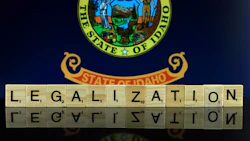

Idahoans told their lawmakers to take a hike on Election Day, rejecting a legislative proposal that would have prevented voters from directly shaping future cannabis policies in the Gem State.
The proposal, House Joint Resolution 4, aimed to amend the state’s Constitution by rolling back the democratic process of citizen-initiated ballot measures. Specifically, it would have blocked citizens from initiating future petitions to legalize cannabis, narcotics and other “psychoactive” substances.
In other words, state lawmakers who voted to place HJR 4 on the 2026 ballot were hoping to reserve that authority for themselves. But their constituents stymied those plans, defeating HJR 4 by a 68% to 32% margin on Tuesday, according to unofficial election results from The Associated Press, which called the race with 49% of votes counted at 10:30 p.m. MT Nov. 3.
When the Idaho Legislature voted in March 2025 to place HJR 4 on the 2026 ballot, the resolution’s sponsor, Rep. Bruce Skaug, R-Nampa, told his fellow lawmakers it was time for Idahoans to “proactively decide the state’s fate” on cannabis, narcotics and psychoactive substances by taking voters out of the legalization equation.
“I’m asking that we let our state go on the offense. Why pass this?” he asked. “In the Idaho Constitution, ‘The first concern of all good government is the virtue and sobriety of the people.’ That’s in our constitution. I don’t gloss over that when I read our constitution.”
Skaug, however, did not recommend sobering up his constituents by reinstating alcohol Prohibition.
Idaho’s Republican supermajority passed HJR 4 largely along party lines. House Minority Leader Ilana Rubel, D-Boise, voiced her concerns at the time, suggesting the resolution ignores more than two-thirds of Idaho adults who believe medical cannabis should be legal, according to an October 2022 SurveyUSA poll.
“All that this [resolution] does is – it’s stripping the power of the people, should the people of Idaho ever reach that level where they are so desperate to get medical cannabis legalized that they are willing to leap through the astonishing hurdles that have already been set in their path for a ballot initiative,” Rubel said, referring to the steep financial costs of organizing a successful ballot campaign.
The ability of Idaho citizens to place initiatives on the ballot goes back to 1933, when the Legislature finally implemented provisions that were written into the state Constitution 21 years earlier. In 1938, voters passed their first citizen-initiated measure to establish the Idaho Fish and Game Commission with a 76% majority.
Since 1998, seven citizen-initiative measures have qualified for the ballot, with three gaining voter approval: The most recent was a 2018 initiative for the state to expand Medicaid eligibility to individuals under 65 whose income is 133% of the federal poverty level or below and who aren’t eligible for other state insurance coverage.
Despite public support for medical cannabis legalization, Idaho remains one of eight states without a licensed and regulated program for qualifying patients. Instead, the Gem State criminalizes the possession of any amount with mandatory fines and the possibility of jail time.
Although a 2026 medical cannabis advocacy group, the Natural Medicine Alliance of Idaho (NMAI), submitted more than double the required signatures in May to place a legalization proposal on this November’s ballot, election officials disqualified 61% of them in July, leaving the group more than 12,000 signatures short of the 70,725 signatures needed from at least 6% of the state’s registered voters, including in at least 18 of the state’s 35 legislative districts.
Specifically, the Idaho Secretary of State’s Office concluded it could not verify that certain NMAI signature-gatherers were state residents and at least 18 years old – both state laws. NMAI’s legal counsel called it “an unusually high rejection rate,” suggesting that more than 10,000 signatures from registered voters were rejected “based on technicalities or legally questionable grounds,” and that the rejections “should concern all Idahoans.”
While various cannabis activist groups have attempted to place legalization measures on the Idaho ballot during every election cycle since 2012, all have come up short, from Compassionate Idaho’s 2012 effort to Kind Idaho’s 2022 and 2024 attempts and NMAI’s 2026 proposal.
That said, Idaho voters retained their rights to place future cannabis legalization petitions on the ballot after defeating HJR 4 on Tuesday.
Should activists overcome the state’s “astonishing hurdles” in the signature-gathering process, the outlook for reform is probable: An NMAI-commissioned survey of 400 likely voters conducted in October 2025 found that 83% of Idahoans support medical cannabis legalization, including 74% of Republican voters.