
Idaho activists hoping to legalize medical cannabis in the Gem State reached the final leg of their campaign to land a citizen-initiated state statute on the November 2026 ballot.
The Natural Medicine Alliance of Idaho (NMAI) announced July 2 that the group submitted all county-verified petition signatures to Idaho Secretary of State Phil McGrane’s office, which must conduct the final statewide review – the last step in the state’s initiative process.
NMAI gathered more than 150,000 signatures ahead of a May 1 deadline for the state’s 44 county clerks’ offices to begin their verification process. Now, McGrane has the final say in whether the alliance collected at least 70,725 valid signatures from at least 6% of the state’s registered voters in at least 18 of 35 legislative districts.
“Through this effort, more than 150,000 signatures were collected in every corner of Idaho, and polling found 83 percent of voters in Idaho support a medical cannabis program,” according to an NMAI statement provided by campaign Communications Lead Amanda Watson. “Throughout this process, the people of Idaho showed up. They shared their support with friends and neighbors, they worked on this effort in good faith, they donated, and they volunteered.”
The alliance referenced its own NMAI-commissioned survey conducted in October, when 83% of likely Idaho voters indicated their support for medical cannabis legalization, including 74% of Republicans.
The alliance’s legalization proposal, the Idaho Medical Cannabis Act, would create a regulated and licensed marketplace for vertically integrated businesses – limited to those with experience in the state’s hemp industry – to grow, process and dispense cannabis to medical cardholders diagnosed with “substantial health” conditions. Those conditions include, but are not limited to, cancer, AIDS, terminal illnesses, post-traumatic stress disorder, anxiety, irritable bowel syndrome, Alzheimer's disease, amyotrophic lateral sclerosis (ALS), chronic pain, epilepsy and multiple sclerosis.
Those with qualifying conditions could purchase up to 113 grams (roughly 4 ounces) of smokable cannabis (flower) or 20 grams of THC in inhalable form (vape) monthly. Ingestible cannabis products (edibles) would be limited to 10 milligrams of THC per serving under the proposal.
The proposal would allow each medical cannabis licensee to operate no more than two cultivation and production facility locations and up to six retail facilities. Also, it would allow for online ordering, delivery and pickup.
“Now that the initiative is in the secretary of state’s hands, we are focused on seeing that process through carefully and completely as they perform their review,” according to the NMAI statement. “We will continue to work with their office and share updates on the status of the initiative as we have them.”
The alliance provided no further details on how many of its 150,000-plus signatures the county clerks’ offices validated before transferring the signatures to the state secretary’s office.
NMAI signature gatherers experienced a setback in Minidoka County, where a campaign contractor attempted to turn in roughly 900 signatures – about 10% of registered voters in the last general election – right as the county clerk’s office was closing on the May 1 deadline.
One Minidoka County Clerk staffer attempting to leave work refused to take the petitions, while another staffer did, the Idaho Capital Sun reported. On May 4, County Clerk Tonya Page refused to count the last-minute petitions, a decision that was later held up in court on June 18.
Still, Watson said NMAI remained confident that the setback in Minidoka wouldn’t stop the alliance from meeting its signature-gathering marks in at least 18 of the 35 required legislative districts to secure a ballot position.
Aside from the setback in Minidoka, the Idaho Capital Sun also reported that Deputy Secretary of State Matthew Reiber sent a letter to NMAI, indicating that the state secretary’s office may throw out additional signatures without proof that the petition circulators who collected those signatures were state residents and at least 18 years old – both state law requirements in Idaho’s ballot initiative process.
In NMAI’s July 2 statement, the alliance stated, “An effort of this scale requires specialized help, and so NMAI entrusted the signature-gathering work to professional outside contractors engaged for that purpose, relying on their expertise and their representations to meet the standards Idaho law requires.”
The alliance further explained that it is not a “large organization or a political machine.”
According to a campaign finance activity report, NMAI received more than $3.2 million in campaign contributions, including $1.8 million from Double Springs Ranch LLC, which operates more than 640 acres in Central Idaho, where it produces hemp fiber for construction materials and hay for livestock.
The other $1.4 million in contributions came from personal donors, primarily from Mike Tunney.
Both Double Springs Ranch and Tunney are tied to the family of Dr. Dori Tunney, who died from brain cancer in 2024, Idaho News 6 reported.
The NMAI stated on July 2 that “It is worth saying who we are,” adding that Tunney’s battle with cancer inspired the legalization campaign.
“It began with a few people, the friends and family of a remarkable Idaho pediatrician who passed after a brave and difficult battle with brain cancer, whose wish was that others who are suffering would have a better, natural alternative to opioids,” according to the alliance. “They are the ones who carried her vision forward and set out to bring this question to the voters of Idaho.”
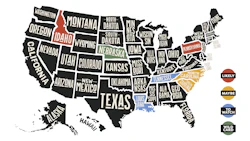
According to the alliance’s website, nearly 836,000 opioid prescriptions are written annually in Idaho, a state of roughly 2 million people. At the same time, Idaho remains one of eight states without a medical cannabis program, even a highly restrictive program, as seen in Iowa and Texas.
“One fact remains true. Idahoans support this,” according to the NMAI. “That support and the turnout of thousands and thousands of Idahoans is what carried this effort. It is the people of Idaho who have given us confidence and who have touched our hearts. To every Idahoan who signed, who volunteered and who stood with us – thank you. More to come.”