

Idaho will remain a cannabis prohibition state in 2026 after Secretary of State Phil McGrane’s office announced July 14 that voters won’t get a chance to cast ballots on a medical legalization proposal.
The announcement came after the Natural Medicine Alliance of Idaho (NMAI) gathered more than 150,000 signatures ahead of a May 1 deadline and subsequently submitted all county-verified petitions to the state secretary’s office on July 2.
The alliance needed 70,725 valid signatures from at least 6% of the state’s registered voters, including in at least 18 of the state’s 35 legislative districts.
“The Idaho Medical Cannabis Act initiative did not qualify for the November ballot after failing to submit the required number of valid petition signatures, both in total number of signatures and required legislative districts,” McGrane’s office announced on Tuesday.
The announcement did not say how short NMAI came of reaching the 70,725-valid-signature threshold; however, the state secretary’s office provided Cannabis Business Times with the final tally.
“The petitions submitted contained no more than 58,024 county-certified signatures,” Public Information Officer Joe Parris said. “It is therefore 12,701 signatures short of the 70,725 signature statewide requirement.”
NMAI organizers indicated on Tuesday that they are “still reviewing the state’s findings and our legal options” as they learn the full picture.
“We share the disappointment of the many thousands of Idahoans who worked for, signed and believed in this effort,” the organizers said in a statement provided by Communications Lead Amanda Watson. “They deserve to know exactly why we fell short.”
When NMAI organizers submitted their petition signatures to the state secretary’s office on July 2, they did not reveal how many of their original 150,000-plus signatures were validated by county clerks’ offices before transferring those signatures to the state secretary’s office.
In late June, just before the signature transfer, the Idaho Capital Sun reported that Deputy Secretary of State Matthew Reiber sent a letter to NMAI organizers, indicating that the state secretary’s office may not validate certain signatures without proof that the petition circulators who collected those signatures were state residents and at least 18 years old – both state law requirements in Idaho’s ballot initiative process.
“Because the people behind NMAI are not campaigners or experienced in petition drives, we hired a professional signature gathering firm to do what we could not do ourselves and trusted it to do the job lawfully and completely,” the organizers said on July 14.
“NMAI organizers oversaw this effort actively and in good faith. As the campaign progressed, we saw signs that our original signature gathering vendor’s operation was disorganized, but, when concerns were raised, we were assured that legal requirements, including requirements related to reporting and residency, were being followed and signatures were on pace to surpass the threshold,” they said. “It appears that our confidence was misplaced.”
The NMAI organizers said the state secretary’s final determination letter that they did not collect enough signatures describes missed deadlines, insufficient circulator documentation and payment disclosures, and petition materials that were incorrectly prepared or submitted late.
“We take every claim in that letter seriously, and no one wants answers more than we do,” they said. “We believe every statement made in the letter originated with our initial vendor. None of our concerns extend to the second firm we brought in late in the drive, whose work was professional throughout. NMAI has zero tolerance for signature fraud or prohibited conduct and will cooperate fully with any review.
“All of this said, we are still shocked that the initiative did not qualify for the ballot.”
The alliance’s legalization proposal, the Idaho Medical Cannabis Act, had aimed to establish a licensed and regulated framework for vertically integrated businesses to serve patients with qualifying health conditions, including, but not limited to, AIDS, cancer, epilepsy, multiple sclerosis, acute or chronic pain, post-traumatic stress disorder, and terminal illnesses under specific circumstances.
The NMAI initiative was backed by family and friends of Dr. Dori Tunney, a philanthropist, pediatrician and long-time Idaho resident who died of brain cancer in 2024. Tunney did not have alternatives to opioids for her treatment and, while recovering from an operation outside of Idaho, was recommended cannabis.
“It brought relief to her nausea and allowed her to sleep for the first time in weeks,” the NMAI organizers said. “That kickstarted her personal (and later her family’s) dream to bring this medicine to Idahoans who could use it in their hardest trials in a dignified, legal way.”
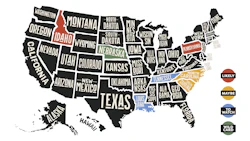
Idaho remains one of eight states in the nation without a medical cannabis program, even a severely limited program such as in Texas and Iowa. Instead, the state criminalizes the possession of any amount with mandatory fines and the possibility of jail time.
NMAI’s failed legalization campaign represents a pivotal moment for Idaho cannabis policy: 2026 potentially represents the last chance for voters to decide the matter.
That’s because Idaho lawmakers passed a joint resolution to place a constitutional amendment on the 2026 ballot that aims to block citizens from placing all future cannabis legalization measures on the ballot, giving the Legislature exclusive authority to legalize (or not legalize) cannabis, narcotics and other psychoactive substances.
In other words, the Idaho Legislature is asking voters to surrender their voting rights on shaping the state’s cannabis policy.
When lawmakers voted last March to place the joint resolution on the 2026 ballot, Rep. Ilana Rubel, D-Boise, opposed it.
“All that this [resolution] does is it’s stripping the power of the people, should the people of Idaho ever reach that level where they are so desperate to get medical cannabis legalized that they are willing to leap through the astonishing hurdles that have already been set in their path for a ballot initiative,” Rubel said.
Various cannabis activist groups have attempted, but to no avail, to place legalization measures on the Idaho ballot for the past decade, each time coming up short on signatures.
According to an NMAI-commissioned survey of 400 likely voters conducted in October 2025, 83% of Idahoans support medical cannabis legalization, including 74% of Republican voters.
NMAI organizers said their third-party validation before submitting the campaign’s signatures indicated significantly higher validity than was returned, and that they plan to review the findings county by county.
“For all the heartbreak, this effort is also a demonstration of what makes Idaho’s system work,” they said. “The citizen initiative exists so ordinary people can bring lawmaking directly to their neighbors, and tens of thousands of Idahoans engaged in exactly that. We also believe in the rigor Idaho law demands of this process. Those safeguards exist so Idahoans can trust that every measure reaching the ballot belongs there, and our commitment to that principle has not wavered.”