
Idaho lawmakers are deploying scare tactics about the impacts of medical cannabis legalization in an attempt to sway voters from supporting a citizen-initiated petition for the November 2026 ballot.
The state Senate adopted Senate Concurrent Resolution 127 via a voice vote on March 30, urging voters not to sign Boise-based Natural Medicine Alliance of Idaho’s (NMAI) legalization petition, the Idaho Medical Cannabis Act.
NMAI organizers have until May 1 to gather 70,725 valid signatures to qualify for the ballot. As of March 31, the group has collected roughly 77,000 signatures that still need to be vetted by election officials.
While introducing the legislative resolution to oppose the legalization proposal during Monday’s floor session, Sen. Ben Toews, R-Coeur d’Alene, claimed that legalizing medical cannabis would threaten Idaho’s way of life.
“Idaho’s sovereignty should not be compromised by an addiction-for-profit business dominated by secretive donors and out-of-state consultants and drug interests,” he said. “Idaho should expose the marijuana industry. Legalizing marijuana has led to increases in violent crime, impaired driving and drug trafficking in other states. Legalizing marijuana has led to increases in serious health issues such as psychosis, anxiety, depression, suicidal ideation, cardiac issues, strokes, addiction, increased emergency room visits and more.”
The resolution itself also states that legalizing cannabis increases cartel activity, illicit market production, human trafficking and safety concerns on job sites.
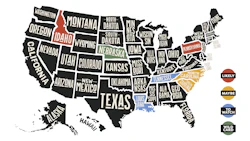
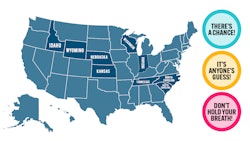
This legislative pushback comes at a time when Idaho maintains some of the strictest cannabis laws in the nation, where possessing any amount carries a criminal offense and the possibility of jail time. Idaho remains one of eight states without even a restrictive medical cannabis program.
The NMAI’s proposed ballot measure would change that by allowing medical cannabis cardholders diagnosed with qualifying conditions to access licensed dispensaries in a commercial marketplace, including monthly purchase limits of 113 grams (roughly 4 ounces) of smokable cannabis (flower) or 20 grams of THC in inhalable form (vapes). Ingestible cannabis products (edibles) would be limited to 10 milligrams of THC per serving.
According to an NMAI-commissioned survey of 400 likely voters conducted in October, 83% of Idahoans support medical cannabis legalization, including 74% of Republican voters.
Cannabis reform advocacy group NORML’s deputy director, Paul Armentano, said Idaho lawmakers’ opposition to the medical cannabis proposal is disappointing but “hardly surprising.”
“Lawmakers are aware that their hostility toward medical cannabis is out of step with most voters,” Armentano said. “That is why politicians are seeking to remove voters’ voices from the equation.”
In addition to SCR 127, Idaho lawmakers passed a joint resolution last year to place a constitutional amendment on the 2026 ballot that aims to block citizens from placing all future cannabis legalization petitions on the ballot, giving the Legislature exclusive authority to legalize (or not legalize) cannabis, narcotics and other psychoactive substances.
In other words, Idaho lawmakers believe their constituents can’t be trusted.
Sen. Scott Grow, R-Eagle, called the NMAI’s medical cannabis petition the “de facto approval of recreational marijuana” because “there’s no such thing as medical marijuana” without FDA approval. He also pointed out that while cannabis remains listed as a Schedule I drug, it has no currently accepted medical use under the federal Controlled Substances Act.
“The Idaho Medical Cannabis Act would force Idaho’s Department of Health and Welfare and the Department of Pharmacy to create and operate a statewide marijuana bureaucracy from seed to sale, forcing state agencies to violate numerous federal laws,” Grow said. “It’s illegal federally. We’d be forcing the state of Idaho to violate those laws. While there are many anecdotal testimonials from users that marijuana is beneficial, it is irresponsible to call it medicine.”
Grow failed to acknowledge that the federal government recognized cannabis’s medicinal value in a 252-page report in 2023, when the U.S. Department of Health and Human Services recommended that the plant be reclassified to Schedule III after a nearly 11-month scientific and medical analysis concluded that more than 30,000 health care practitioners across 43 U.S. jurisdictions are authorized to recommend cannabis for more than 6 million registered patients with at least 15 medical conditions.
Speaking in opposition to SCR 127, Sen. Melissa Wintrow, D-Boise, provided one of those testimonials that Grow referred to as “anecdotal.”
“I would share one personal story that when my mom was dying of cancer and wasting away, emaciated, and wouldn’t eat because she just didn’t have the appetite,” Wintrow said. “She was in another state, and we talked about medical cannabis to get her appetite up so she would gain weight and could withstand the cancer treatments. And I can remember how desperate I was. So, I think before we just throw out the use of medical marijuana, we should really think about that.”
When the NMAI launched its signature-gathering campaign in late October, Communications Lead Amanda Watson said the petition was focused on “giving families and individuals options when nothing else has worked,” adding that the group’s proposal would require strong oversight through measures to “prevent recreational use.”
Still, Sen. Brian Lenney, R-Nampa, said that he lived in California when the Golden State legalized medical cannabis in 1996, claiming that “all of a sudden everybody you knew had anxiety or a backache, and they were just handing out medical marijuana cards to literally anybody for any reason you could think of. And once they cracked open that Pandora’s box, it was a pretty quick road to legalizing recreational marijuana.”
He failed to mention that it took 20 years before California voters legalized adult-use cannabis in 2016.
Republican lawmakers also took issue with NMAI’s proposed list of 18 qualifying conditions, which includes anxiety, insomnia and acute pain.
“These three serious medical conditions are so broad that almost anyone could qualify for a medical marijuana card,” Toews said.
Sen. Todd Lakey, R-Nampa, went on to call medical cannabis a “gateway drug,” adding that Idaho is “different” than Oregon, Washington and California, suggesting that legalization has turned towns that used to be great places to live into a “garbage dump.”