10 Lessons Learned From Adding Cannabis Cultivation to a Garden Center
Nanticoke Gardens co-owner Pete Shafer shares his top takeaways from expanding from bedding plants and poinsettias to cannabis in New York’s adult-use marketplace.
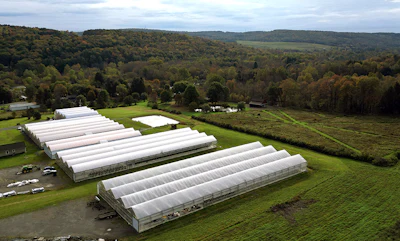
Aerial view of Nanticoke Gardens' cannabis greenhouse facility in Endicott, N.Y.
Editor's note: These lessons learned are part of a broader feature on how Nanticoke Gardens, a garden center since 1973, became one of New York’s first licensed cannabis cultivators in 2022 and now has products in more than 500 of the state’s roughly 700 dispensaries. That story is here.
Adding cannabis growing to an ornamental plants business might seem like a smart move based on simple logistics. But the reality of making the business successful is much more complicated. Regulatory hurdles and intricate growing differences can make the ornamental-to-cannabis learning curve feel steep for new cultivators.
Nanticoke Gardens co-owner Pete Shafer successfully led his 50-plus-year-old garden center into New York’s adult-use cannabis market. He shared his top 10 takeaways for successfully adding cannabis to his business.
1. Lean on Experience
“IPM management was huge in kicking us off in cannabis. We had already gone through the change from heavily chemical-based IPM management to beneficial and biological IPM management, so we already knew how to prevent insects and fungus and work on the prevention side. Growing in containers is also all we do in the bedding-plant business, so understanding the different soil mixes carried right over. We already had a network of greenhouse suppliers, so it was just like growing another crop for bedding plants, except it was cannabis.
“The big difference is that, in a garden center, you grow starter plants and sell them, which is very equivalent to growing clones. Growing cannabis to flower is more synonymous with growing tomatoes to produce tomatoes in a greenhouse. We were growing a crop for produce instead of growing starter plants. The whole post-harvest process at scale was another place where we had to adapt. We knew how to harvest, hang dry, trim and cure, but when you multiply that by thousands of plants, it is a different story.”
2. Plan to Expand
“Our first year, we grew bedding plants in the greenhouse through the spring season and then filled that whole square footage with cannabis and grew under natural daylight. After that harvest, we started retrofitting those greenhouses for cannabis by adding lights, more temperature controls and blackout systems so we could do light deprivation.
“I don’t know for sure the total cost of retrofitting because it happened in stages and, in many cases, on the fly. To build a 20,000-square-foot greenhouse for cannabis production from the ground up with everything, it is about a $2.5 million project. We were fortunate that we already had the structures and only had to retrofit them.
“Dehumidification is a huge plus because one of the biggest greenhouse challenges is humidity. Lighting is also different. In ornamentals, you sometimes need lights for a specific day length, but not necessarily for plant growth. In cannabis, you need them for both. If you want to grow year-round, you have to amplify your lighting, and if you want to be efficient, you need high-tech lighting controls that sense the sunlight and dim the lights when the sun is bright.”
3. Be Willing to Adapt
“Early on, we filled all our greenhouse space and then harvested and hang-dried it all. We realized very quickly that the labor and drying-room infrastructure made that impossible, so we evolved into a continuous-harvest system. We broke up our flowering space into eight different rooms, and now we plant every week and harvest every week. It is much more manageable; you can do it with a dozen people instead of a team of 25.
“When we rented space to other cultivators, it was important that the tenants were like-minded and had similar growing styles. We vetted our tenants well enough that it has not been an issue. One tenant also comes from a garden-center background, so it has been pretty turnkey because we have the same experience.
A Nanticoke worker trims dried cannabis flower at the companies facility in Endicott, N.Y.
4. Hire the Right Team
“We don’t advertise that we’re in cannabis when we post jobs. We post for packaging on the manufacturing side or greenhouse work, but we keep it vague because, on the cultivation side, we’re looking for people interested in plants and agriculture. Not necessarily just cannabis. If you get people who are only interested in cannabis, sometimes you’re missing other qualities in their work. A lot of hiring also happens through word of mouth from people who know us through the garden-center business or know somebody who works with us.
“Cultivation training is pretty much all on-the-job training. For the processing facility, a great candidate is somebody with kitchen experience because it is a food-safe, GMP work environment with PPE, hairnets, gloves and stainless-steel tables. Prep cooks and line cooks are great candidates for manufacturing in that kind of environment.
Nanticoke's Coconut Cream cannabis cultivar grown in Endicott, N.Y.
5. Secure Premium Genetics
“We sourced a lot of our own genetics early on. Over the years, we started working with a couple of other breeders. One that we’ve been very happy and successful with is Ziplock Seeds. We source seeds from them and then do our own pheno hunts.
“How we choose what to grow depends on an evolution of factors: what the market is looking for, the time of year, which products on our menu are wavering and which cultivars in the greenhouse are no longer performing like they used to. We may try two or three cultivars and grow them all the way out to see how they yield, test and smoke. It has to work for cultivation first. It has to be a good performer in the greenhouse, cure well and smoke well, and only then can we see how it performs in the market.
6. Develop Practices That Work
“Always remember that it’s farming, and all the risks of farming are at play with cannabis. Cannabis is like any other crop when it comes to the amount of work, the type of work and the intensity of the labor involved. You are a farmer, and that is what you are getting into in this business.
“If you want to enter this industry and save your margins, you have to be prepared to do it all. You cannot just expect to sell big bags of weed and survive. You may have to build a brand, process and package the product and distribute it directly to dispensaries.”
A Nanticoke worker in the extraction lab at the company's processing facility in Endicott, N.Y.
7. Roll With the Punches
“There were many things we didn’t anticipate when we first got involved in cannabis. One was security. When you grow at a garden center, you’re not as concerned with security because the crops aren’t as valuable. But early on in cannabis, security was a major concern, so we hired off-duty police officers to guard our greenhouses at night because we had so much invested in the crop.
“Another adjustment was growing a crop all the way to harvest. We were accustomed to growing starter plants in the greenhouse, but growing cannabis to flower is more like growing produce. We had never grown and harvested a crop at that scale before.
“We also underestimated the amount of labor required to grow at scale and complete huge harvests all at once. We used to fill the entire greenhouse and then harvest, hang-dry and process the whole crop. As the years went by and lighting became allowed, we learned to stagger the crops.”
Nanticoke's dried flower packaging in Endicott, N.Y.
8. Know the Regulations
“We anticipated selling bulk cannabis directly to dispensaries, as is common in some Western markets. Instead, as New York’s rules developed, the state required products to be completely packaged before they could be sold. If we wanted to sell single pre-rolls, five-packs, eighths or dime bags, each product type had to be tested separately, even when the products came from the same crop.”
9. Find the Right Partners
“It started with early-stage relationship building. We were fortunate to be among the early cultivation licensees, so we watched the regulations develop and stayed very active as the industry grew. We tried to make connections with every dispensary owner we could find. It was very grassroots selling.
“We used every resource available to identify who had received dispensary licenses and then tracked them down to show them our products. I sometimes drove to dispensary owners’ homes because they did not yet have storefronts and were still dealing with municipal challenges. I would call them, meet them at their front door and give them a sample box so that, when they eventually opened, they remembered me.
“From there, we kept developing those relationships and found people in different communities who could help represent the brand. It was a lot of hustle. We now have a sales team of seven or eight people, but I still make calls and beat the streets regularly. At the end of the day, it comes down to relationships and product. If you have a good product and build genuine, transparent relationships, the rest begins to work itself out.”
10. Have a Backup Plan
“We were fortunate to have another income stream through the garden center, which remained our core business. Not turning our back on that business was important, and the income and work it provided allowed us to weather the collapse of the CBD market.
“Our position in the CBD supply chain also helped protect us. We were not dependent on selling oil or finished products. We supplied starter plants to several large farms that planted them in the field for CBD production. Because we were on the front end of the supply chain, we had already sold the starter plants and were not left holding large quantities of oil or flower that we couldn’t move when the market crashed.”


 A Nanticoke worker trims dried cannabis flower at the companies facility in Endicott, N.Y.
 A Nanticoke worker trims dried cannabis flower at the companies facility in Endicott, N.Y.
 Nanticoke's Coconut Cream cannabis cultivar grown in Endicott, N.Y.
 A Nanticoke worker in the extraction lab at the company's processing facility in Endicott, N.Y.
 Nanticoke's dried flower packaging in Endicott, N.Y.