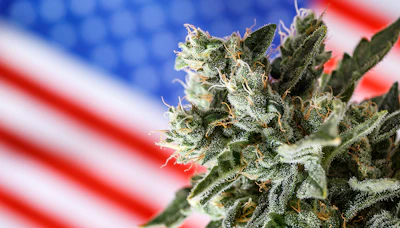

Influential Colorado law firm Vicente LLP founding partner Brian Vicente calls the sudden federal move to reschedule medical cannabis to Schedule III “the biggest thing” to happen in federal cannabis policy in decades.
In this Cannabis Business Times interview, Vicente breaks down three immediate implications:
● potential Section 280E tax relief for medical cannabis operators
● a new DEA registration process for medical businesses, and
● an accelerated administrative hearing that could open the door to broader adult-use reform.
Vicente and his firm have been in the trenches of legalization policy for decades in Colorado, and helped develop memos diving into issues surrounding the United Nations Single Convention on Narcotic Drugs, the international drug treaty, underpinning the Department of Justice’s recent action.
He says state medical cannabis programs played a critical role in giving federal officials a framework to recognize existing controls. He also sees major unresolved questions for hybrid medical- and adult-use-license states such as California, Maryland and Oregon, where businesses may need to determine how much of their operations qualify as medical.
The conversation ranges from international drug treaties and the legacy of Brian VicentePhoto courtesy of Vicente LLP
David Downs: Happy 4/20 — Schedule III.
Brian Vicente: Yeah. What a week. This is truly remarkable.
Downs: What’s your top-line message from Vicente LLP?
Vicente: Our firm was involved with Biden and then Trump and assisted with various stages of pushing this forward, including providing a lot of the treaty memos, which provided the underlying framework for this instant action.
Three things went down. You have the rescheduling of medical cannabis instantaneously to Schedule III. Obviously, an enormous tax break under 280E for medical cannabis operators, it eases research a bit, things of that nature.
The second piece, which I’m still wrapping my head around, is this DEA registration. Every medical cannabis business in the country, I guess, needs to register in the next 60 days with the DEA. Fascinating piece there. We’ll see who chooses to do that or not.
And then, of course, there’s this new administrative hearing. We were a petitioner in the original administrative hearing and helped get a bunch of comments on that stuff.
Now we have a new one, and it's going to be pretty damn accelerated. There are opportunities for your readers and so forth to participate in that or apply to participate. Completely fascinating.
And the end result of that could be rescheduling for broader adult-use.
So, I see this as a very significant change for medical, but also potentially for adult-use. And it is the biggest thing that has happened in decades of federal cannabis policy.
Downs: I got Larry Sloman's “Reefer Madness” on my bedside stand, and I know [drug warrior] Harry Anslinger died peacefully knowing that he had buried marijuana under an international drug control treaty—[186] countries had [adopted] it.
He was saying, “You’ll never free it from this.”
He was proud of his life’s work, and you mentioned treaties at the top of this call. I think they're a real germane part of this. It seems a lot of this has been trying to fit what we have in the American states into the treaties we got everyone to sign about 60 years ago.
Vicente: Yeah. Completely fascinating, right? You have these long-standing U.N. Single Convention treaties.
And at the end of the day, we saw this with [FDA-approved cannabis drug] Epidiolex, right? There’s the ability for signers of the treaty to schedule drugs quickly if it's the right path for their country, and that's what happened with Epidiolex. So, we have some precedent. We believe that creates the legal framework to make this hopefully litigation-proof for this broader rescheduling.
It gives a fair amount of power at the end of the day to treaty signers, and it was great to see the AG [Attorney General] flex that power.
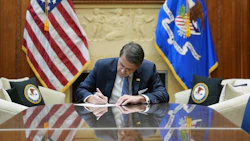
Downs: It was poetic to me to see the AG talk about how the Controlled Substances Act (CSA) gave him pretty sweeping autocratic powers to wave a wand on scheduling under the auspices of “control” as the pretext to say, “We’re doing this ‘without regard to rulemaking.’”
As just someone who's been in the weeds with this, it's more of an observation to you that makes me smirk to think about the use of the word “control” and the sweeping powers that were baked into the CSA for an AG ostensibly to find a new drug and be, like, “Controlled.” But to actually go look at the state landscape and under the auspices of “control” be, like, “We're doing this.”
Vicente: That was such a fascinating piece. And the state-level programs provided a couple different things that got us to this result.
One was, for the first time, the FDA and HHS looked at state-level medical cannabis data and research—as opposed to just clinical trials—and came up with this original proposal for Schedule III.
But then the truly shocking thing … was that the attorney general had looked at state programs and said, “You know, these are effective controls. These are better than black market or the underground market, and we're looking to control them under the treaties. We have this level of control. Let’s authorize this.”
Downs: Another top takeaway is that medical marijuana is back. In California, we got tax breaks for patients. We only have about 2,000 [patients] in the system. And then on the medical-only license type only in California, we only have about 600.
But if you're in Oklahoma, which had a real wild and woolly medical system, or Washington D.C., which only got as far as medical, this is helping today.
Vicente: Exactly. It helps those businesses today by not only removing a lot of the stigma around what they're doing but also providing immediate 280E tax relief.
And then, as you may have seen, [the DOJ] advised the Treasury Department to make that retroactive. Just think about Trulieve in Florida—how much retroactive tax. It's truly remarkable.
RELATED: Trulieve CEO ‘Not Concerned’ by DEA’s Middleman Role in Schedule III Order
Another piece therein, David, which I think is really interesting, for California and some other states: A lot of states have combined licenses. Maryland has hybrid licenses. There's an argument that every Oregon cannabis business has been authorized to sell medical.
Do they have to bifurcate that for 280E purposes? Does part of their company apply for the registration?
And I think this could get us closer to adult-use than people might think at first blush.
Downs: I could see a world where the doctor's office opens again at Amoeba [Music, a massive independent record store with several locations in California], and more patients go back in the system.
There's some legacy medical-only licensees in the state that suddenly their books look a lot better on the retail side.
We might see a new little vertical of M-only in California as a stopgap while they litigate what “Adult-use + Medical” licensing really means.
It's like it's 1996 again from the tax picture.
Vicente: Yeah. Totally fascinating, right?
And depending on how far people want to push it, Washington, D.C. is a medical program that involves patient self-certification.
What if California were to pass a law allowing patient self-certification? Everybody's medical.
Nobody pays 280E. It's federally legal-ish. There's a lot of really interesting potential there.
Downs: It reminds me of [activist] Dennis Peron saying, “All use is medical,” and now there's a tax incentive to embrace that.
You have a historical perspective. You're the perfect person to sound off on how the American Medical Association said this stuff was medical in 1937.
With the Single Convention in the CSA, they tried to bury it under local, state, federal, and international law to never see the light of day. Now light seems to have found its way down to it.
What are your feelings about the journey this has been on? Think of the Shafer Commission of 1972. There's been all these steps along the way where people have said “it's medical.”
In 1996, California voters said it was medical. [The federal government] prosecuted doctors. They raided dispensaries.
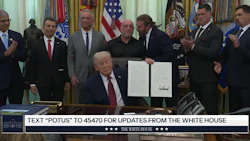
And now the acting AG has said “It's done. It's medical.”
Vicente: It's a monumental shift, and in some ways, as a long-term patient advocate, it's very gratifying.
I've had patient clients of mine that were dying of AIDS that got arrested for using medical cannabis. People denied transplants. People had their kids taken away. People lost jobs, all for simply being medical marijuana patients.
And since '71, the feds have been saying “this could cause death”—this reefer madness hype that's now really been taken away with the wave of a wand here.
It's certainly gratifying, and I think for those patients and doctors and others that put themselves on the front line, and also for a new generation of patients to come that will have better access to clinical trials, research, and tax-free medicine.
Downs: There's going to be critics who want the whole loaf today saying, “This doesn't go far enough. It doesn't cover this and that.”
My sense is this is an incremental gain that changes the landscape and potentially opens up new opportunities. It gives cover for people on the right to advance policy, it gives a boost to people on the left. You understand the political terrain better than most people. Do you see efficacy in this incremental gain?
Vicente: I do. I think this is a force multiplier. I think we are going to see concrete advancement on medical, and we're also going to see an acceleration of the recreational movement in this country now that you have conservatives and the conservative GOP leader of the country coming out and saying, “Hey, there's medical value here.”
I think that's going to influence statehouses across the country and really move the needle closer to descheduling, which is where we’d like to see it.
Downs: I could see some holdout red states going for medical, just to align with the federal government now.
And then it’s just shocking to me that [University of Mississippi Researcher Mahmoud] ElSohly’s monopoly on research weed is over.
Vicente: Which is great. The other providers have better products, hopefully.
Downs: Should we see this as a step toward the United States being able to export U.S. medical cannabis into the global market and actually compete against other medical countries?
Vicente: I am still trying to figure that out, David. And there's a lot to get through here. And a bunch of our staff have been trying to wrap our heads around this. I do think there's an argument here that we're moving closer to not just export, but potentially state-to-state, interstate stuff.
I know California's passed laws around this. Does this allow enough of a federal change to have the state law come into effect? Maybe not. But does it get us closer? Certainly. So, these are the things that we'll be parsing through and trying to figure out.
Also, just other random stuff. If I go through this registration process as a medical operator, I can probably apply to be publicly listed on Nasdaq. At that point, you're arguably not federally illegal, right? I just think there's an opportunity for investment and other things that we'll continue to unpack.
Downs: And now the DEA is the biggest buyer of weed in America.
Vicente: Yeah. That is fascinating.
I'm still trying to figure out that piece, but what a day. It's like April Fool's Day, and then it's not.
Award-winning freelance journalist and best-selling author David Downs is the former Leafly.com Senior Editor. He authors the Fire Follower genetics newsletter on Substack. His work appears in High Times, Leaf Magazine, GreenState, Cannabis Now, Cannabis Business Times, and beyond. Downs’ work has appeared in San Francisco Chronicle, New York Times, Scientific American, Wired, Rolling Stone, The Onion A/V Club, Columbia Journalism Review, Billboard, and many more. He holds a bachelor’s degree in English Literature from UC Santa Barbara, and was a Fellow at the Medill School of Journalism’s Academy of Alternative Journalism in Chicago.