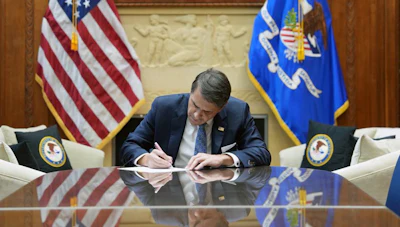

U.S. Acting Attorney General Todd Blanche announced a two-phase cannabis rescheduling package on April 23, sparking no shortage of cannabis industry reactions to the immediate and forthcoming impacts.
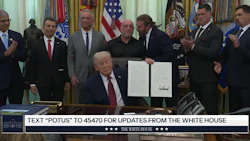
Industry stakeholders have been waiting for months to see what would unfold from President Donald Trump’s executive order to loosen restrictions on the plant.
Phase one of Blanche’s plan includes a 33-page order that he signed to “immediately” reclassify FDA-approved products containing cannabis or cannabis extracts, as well as state-licensed medical cannabis and cannabis products, to Schedule III of the Controlled Substances Act (CSA). Delta-9 THC and other naturally occurring compounds derived from the cannabis plant are included in this order.
Blanche issued the order under the United Nations Single Convention on Narcotic Drugs, an international drug treaty, which requires parties to take measures “to limit exclusively to medical and scientific purposes the production, manufacture, export, import, distribution of, trade in, use and possession of” a substance covered by the treaty.
In other words, Blanche directed the DOJ to carry out the U.S. treaty obligation of his expedited scheduling action – free of the normal rulemaking process – by limiting the “immediate” rescheduling under phase one to FDA-approved products and licensed cannabis products falling under state regulatory schemes.
This immediate rescheduling order carries a certain amount of federal oversight with it.
Blanch mentioned how, since California first legalized medical cannabis in 1996, state regulatory systems maintain comprehensive licensing frameworks governing commercial activities with robust infrastructure for preventing diversion, ensuring product safety, maintaining records and conducting facility inspections.
“In light of that record, the attorney general has determined that incorporating state licensing systems into the federal registration framework represents the most effective and efficient means of achieving the CSA’s objectives with respect to medical marijuana while promoting the medical benefits of marijuana and causing the least disruption for patients and existing state systems,” the order states.
To facilitate this integration, licensed medical cannabis businesses would be subject to an expedited Drug Enforcement Administration (DEA) registration process in which they can submit their existing state credentials as “conclusive evidence” for federal registration.
To satisfy Single Convention treaty compliance, the federal government would then have to establish a nominal price purchase-and-resale mechanism to “acquire and resell” the crops from registered medical cannabis companies. This would require registered medical cannabis cultivators to allow the DEA to maintain access to where their harvested plants are stored until the transaction takes place.
While the federal government would sell the crops back to the cultivator at the same nominal price determined by the business, the transaction would include an “administrative fee.”
Although some may consider this “fee” a federal tax, a Schedule III listing equates to massive tax savings for cannabis businesses that have been dragged down by the financial burdens of Section 280E of the Internal Revenue Code, which prevents businesses that “traffic” Schedule I or II drugs from deducting standard business expenses.
Blanche indicated in Thursday’s order that the DOJ wants to provide medical cannabis businesses retroactive relief from 280E’s punitive tax structure, meaning some companies could potentially receive deductions they never took going back more than a decade.
“The Administrator encourages the Secretary of the Treasury to consider providing retrospective relief from Section 280E liability for taxable years in which a state licensee operated under a state medical marijuana license,” according to Blanche’s signed order.
In phase two of the rescheduling plan, the acting DOJ head separately signed a six-page notice for a new, expedited hearing to broadly reschedule all cannabis, not just medical products, to Schedule III under the CSA. This hearing is scheduled to begin June 29 and conclude no later than July 15, 2026.
Blanche also signed a withdrawal notice that canceled an administrative law judge hearing process that was initiated under President Joe Biden, satisfying an interlocutory appeal that had stalled progress on rescheduling since January 2025.
While Trump’s DEA will now conduct its own hearing process, it will include the same proposed rule that was published in the Federal Register in May 2024 under the Biden administration.
Current DEA Administrator Terry Cole said in Thursday’s rescheduling announcement that he plans to honor Trump’s directive from December to reschedule cannabis in the “most expeditious manner.”
“Under the direction of President Trump and Acting Attorney General Blanche, DEA is expeditiously moving forward with the administrative hearing process – bringing consistency and oversight to an area that has lacked both,” Cole said.
The purpose of the hearing remains the same: to receive factual evidence and expert opinion regarding whether cannabis should be reclassified to Schedule III. Every “interested person” who wishes to participate in the hearing can file a written notice of their intention to participate.
Blanche plans to notify selected participants on June 22. The acting DOJ head also plans to designate an administrative law judge to preside over the hearing.
Waiting four months since Trump issued his executive order to find out whether his administration would follow through, cannabis industry stakeholders were quick to react following Thursday’s announcement.
Here are several of those reactions:
Kim Rivers, CEO, Trulieve
“The administration is delivering on its promise to address long-overdue cannabis reform by rescheduling medical marijuana. President Trump and Attorney General Blanche have, through this final order, completed the first-ever meaningful policy shift related to cannabis in the history of America. By Rescheduling medical marijuana to Schedule III, American-led research, utilizing products that Americans are consuming, can begin in earnest and will shape the future state of cannabis in this country. Trulieve welcomes this decisive action to more closely align federal policy with current medical practice and state laws.” -Kim Rivers
Howard Kessler, Founder, The Commonwealth Project
“President Trump’s move of marijuana to Schedule III is more than a regulatory tweak – it’s a long-overdue correction that finally treats cannabis as medicine. For millions of seniors battling chronic pain and other conditions, this opens the door to evidence-based therapies, real clinical research, and potential Medicare coverage. It’s a clear win for patients and responsible health care innovation.
“But let’s be crystal clear: This is not recreational legalization. Medical cannabis must stay in its own lane – prescribed, studied, monitored and covered like any legitimate therapy. Recreational marijuana belongs under strict state control, separate and regulated like alcohol and tobacco. This is how we turn today’s decision into real, lasting benefits for American patients – especially our seniors.” -Howard Kessler
Boris Jordan, Chairman & CEO, Curaleaf
“Thank you, President Trump and Acting AG Todd Blanche, for getting medical cannabis rescheduled! This is the biggest legislative change for cannabis in 55 years, and a clear signal that federal policy is beginning to catch up with science, public opinion and economic realities. This decision carries meaningful implications for the future of the industry and provides medical patients with the critical access that they need. Effective immediately, pursuant to the United Nations Single Convention Narcotic Drug treaty, cannabis sold under state-issued medical licenses will be reclassified under Schedule III, with an ALJ hearing on adult-use licensed businesses to come.
“For decades, cannabis was misclassified in a way that created unnecessary barriers for legal operators and slowed meaningful progress. Rescheduling will accelerate research, expand patient access, help protect consumers from the illicit market, and create a more stable and transparent operating environment. It also addresses long-standing industry challenges such as punitive tax structures and capital constraints. The process outlined provides tax relief today to state-licensed medical operators, with relief expected for the broader state-licensed market later this year. This will help bring clarity for thousands of businesses that have faced years of financial uncertainty under past legislation.
“We are incredibly optimistic about what comes next and look forward to working with policymakers to ensure this momentum leads to lasting, positive change for the industry and the millions of Americans it serves.” -Boris Jordan
Jim Cacioppo, CEO, Jushi
“We have been working hard for years to advance sensible cannabis reform, and we thank President Trump and his administration for their leadership, hard work and commitment to getting this done for the American people.
“Today marks an important moment in the history of U.S. drug policy. President Trump’s decision to move cannabis from Schedule I to Schedule III acknowledges what millions of Americans already know and what a rapidly expanding body of clinical evidence demonstrates: cannabis should be responsibly regulated, not prohibited. Jushi looks forward to discussing this development with the president’s supporters holding office in states like Pennsylvania, where lawmakers continue to block reform efforts on the basis of demonstrably inaccurate prohibitionist ideology.” -Jim Cacioppo
Wendy Bronfein, Co-Founder and Chief Brand Officer, Curio Wellness
“Moving cannabis to Schedule III is a meaningful and long-overdue step. We appreciate President Trump’s persistence in following through on his promise and executive order to unlock the medical potential of cannabis through rescheduling. This decision reflects federal recognition of its accepted medical use, expands access to care for patients who can benefit from cannabis-based treatments, strengthens operators’ ability to reinvest in their businesses and workforce, and helps stabilize an industry that has faced prolonged uncertainty. While it does not resolve every challenge overnight, it represents real progress toward a more rational and sustainable policy framework.” -Wendy Bronfein
Sam Brill, CEO and Director, Ascend Wellness Holdings
“Today’s announcement from the Trump administration has the potential to meaningfully reduce barriers to research and supports the development of evidence-based medicinal applications, moving federal scheduling policy in the right direction. While rescheduling is not legalization, and it does not resolve all structural challenges in the industry, it is an important step toward a more transparent and accountable market that supports compliant operators.
“We believe a well-regulated, research-driven cannabis industry benefits consumers, communities, and public health, and remain committed to operating within this evolving framework to help realize the industry’s full potential.” -Sam Brill
George Archos, Founder and CEO, Verano
“We’re thankful for the leadership, commitment and coordinated efforts of President Trump and Attorney General Blanche to reschedule cannabis to Schedule III, which will provide countless health and wellness benefits for Americans nationwide.
“Completing the historic rescheduling of cannabis to Schedule III promises to unlock the full medical, research and commercial potential of this miracle plant and support the growth and normalization of America’s next great industry in the United States.” -George Archos
Charlie Bachtell, CEO, Cresco Labs
“Rescheduling medical cannabis is a long-overdue step that finally brings federal policy closer to the science. For the first time in history, our federal government is classifying cannabis as medicine, validating the experiences of millions of patients who rely on it to help manage serious conditions and live better lives.
"This decision opens the door to expanded research, better data, more informed care and broader access for those who need it most. It is a win for all patients nationwide and will usher in a new era of health care, where cannabis is treated like any other medicine. Cresco Labs commends President Trump and the administration for following through on bringing a commonsense approach to cannabis regulation.” -Charlie Bachtell
Irwin D. Simon, Chairman and CEO, Tilray Brands
“Today marks a pivotal moment for the United States. With President Trump’s action to reschedule cannabis, federal policy is finally aligning with science, medicine, and most importantly, patient needs. This is about people: patients fighting cancer, seniors managing chronic pain, veterans navigating PTSD and children with epilepsy whose families have long sought safe, effective options. For decades, they have turned to medical cannabis. Today, the system begins to catch up with them. Rescheduling has the potential to accelerate clinical research, broaden access and elevate the quality, consistency and safety standards that establish medical cannabis as a legitimate pillar of modern health care.
“At Tilray, we have built a global platform for precisely this moment. We are among the world’s largest cannabis growers with more than 7 million square feet of cultivation capacity and a recognized global leader across pharmaceutical-grade cannabis production, clinical research, product innovation and patient care. Through Tilray Medical, we have served hundreds of thousands of patients across more than 20 countries in some of the world’s most stringently regulated markets. This is how health care evolves. Tilray stands ready to partner with regulators and health care providers to responsibly expand access to medical cannabis and help shape the future of this industry in the United States.” -Irwin D. Simon
Michael A. DeGiglio, Founder, President and CEO, Village Farms
“The rescheduling of medical cannabis represents a monumental change for our industry, and we applaud the Trump administration for keeping its campaign promises and its commitment to unlocking the medicinal benefits of cannabis for millions of Americans. We look forward to the opportunity to activate our U.S. cultivation assets when regulations permit, and are proud that our efforts to defend our industry and ensure a transparent administrative process last year have been successful.” -Michael A. DeGiglio
Nico Richardson, CEO, Texas Original
“The Justice Department's reclassification of state-licensed medical cannabis from Schedule I to Schedule III is a significant step for Texans who will benefit from easier access to needed medicine. It will reduce some of the most burdensome restrictions on medical cannabis and pave the way for expanded research. This is a major step forward as we continue to deliver the highest-quality medical cannabis to patients across Texas.” -Nico Richardson
Omar Delgado, Vice President of Retail, Ivy Hall
“Today’s DOJ announcement is meaningful progress, even if the work isn't done. Moving FDA-approved and state-licensed cannabis to Schedule III is a real step forward: It eases research barriers, opens the door to 280E relief for compliant operators and signals that the federal government is finally taking cannabis seriously as medicine. A full rescheduling hearing in June is the next hurdle, and we'll be watching closely. At Ivy Hall, we're encouraged and ready to build on this momentum.” -Omar Delgado
Thomas Sheridan, CEO, MWG Holdings Group Inc./Perfect Union
"Today's announcement from the Department of Justice is the most meaningful federal acknowledgment California's legal cannabis industry has received in a generation. For years, dispensaries in this state have been taxed in an unsustainable way under 280E — unable to deduct basic business expenses like rent, payroll and marketing that every other retailer in America takes for granted. Moving state-licensed medical cannabis to Schedule III finally breaks that penalty. The tax relief this unlocks is real, it is immediate, and it could be the difference between survival and closure for small and mid-sized California operators who have been fighting just to keep their doors open.
"Rescheduling is a first step, not the finish line. It doesn't end the conflict between state and federal law, it doesn't solve banking, and it doesn't address the illicit market undercutting every legal operator in California. But it is the single most consequential piece of federal cannabis policy in 55 years, and it gives legal operators the financial breathing room to reinvest in our people, our patients and our communities. At Perfect Union, we intend to use that relief to strengthen the very things California's cannabis consumers have been asking for: better prices, safer products and a legal market that can actually compete." -Thomas Sheridan
Cameron Clarke, Co-Founder and CEO, Sunderstorm
"Today's rescheduling is the first badly needed step toward cleaning up one of the most convoluted regulatory landscapes in American business. Cannabis in the U.S. is a patchwork of hemp, medical and adult-use markets forced to coexist under a federal framework that made no sense, all competing with the illicit market. The immediate elimination of 280E is consequentially vital as retailers have found it almost impossible to compete with the illicit market. When retailers are profitable, the entire supply chain strengthens. However, banking reform is still unfinished, interstate commerce has not been resolved, and recreational cannabis remains on Schedule I. We welcome this moment, but the industry's work to normalize itself within the broader American economy is just getting started." -Cameron Clarke
Matt Melander, President, Sun Theory
"Cannabis rescheduling is a meaningful step toward aligning federal policy with where consumers and the broader health and wellness market already are, and toward recognizing the health benefits many have long known existed. While rescheduling alone won’t solve every challenge facing the industry, it represents real progress toward a federal framework that allows research, regulation and legitimate businesses to operate more effectively. Reclassifying cannabis from Schedule I to Schedule III helps remove long-standing barriers to legitimate medical research and marks an important shift away from treating regulated cannabis as an illicit substance.
Jon Marshall, Chief Operating Officer, Deep Roots Harvest and The Source
Adam J. Smith, Executive Director, Marijuana Policy Project
"Rescheduling cannabis is a historic move towards sanity in cannabis policy. We hope that this will open the door to more medical research, inspires states to guarantee access to safe, regulated cannabinoids for patients who desperately need them, and that the regulated industry might finally be treated more fairly under the federal tax code. But a move to Schedule III stops short of the systemic change we need. It does nothing to end hundreds of thousands of possession arrests each year, nor does it do anything to fix the untenable, ongoing disconnect between federal prohibition and the regulated state markets under which more than half of American adults live. While we welcome this important step, the federal government should treat cannabis the same way it treats alcohol, which means descheduling cannabis entirely." -Adam J. Smith
Michael Bronstein, President, American Trade Association for Cannabis and Hemp (ATACH)
"Today’s decision by the Trump administration to reclassify cannabis to Schedule III marks the most significant federal advancement in cannabis policy in over 50 years. This action recognizes what Americans have long known: Cannabis is medicine. By opening the door to expanded research, rescheduling will shift our nation’s conversation around medical cannabis products and improve patient outcomes.
“For American businesses, this action brings long overdue equal tax treatment by lifting draconian tax penalties on state-legal businesses and allowing reinvestment in local jobs and communities.
“Today is just the beginning, and the Coalition for Cannabis Scheduling Reform looks forward to carrying this effort across the finish line – our work is not done until we fully end prohibition in our country.” -Michael Bronstein
Paul Armentano, Deputy Director, NORML
“Today’s order marks a historical reversal in federal cannabis policy. It validates the experiences of tens of millions of Americans, as well as those of tens of thousands of physicians, who have long recognized that cannabis possesses legitimate medical utility, as well as the legitimacy of the longstanding medical cannabis access programs available in the majority of U.S. states.
“It wasn’t long ago that federal officials were denying that cannabis possessed any legitimate medical utility, threatening to seize doctors’ medical licenses for discussing medical cannabis with their patients, and shutting down state-licensed marijuana dispensaries. Now the government is seeking to integrate these programs into the existing federal and international framework for regulating substances with accepted medical value.
“While today’s move is a historic step forward, it still falls well short of the comprehensive changes necessary to bring federal marijuana policy into the 21st century. Specifically, rescheduling fails to fully harmonize federal marijuana policy with the cannabis laws of many states, particularly the 24 states that have legalized its use and sale to adults.
“In order to rectify this state-federal conflict, and in order to provide state governments with the explicit authority to establish their own cannabis regulatory policies – like they already possess with respect to alcohol – cannabis must be removed from the Controlled Substances Act altogether. Doing so would affirm America’s longstanding principles of federalism and appeal to Americans’ deep-rooted desires to be free from undue government intrusion into their daily lives.” -Paul Armentano
Saphira Galoob, CEO, US Cannabis Roundtable
“President Trump first endorsed reclassifying cannabis in September of 2024, citing a desire for more research to unlock medical uses of cannabis. Now he is delivering by moving medical cannabis to Schedule III and setting the stage for full rescheduling. This shift is smart policy, backed by science, and overwhelmingly popular.” -Saphira Galoob
Rep. Dina Titus, D-Nev., Co-Chair, Congressional Cannabis Caucus
“The administration’s decision is a positive step toward commonsense cannabis policy reform, but work remains. Although it eases restrictions on medical research and alleviates certain tax burdens on state-legal cannabis businesses, classifying marijuana as a Schedule III substance still enables the unfair and unequal incarceration of recreational users and limits businesses’ access to banking services. We must continue to address the systemic inequity associated with the scheduling of cannabis as a dangerous drug.” -Rep. Dina Titus
Adam Rosenberg, Board Chairman, National Cannabis Industry Association
"The National Cannabis Industry Association (NCIA) applauds the Trump administration and the Department of Justice for finalizing the decision to move medical cannabis to Schedule III under the Controlled Substances Act while urging immediate action to complete rescheduling of cannabis and emphasizing the need for comprehensive reform. This action represents a significant and long-overdue first step in aligning federal policy with science, patient needs and the realities of today’s regulated cannabis marketplace.
“By formally recognizing cannabis’ accepted medical use, this decision helps correct a decades-old policy mismatch. It facilitates research and provides meaningful relief to state-licensed medical operators, particularly through the removal of tax burdens imposed by Section 280E. Rescheduling will allow responsible medical operators to reinvest in their workforce, strengthen compliance, and continue delivering safe, tested products to millions of patients.
“NCIA specifically appreciates the Trump administration’s adoption of the retroactive 280E relief for state-licensed operators championed by NCIA and detailed in our 2025 white paper. Retroactive 280E relief is essential to ensuring a level playing field for small businesses, and NCIA appreciates the Trump administration’s recommendation for state-licensed medical operators and urges that the same position be adopted for all state-licensed cannabis operators.
“However, the Trump administration must also move forward as quickly as possible to apply this change to the entire industry through the hearings announced for June. By omitting adult-use operators in today’s rescheduling order, businesses selling identical cannabis products could be treated materially differently depending on the type of state license. Moreover, much of the market must continue to operate under an onerous taxation model, even as medical operators have the opportunity to write off common business expenses with the elimination of 280E.
“NCIA will continue to support the rescheduling process as the administration continues to engage with stakeholders across the industry. We view this as an important step toward a more rational and modern federal approach to cannabis.
“At the same time, rescheduling is not the finish line. Congress must now build on this progress by establishing a clear federal framework that respects states’ rights, ensures public safety and supports the long-term stability of the legal cannabis industry. NCIA remains committed to working with policymakers on both sides of the aisle to advance comprehensive reform." -Adam Rosenberg
Mike Butler, Outreach Committee Co-Chair, American Council of Cannabis Medicine
"This is a pivotal moment for patients, providers and the broader health care system. Rescheduling to Schedule III validates the growing body of scientific and clinical evidence supporting medical cannabis while enabling the next phase of responsible integration into mainstream care." -Mike Butler
Meredith Buettner Schneider, Executive Director, Pennsylvania Cannabis Coalition
“The Trump administration’s decision to move cannabis to Schedule III marks a meaningful shift for medical operators who have spent years navigating a system that treated state-regulated businesses like illicit actors. For Pennsylvania’s medical cannabis providers, this change ends tax code 280E, allowing them to write off routine business expenses just like any other company, which will free up resources that can be reinvested into patient care, workforce development and facility improvements.
“At the same time, this is not a cure-all. Pennsylvania operators are still working within a framework that limits growth while demand continues to evolve. As federal policy begins to catch up with the reality on the ground, it’s critical that state leaders do the same by modernizing our program and advancing a responsible path to adult-use.
“Today’s announcement is progress, but it should be seen as a starting point, not the finish line. Patients, providers and workers across Pennsylvania deserve a system that is consistent, sustainable, and built for the long term.” -Meredith Buettner Schneider
Chuck Smith, CEO, Colorado Leads
“The administration’s action to reclassify state-regulated medical cannabis under Schedule III represents a historic and notable step forward in aligning federal policy with science and the reality on the ground in states like Colorado. There are still significant questions about how this policy will work in practice – particularly when it comes to the distinction between cannabis regulated under state medical programs and cannabis sold through adult-use markets. Clarity on how federal agencies will treat these different segments of the industry will be critical for businesses, regulators and consumers alike.
"For cannabis business operators in Colorado, the immediate effects of this order are significant but relatively narrow. State-licensed medical marijuana businesses appear to have a path to operate within a new federal registration framework, while adult-use marijuana remains outside the order and therefore remains subject to Schedule I treatment unless and until the broader federal rulemaking is completed. Hybrid businesses should expect a transitional period in which federally covered medical activity and federally non-covered adult-use activity may be treated differently for registration, tax and compliance purposes.
“While many of the details remain uncertain, the potential tax relief associated with rescheduling – particularly relief from the burdens of Section 280E – is critical for state-licensed cannabis businesses and has been a long time coming. Ensuring that this benefit is implemented in a workable and equitable way will be essential to the success of this policy change.
“We are encouraged to see the administration establish a clear timeline for the administrative hearing process to consider broader changes to marijuana scheduling. This is a critical step to ensure that progress continues in a transparent and timely manner.
“As this process moves forward, we will be watching closely to understand how these actions are implemented and what they ultimately mean for state-regulated cannabis businesses and consumers in Colorado and across the country. It is essential that federal reforms build on the strong regulatory frameworks states have already put in place and provide certainty for the industry going forward.” -Chuck Smith
Seth Sznapstajler, Co-Founder, Sluggers Hit
“Today’s rescheduling movement is for the people who took the hits from cannabis prohibition, whether that was charges, lost jobs or just the stigma that came with it. We don’t forget where this started. We’re just going to keep building what comes next.” -Seth Sznapstajler
Andrew Berman, CEO, Arcana Collective
“We truly appreciate that the federal government has moved the ball forward on rescheduling. While today’s announcement has the potential to unlock improvements across taxation, banking access, investment activity and research expansion, it is by no means the finish line, as broader structural constraints impacting the industry will persist until comprehensive federal legalization is achieved. Arcana Collective welcomes all such progress, and we look forward to further action from Washington.” -Andrew Berman
Yung Tan, Co-Founder & CEO, Mfused
“The rescheduling process continues to move forward, which reflects a broader shift toward aligning federal policy with how state-legal cannabis markets already operate in practice. It does not change federal legality, but it does signal continued momentum toward clearer standards around research, safety and regulation.
“For Mfused, this comes back to something practical. Consumers should be able to trust what is properly tested and regulated and what is not. Clear, science-based standards make that possible. As the policy environment evolves, it also creates more room for companies to reinvest in quality, consistency and how products are made and perform.” -Yung Tan
Kim Sanchez Rael, CEO and Co-Founder, Azuca
“Federal rescheduling is a pivotal step forward for the cannabis industry, and a sign that policy is finally aligning with science over fear and ignorance. It is certainly not a panacea, but a step in the right direction that, once implemented, has the potential to unlock real relief for operators and steady the industry.
“Now the industry needs to double down on product quality, consistency and building real brand trust for consumers, rather than racing to the bottom.
“We also need rationalization across hemp and cannabis. Rescheduling and hemp reform will ultimately only work with a cohesive regulatory framework that reflects the reality of one plant, not two separate industries forced to advance competing agendas because of nonsensical legacy policies.
“Last but not least, policy reform is hollow without justice for those harmed by prohibition and disparate enforcement. We welcome rescheduling, but we have a lot more work to do.” -Kim Sanchez Rael
Nicolas Guarino, Co-Founder and CEO of Jaunty; Co-Founder, Empire Cannabis Manufacturers Alliance
“Rescheduling is a critical step toward fully integrating cannabis into the mainstream economy – one that most Americans already recognize as legitimate. Section 280E of the IRS tax code has been one of the greatest burdens on operators across the supply chain, but rescheduling would allow cannabis businesses to be taxed like any other legal industry, freeing up billions of dollars that can be reinvested into operations, innovation and long-term growth. It would also help level the playing field, finally giving responsible operators who have played by the rules a fair shot to compete and succeed.
“However, the most immediate impact would be felt in research in medical markets. Adult-use markets in 24 states and D.C. would still face significant federal limitations that hinder the industry from reaching its full potential. We’re hopeful that this decision marks a progressive and landmark decision – one that sets a clear precedent and helps advance improved measures like SAFE Banking, increased access to logistic providers and to capital, and ultimately, federal legalization.” -Nicolas Guarino
Bryan Gerber, CEO and Co-Founder, HARA Supply
“Today’s decision by the Trump administration to reschedule cannabis to Schedule III marks a historic milestone and a breakthrough our industry has pursued for more than a decade. While it falls short of full legalization, it meaningfully expands opportunities for medical and scientific research, lowers barriers to institutional investment and gives financial institutions the confidence to engage with legitimate operators. Critically, relief from 280E restores essential working capital to the sector, allowing responsible businesses to reinvest in innovation, job creation and higher-quality products for consumers. This decision lays an important foundation for a more legitimate, equitable and sustainable cannabis marketplace, while underscoring that significant work still remains to achieve the broader reforms this industry needs.” -Bryan Gerber
Michael Johnson, CEO, Metrc
“Today's decision to advance cannabis rescheduling represents one of the most consequential shifts in policy for legal cannabis in decades, removing some of the key roadblocks the industry has long faced. While this is not full federal legalization, this move makes meaningful progress towards standardizing the industry and setting the stage for much-needed policy frameworks. Next, as the industry grows and evolves in the coming years, ensuring the traceability and safety of cannabis products reaching shelves will be critically important.” -Michael Johnson
Daniel Cook, CEO, True Terpenes
“This is the most significant drug policy change in this country in 50 years. It legitimizes medical marijuana programs in 40 states, expands legitimate research and delivers 280E relief to state-licensed medical operators, who have been carrying effective tax rates as high as 70%. Cannabis shouldn’t be Schedule III; it belongs in a single-plant regulatory framework alongside hemp. But this is a meaningful step, and the industry should take the win.” -Daniel Cook
Kevin Hart, CEO, Green Check
“We expect to see and help drive more clarity together. More financial institutions will come off the sidelines to be ready to serve what will be an expanding market. Rescheduling brings 280E relief, which will have a massive positive cash flow impact for cannabis-related businesses. As a result, tighter tracking of operational compliance requirements will be needed, and cash management will become even more critical.” -Kevin Hart
David Sandelman, Chief Technology Officer and Co-Founder, Cannatrol
Howard Lee, CEO, SōRSE Technology
"I strongly support President Trump’s move to reschedule medical cannabis from Schedule I to Schedule III. While the process isn’t fully complete, this marks meaningful progress, and with President Trump's backing, there’s real momentum to get it across the finish line. After years of waiting, we’re closer than ever." -Howard Lee
Ashwin Raj, CEO, LeafLink
“The Department of Justice’s rule moving cannabis to Schedule III marks a defining moment for the industry. It’s a clear signal that federal policy is modernizing to address public health and safety, along with the economic and operational realities of the cannabis industry. This change creates long-overdue tax parity, research opportunities and an acknowledgement of cannabis’s medical value. It also opens the door for cannabis businesses to reinvest, scale responsibly and focus on strengthening a safe, regulated and normalized market that supports thousands of jobs. At LeafLink, we look forward to the completion of this process and are actively working with our customers to expand operations and grow with confidence.” -Ashwin Raj
Frank A. Segall, Chair, Blank Rome’s Cannabis Industry Group
“The Trump administration’s move on the rescheduling of cannabis is long overdue and monumental. It recognizes the importance of further legitimizing the health and wellness benefits of this miracle plant, allowing research and clinical trials to advance, and expanding access for those who may benefit from its medicinal properties.
“However, meaningful and equitable access for all Americans, and fair treatment of the industry comparable to that extended to all other businesses, will only be achieved with full rescheduling of cannabis.” -Frank A. Segall
Paula Savchenko, Esq., Founding Partner, Cannacore Group and PS Law Group
“President Trump’s decision to reschedule marijuana to Schedule III reflects a long overdue acknowledgment of reality: Cannabis has recognized medicinal value, is used responsibly by millions of Americans and should be governed by science, not stigma.
“For decades, federal cannabis policy has been untethered from medical evidence and economic common sense. Schedule III status aligns federal law more closely with how cannabis is actually used in medical practice, research and regulated markets across the country. This shift opens the door to expanded clinical research, clearer regulatory pathways and a more rational national framework.
“One of the most immediate impacts would be improved access to banking and financial services. While rescheduling alone may not fully resolve the industry’s banking challenges, and additional legislation will likely still be needed to create a comprehensive safe harbor for financial institutions, it is a critical first step. It should reduce some of the perceived risk for banks and open the door to more normalized financial relationships over time.
“Equally significant is that Internal Revenue Code Section 280E will no longer apply to the industry. Eliminating 280E would allow cannabis businesses to take standard business deductions, materially improving margins and overall financial health across the industry. For many operators, this change alone would be transformative, freeing up capital that can be reinvested into growth, infrastructure and workforce.
“More broadly, rescheduling would likely catalyze institutional investment and support the continued maturation of the industry. It represents an important federal shift, but also the beginning of a broader legislative process that will further shape how the industry operates long term.
“The changes should boost expansion initiatives across the industry almost immediately, as operators gain the financial flexibility and confidence to scale.” -Paula Savchenko, Esq.
Meghana Shah, Partner and Co-Leader, Eversheds Sutherland’s Cannabis Industry Team
"Like most federal actions in the cannabis space, this is incremental – refining the federal posture without fully resolving the underlying federal–state misalignment. The harder questions on scope, tax and regulatory oversight are still ahead, and will likely play out through guidance, administrative challenges and litigation.” -Meghana Shah
Jasmine Johnson, CEO, GŪD Essence
“Potential rescheduling is one of the most significant inflection points the cannabis industry has seen in years – but it’s important to understand what it does and doesn’t change.
“Moving cannabis to Schedule III would primarily impact the financial side of the business, particularly by alleviating the burden of IRS 280E, which has historically prevented operators from deducting ordinary business expenses. That alone could unlock capital, improve margins and allow companies to reinvest in operations, quality and expansion.
“However, rescheduling does not legalize cannabis federally, nor does it resolve the core challenges in highly regulated state markets like Florida, where vertical integration, limited licenses and high barriers to entry still shape the competitive landscape.
“For consumers, the immediate impact may be subtle, but over time, it could lead to better product quality, more innovation and potentially more competitive pricing as operators gain financial flexibility.
“Ultimately, rescheduling is a meaningful step forward – but not the finish line. The real opportunity lies in how operators, regulators and policymakers build on this moment to create a more equitable, sustainable and accessible industry.” -Jasmine Johnson
Robb Harmon, Founder, Veterans Cannabis Care
“Moving cannabis out of Schedule I is a long-overdue acknowledgment that science and lived experience matter, especially for veterans who have relied on cannabis as a safer alternative to VA pharmaceuticals. Rescheduling does not solve access issues overnight, but it helps dismantle the stigma that has kept doctors, researchers and federal systems from engaging honestly with cannabis as medicine. I'm a firm believer in ‘Cannabis is the Bayer of the 21st century.’ For veterans, this is about credibility and continuity of care, not politics. When federal policy begins to reflect reality, it opens the door to better research, more informed health care conversations, and fewer barriers for those already using cannabis to manage trauma and chronic pain. That cultural shift may ultimately be more impactful than any single regulatory change.” -Robb Harmon
Sasha Kalcheff-Korn, Executive Director, Realm of Caring
"Rescheduling cannabis to Schedule III marks a meaningful and long-awaited shift in federal policy. While this action does not fully resolve the complex legal and regulatory landscape, it represents a significant step toward broader reform and signals clear momentum at the federal level. The administration’s move underscores a growing recognition of cannabis’s medical value and suggests that additional changes across research, access and industry oversight may follow.
“While rescheduling alone does not resolve the broader regulatory and access challenges facing patients and providers, it signals progress toward a more evidence-informed approach to cannabinoid therapies. As an education and research-focused nonprofit, Realm of Caring is especially encouraged by what this could mean for expanding rigorous, accessible research. For more than a decade, we have worked to bridge the gap between patient experience and clinical evidence.
“Realm of Caring is currently partnering with the Johns Hopkins Behavioral Pharmacology Research Unit to conduct a national medicinal cannabis use registry. This publicly accessible database is designed to better understand the benefits, risks and real-world outcomes of cannabis and CBD products, with the goal of informing policy decisions and supporting clinical guidance. We are still recruiting participants for this groundbreaking study.
“Rescheduling can make it easier to complete this research and conduct future studies, helping build the scientific foundation behind what many patients already experience: Cannabinoid therapies may offer meaningful relief for a range of symptoms and conditions. We are committed to continuing and expanding this essential work." -Sasha Kalcheff-Korn
Jeff Adams, CEO and Founder, XRpure
"The reclassification of cannabis would be a major step forward for the industry, as it would ease many of the administrative barriers that slow research and open the door to more funding of scientific studies of the plant’s medical applications. More federal alignment may help businesses expand their operations across state lines, allowing for growth. In addition, these legal updates may improve microbial testing and product safety standards. While, by itself, reclassification would not immediately create federal product safety or testing laws, it could enable regulatory oversight by a federal agency such as the FDA. Under FDA-style regulations, cannabis could be treated more like a prescription drug, with clear, uniform standards for manufacturing, safety testing and labeling. Over time, this kind of oversight could result in national microbial limits for yeast, mold and pathogens; testing protocols; and required quality systems, including environmental monitoring, batch-level microbial controls, and track-and-trace production." -Jeff Adams
Darren Gleeman, Managing Partner, MBO Ventures
“Schedule III will materially improve after-tax cash flow for many operators by removing 280E. That matters because valuation is driven by sustainable, normalized cash flow. When taxes stop consuming a large portion of operating income, free cash flow becomes more comparable to other regulated industries. That alone can support higher valuations by improving debt capacity, refinancing options and overall exit flexibility.
“From my day-to-day perspective, ESOP valuations are forward-looking and tied to market reality through public company comparables and precedent transactions. If public cannabis markets see a valuation increase following Schedule III, and that increase proves sustainable, those higher public multiples will flow through to private market valuations, including companies selling to an ESOP. In that environment, the exit math for ESOP sellers can change meaningfully.” -Darren Gleeman
Adam Stettner, CEO, FundCanna
“News is breaking and confusing even the most well-read policy experts – as we unpack this, more will come to light. But initially, the DEA’s final order to place certain cannabis-related products in Schedule III marks a meaningful, but highly targeted, policy shift. Rather than broadly rescheduling cannabis, the order applies specifically to FDA-approved cannabis drugs and products operating under state medical marijuana frameworks, reinforcing that federal recognition is advancing, but not yet universal across the industry.
“This distinction matters. While the move affirms that cannabis has accepted medical use, it stops short of extending that recognition to the broader adult-use market. As a result, the implications are uneven: Medical operators may benefit from clearer federal alignment, while nonmedical businesses remain subject to existing Schedule I treatment and its associated constraints.
“The same nuance applies to tax treatment. The order indicates that Section 280E will no longer apply to qualifying state-licensed medical marijuana operators, but it does not extend that relief across the full industry. For many operators, particularly those in adult-use markets, the expected tax and margin impact remains uncertain and likely unchanged in the near term.
“Beyond tax considerations, the more immediate impact is structural. The order begins to formalize a federal pathway for medical cannabis within an established regulatory framework, including DEA registration, reporting and compliance requirements aligned with Schedule III substances. This introduces a higher bar for operational discipline while signaling to institutional capital that parts of the cannabis market are becoming more standardized and financeable.
“At the same time, the industry’s core challenges persist. Operators will continue to face constrained access to capital, fragmented regulatory regimes and ongoing cash flow pressure across the supply chain.
“Broader transformation will take time, and likely some form of congressional action. Regulatory clarity will continue to emerge unevenly, particularly between medical and adult-use markets, and increased federal involvement may introduce new oversight layers tied to FDA and DEA requirements. Ultimately, this moment sets direction, not outcomes – raising the bar for how cannabis businesses operate, comply and access capital in an increasingly fragmented market.” -Adam Stettner
Betty Aldworth, Co-Executive Director, Multidisciplinary Association for Psychedelic Studies (MAPS)
“Reports that the Trump administration may now move forward with cannabis rescheduling, months after an executive order directing action, underscore both how far we have come and how far we still have to go.
“Reclassifying medical cannabis as a Schedule III substance would mark a meaningful shift away from decades of federal misclassification and an overdue acknowledgment of the medical utility of cannabis. That matters, but we should be clear-eyed about what this is and what it is not.
“Rescheduling is a step in the right direction, not a solution. It does not resolve the fundamental contradictions between federal and state law. It does not address the ongoing reality of cash-only operations that put workers and communities at risk. It does not protect people from the legal consequences of cannabis use embedded in housing, immigration, employment or family law. And it does not create a pathway for patients to access cannabis through insurance coverage, even when it may be safer or more effective than legal options.
“What we are seeing now is a familiar pattern: momentum framed as reform, without the structural change required to make that reform meaningful in people’s lives. Delays followed by renewed promises may generate headlines, but they do not deliver stability, safety or equity.
“Cannabis is no longer a fringe issue. It is a $38 billion, state-regulated sector operating across much of the country, with demonstrated public health, economic and social impacts, including evidence suggesting reductions in youth use in legal states. Federal policy is not just lagging behind the evidence; it is actively undermining the reality on the ground.
“If this administration is serious about reform, it must go beyond rescheduling to address criminalization, lifelong restrictions due to arrests and financial exclusion. Anything less will continue to leave patients, providers and communities, especially those most harmed by prohibition, waiting for change that never fully arrives.
“Cannabis policy must catch up to lived reality. Progress that stops short of that is not transformation. It is a postponement.” -Betty Aldworth
Thomas Winstanley, Executive Vice President and General Manager, Edibles.com
“The DOJ and DEA’s decision to move medical cannabis to Schedule III marks a historic shift in federal policy. It will be remembered as a decisive step toward expanding access to products that have long been misunderstood and stigmatized at the federal level.
“Today, we recognize and celebrate the regulated cannabis industry – operators, advocates and patients – who have led the way through years of uncertainty to reach this moment. Their persistence has helped drive a more rational, evidence-based approach to cannabis policy in the United States.
“As defined, this action applies to medical cannabis and remains distinct from hemp under current law. We are encouraged, however, that this signals continued momentum toward broader regulatory clarity. Establishing a durable, commonsense federal framework for hemp, one that supports American farmers and responsible operators while ensuring consumer safety, remains a critical priority.
“Today is a moment to acknowledge progress and recognize those who made it possible. The work to build a complete and lasting regulatory foundation continues.” -Thomas Winstanley
Anthony Coniglio, CEO, NewLake Capital Partners
“Today marks an historic milestone for cannabis patients and the industry. The United States has taken a meaningful step toward acknowledging what patients, physicians and operators have long understood: that cannabis has legitimate medical value.
“The DOJ and DEA have now taken an important concrete step by placing FDA-approved marijuana products and qualifying state-licensed medical marijuana activity into Schedule III. That is meaningful progress because it begins to align federal policy with medical reality, state regulatory systems and the operational framework under which compliant businesses have been operating for years.
“For medical cannabis operators, this action has immediate significance. Most notably, it should remove the crushing burden of Section 280E for qualifying state-licensed medical businesses, creating room for reinvestment in operations, employees, patient access and long-term stability. That is a material shift not only for operators and patients, but also for investors, lenders and real estate partners evaluating the cannabis sector.
“At the same time, this is a partial measure, not full reform. The order does not extend to adult-use cannabis, does not legalize marijuana federally and does not resolve the industry’s banking challenges. The broader rescheduling proceeding remains critically important, and the upcoming DEA hearing process should move forward on an expedited basis so the market can get the clarity it has been waiting for.
“The strongest signal in this action is that the federal government is beginning to distinguish between compliant, regulated medical operators and the illicit market. That distinction matters. Responsible operators already function under rigorous state oversight focused on safety, transparency, accountability and consumer protection.
“We encourage federal policymakers to build on this momentum. Completing the broader rescheduling process, passing the CLIMB and SAFER Banking acts, and advancing legislation that creates a durable national framework would help support capital formation, regulatory consistency and responsible long-term growth across the industry.” -Anthony Coniglio
Terry Mendez, CEO, Safe Harbor Financial
“The final order issued by Acting Attorney General Todd Blanche represents the most significant federal action on cannabis policy in more than 50 years, and it is important to understand both its scope and its limitations.
“This order places two specific categories into Schedule III of the Controlled Substances Act: FDA-approved drug products containing marijuana and marijuana produced under a qualifying state medical marijuana license. It is not a broad federal rescheduling. It is a targeted action limited to medical cannabis and FDA-approved products.
“The most commercially meaningful component is the treatment of Section 280E. For qualifying state-licensed medical operators, the order removes the disallowance of standard business deductions because 280E applies only to Schedule I or II substances. Historically, this provision has driven effective federal tax rates as high as 70 percent or more, materially constraining cash flow and distorting financial performance. Relief from 280E should improve operator liquidity, financial transparency and credit quality, all of which are foundational to sustainable banking relationships.
“That being said, it’s critical to understand the limits of this action. This action does not extend to adult-use cannabis, does not legalize marijuana federally, and does not change existing obligations under the Bank Secrecy Act. Financial institutions must continue to adhere to FinCEN guidance, including SAR and CTR reporting and enhanced due diligence requirements. The order also does not provide retroactive 280E relief, though it encourages Treasury to consider that step, which remains an important consideration for institutions evaluating historical exposure.
“We expect this action, along with the broader rescheduling effort currently under review, to drive increased interest from banks and credit unions. As perceived federal risk moderates, more institutions are likely to explore cannabis banking, expanding the addressable market for compliant, technology-enabled solutions.
“Ultimately, while this action improves the operating environment for portions of the industry, it does not replace the need for comprehensive federal reform. A durable solution will require congressional action, including passage of the SAFER Banking Act, along with clear and consistent federal guidance that aligns financial services policy with the scale and legitimacy of today’s state-legal cannabis industry.” -Terry Mendez