

Editor's note: This article was updated on Nov. 13 to include additional viewpoints (below) from industry stakeholders.
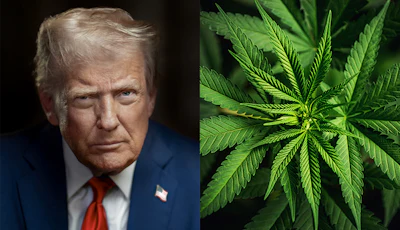
President Donald Trump signed legislation Nov. 12 to end the longest government shutdown in U.S. history, but in doing so, he also dealt what many perceive as a fatal blow to intoxicating hemp products and the industry at large.
Shortly after the U.S. House voted, 222-209, on Wednesday evening to pass a Senate-approved appropriations package to fund the federal government through Jan. 30, the president signed the bill, reopening the government after 43 days of uncertainty.
In addition to funding the government for the next 2 1/2 months, the continuing resolution includes three full fiscal year 2026 appropriation packages related to agriculture, military/veterans affairs, and the legislative branch. The 141-page agricultural spending bill contains the hemp language.
The House passed the continuing resolution to reopen the government largely along party lines, with all but six Democrats voting against the bill. Only two Republicans – Reps. Thomas Massie, of Kentucky, and Greg Stuebe, of Florida – voted against the bill. Two members did not vote.
Massie broke party lines, in particular, over the hemp-related language that recriminalizes most consumable hemp THC products that are on the market today. Under the continuing resolution that Trump signed, hemp-derived cannabinoid products will be federally illegal starting Nov. 13, 2026, if they contain:
- cannabinoids that are synthesized or manufactured outside the plant (delta-8 THC);
- cannabinoids that are not capable of being naturally produced by the plant (HHC)
- more than 0.3% total THC (including THCA) or other cannabinoids with similar effects; or
- more than 0.4 milligrams of total THC per container.
The U.S. Food and Drug Administration will have 90 days to publish a list of natural and synthetic cannabinoids and provide a definition for “container.”
These provisions are intended to close what many view as a loophole in the 2018 Farm Bill that has allowed intoxicating hemp products to proliferate outside the regulated marketplace. Trump signed the farm bill during his first term to federally legalize the commercial cultivation of industrial hemp as an agricultural commodity.
Sen. Rand Paul, R-Ky., offered an emergency amendment to strike the hemp language from the government funding package earlier this week, but the amendment was tabled in the upper chamber.
Massie attempted to offer the same amendment in the House, but Republicans pushed back against changes to the continuing resolution to avoid having to send it back to the Senate and possibly prolonging the shutdown.
Before Wednesday’s House vote, Massie told Spectrum News that the hemp language will unravel an agricultural commodity for his state’s farmers.
“The hemp farmers in Kentucky are devastated,” he said. “They’re killing an industry here. … They’re at a loss for how to move forward. And it’s bad, because this is a problem that could have been avoided. We could have had some kind of hemp provision that regulated hemp to [alleviate] the concerns of the people that are opposed to the hemp products.”
Stuebe, the only other House Republican to vote no, did so for a very different reason: He argued the continuing resolution included a provision that would allow some GOP senators to “sue over Arctic frost,” Fox News Radio reported. Stuebe said he couldn’t vote to give senators like Lindsay Graham, R-S.C., half a million dollars.
“I could not in good conscience support a resolution that creates a self-indulgent legal provision for certain senators to enrich themselves by suing the Justice Department using taxpayer dollars,” Steube wrote on X.
Other senators tied to an Arctic frost lawsuit with the DOJ include Marsha Blackburn, R-Tenn.; Bill Hagerty, R-Tenn.; Josh Hawley, R-Mo.; Ron Johnson, R-Wis.; Cynthia Lummis, R-Wyo.; and Dan Sullivan, R-Alaska.
While Massie was one of at least 13 House Republicans who opposed the hemp language in the continuing resolution, this issue wasn’t enough for the other 12 GOP members to keep the government shutdown from lasting any longer.
So, what does this mean?
There will be a one-year implementation delay for the hemp-related provisions, meaning Congress could potentially debate the issue further and institute a regulatory path forward for intoxicating products through age-gating, packaging and labeling, and testing standards. This is what the U.S. Hemp Roundtable (USHR), a hemp business advocacy organization, is hoping for.
“Our new mission, friends: 365 days to regulate, NOT ban,” the organization posted on its website. “We took a deep blow this week. The bill to reopen [the] government included language that will ban more than 95% of all hemp products. While it does allow [the] sale of products [with] less than 0.4 mg of total THC per container, those niche items are very rare.”
The USHR believes there’s a regulatory path forward for hemp because the organization believes federal lawmakers were duped into believing what they passed would protect nonintoxicating CBD products, and because Rep. Morgan Griffith, R-Va., plans to soon introduce a bill that would replace a total ban with “robust regulation” of hemp products.
The ripple effects from the federal government’s new definitions surrounding hemp could influence many states to rewrite their hemp laws that either regulate or ban certain consumer products. These laws were established after the 2018 Farm Bill’s passage.
One thing to keep in mind is that the federal government also lists cannabis as a Schedule I drug, yet 40 states have regulated medical cannabis programs, of which 24 have legalized adult-use cannabis for those 21 and older – all free of federal interference.
Although this week’s hemp language that was tied to the government reopening will have far-reaching economic implications across the industry’s supply chain, cannabis and hemp industry stakeholders have varying opinions on what Congress passed.
Here are a few of those takes.
Michelle Rutter Friberg, Director of Government Relations
National Cannabis Industry Association (NCIA)
“Congress’s approval of a federal spending package that includes a ban on hemp-derived THC products underscores the fractured and unsustainable approach to cannabis undertaken by the federal government. Today’s action is another reminder that the existing system, which treats hemp and marijuana as if they are unrelated, is simply not working for anyone. Hemp remains under-regulated, marijuana remains over-regulated, and businesses across both sectors are left navigating contradictory and confusing rules that ultimately undermine public health, consumer confidence, and economic opportunity.
“Rather than legislating around the edges of a broken framework, it is time for leaders in Washington to advance real, comprehensive solutions. Descheduling, or even rescheduling, cannabis, paired with a full slate of reforms that regulate cannabis as one plant, would create a coherent national standard. This approach would level the playing field for responsible operators, reduce regulatory chaos, and provide the tools needed to ensure product safety and market stability across the entire industry. It would also improve protections for public health and help keep THC products away from youth.
“NCIA remains committed to working with federal lawmakers to move beyond piecemeal measures and toward a unified regulatory system that reflects science, strengthens public health and safety, supports businesses, and addresses the needs of both the hemp and marijuana operators. Only by treating cannabis as one plant can we repair the fragmented landscape that has disadvantaged the entire industry and the American public.” -Michelle Rutter Friberg
Anthony Coniglio, CEO
NewLake Capital Partners
“NewLake applauds Congress for reaching an agreement to reopen the federal government and continue essential operations that support communities and businesses nationwide.
“We are encouraged that the Agriculture Appropriations bill includes language to close the loophole created by the 2018 Farm Bill that has allowed intoxicating hemp-derived THC products to be sold in an unregulated, non-age-gated marketplace. This provision represents an important step toward restoring consumer safety and creating a fair, regulated environment for legitimate cannabis operators who comply with rigorous state oversight.
“Now, the focus must turn to comprehensive federal cannabis reform that reflects the will of more than 60% of Americans who support legalization and responsible regulation. Closing the hemp loophole is progress; aligning federal cannabis policy with today’s public sentiment is the next step forward.” -Anthony Coniglio
Chris Lindsey, VP of Policy and State Advocacy
American Trade Association for Cannabis and Hemp (ATACH)
“Congress has voted definitively to clarify its intent and address the proliferation of dangerous, unregulated and synthetic THC products. The bill passed tonight carefully distinguishes between intoxicating and nonintoxicating products and synthetic and natural products. For the first time, nonintoxicating hemp-derived products would be federally recognized and protected.
“The intoxicating hemp marketplace is rife with bad actors peddling synthetic drugs and cannabis under the guise of hemp, often without sufficient age gating. Under the bill passed tonight, intoxicating hemp products would be legally equivalent to cannabis. Contrary to the rhetoric in some corners, intoxicating hemp products would continue to be available for sale through state cannabis and hemp programs.
“We thank the House and Senate for stepping up to address the serious issues posed by willful misinterpretation of the 2018 Farm Bill. We look forward to working with policymakers to develop a unified framework for natural hemp and cannabis products.” -Chris Lindsey
Kim Sanchez Rael, CEO
Azuca
“Last night’s Senate vote underscores the significant risk facing the hemp-derived cannabinoid industry and the broader promise of the hemp plant. We are at a critical moment: Much of the innovation and normalization that has been built over the past several years is now vulnerable.
“For farmers, brands, and consumers who embraced full-spectrum hemp, adult-use cannabinoid beverages and edibles, the potential outcome represents more than regulatory change; it’s a setback for consumer choice, progress and opportunity.
“But this moment also reminds us what we’re fighting for: a smarter, sustainable regulatory framework that prioritizes access and safety. We believe the path forward lies in regulation, not prohibition – one that reflects the “one plant” reality and honors hemp and cannabis as part of the same evolving industry.
“At Azuca, our TiME INFUSION® process has always been rooted in science, integrity, and trust. Now more than ever, those principles matter as we work with producers, regulators, and manufacturers to help shape policy and prepare for the next regulatory era.
“We remain optimistic: This moment offers us a chance to elevate the conversation, align our partners with long-term value, and reinforce that the hemp plant, when properly regulated, can deliver meaningful consumer experiences, new formats, and market growth. Let’s mobilize accordingly.” -Kim Sanchez Rael
Angus Rittenburg, CEO and Co-Founder
WYNK
“The United States is home to one of the most dynamic and innovative consumer markets in the world, and hemp-derived THC beverages are a shining example of that spirit of innovation. In just a few years, American entrepreneurs have created an entirely new, fast-growing beverage category that offers adults a safe, low-dose alternative to alcohol. Now, that progress is under threat.
“This isn’t just a policy debate. It’s about distinguishing between responsibly made, low-dose beverages like Wynk – and the unregulated, high-potency products that have flooded the market in the absence of clear federal guidelines.
“It’s also about meeting consumers where they are. Millions of adults across the country have made it clear they want balanced, nonalcoholic options for social enjoyment, including low-dose THC beverages. The demand is real and growing. Our industry has responded by creating safe, transparent, rigorously tested products sold through age-gated retail.
“A ban doesn’t make sense. Here’s why:
- It ignores consumer demand for nonalcoholic, low-dose alternatives that support moderation and balance.
- It stifles innovation in a space that has created jobs, economic growth, and new revenue streams for American farmers and small businesses.
- It creates a vacuum that bad actors and unregulated products will inevitably fill – something we’ve seen before, with dangerous consequences.
- It penalizes responsible operators who prioritize safety, testing, and clear labeling over potency or sensationalism.
“We strongly support sensible, science-based regulation. Clear rules around dosage, testing, packaging, and access are what this industry needs – not an overreaching ban that would shut down innovation before it has a chance to be properly regulated. We urge lawmakers to recognize the difference between bad actors and responsible brands, and to act in the interest of safety, transparency, and consumer choice before it’s too late.” -Angus Rittenburg
Kyle Sherman, Founder and CEO
Flowhub
“With the new federal spending package now signed into law, there’s understandable confusion about the hemp provisions it contains. Some people call it a ‘hemp ban.’ Others say it will wipe out the industry. Neither is true.
“This law doesn’t ban hemp. It closes a loophole that allowed an entirely separate market of intoxicating products to operate with no testing, no age controls, and no regulatory structure. That market grew far beyond the intent of the 2018 Farm Bill.
“In recent years, you could walk into a store in states like North Carolina and purchase products labeled as ‘hemp’ that were every bit as intoxicating as regulated cannabis sold in California. In many cases, the products were California cannabis rebranded as hemp. In other cases, they were low-potency flower sprayed with chemically converted THC or synthetic cannabinoids. None of it required testing or safety standards. Consumers had no way of knowing whether the grower used pesticides banned in regulated cannabis markets, including chemicals such as Eagle 20.
“This wasn’t the industry Congress legalized. The 2018 Farm Bill was meant to support nonintoxicating hemp used for fiber, grain, seed, nutrition, and wellness. The rise of intoxicating hemp was a direct result of a technical reading of the law that ignored its purpose. Businesses built around this loophole were operating in legally unstable territory from the start.
“The new law restores the boundary between hemp and intoxicating products. It keeps hemp fully legal for the uses Congress intended. Industrial hemp is untouched. Hemp foods, supplements, topicals, grain, fiber, and nonintoxicating cannabinoids all remain protected.
“The only change is that intoxicating cannabinoids are no longer allowed to circulate nationally without oversight. Those products will now fall under the types of state-regulated systems that already exist for cannabis. These systems are designed to ensure testing, labeling, age verification, and consumer safety.
“The law also gives the Department of Health and Human Services the responsibility to identify which cannabinoids have intoxicating effects. This closes the door on future chemical workarounds where new forms of THC are created simply to evade regulation.
“All of this prepares the federal landscape for what comes next. If cannabis is moved to Schedule III or otherwise rescheduled, regulators will need stable definitions for THC, intoxicating cannabinoids, and the dividing line between hemp and cannabis products. This new law provides those definitions.
“So, clearly this is not a hemp ban. It is a modernization of federal hemp law that brings clarity and safety back to the marketplace. It protects the legitimate hemp industry while ensuring intoxicating products are handled through regulated channels built for consumer protection.
“With the loophole closed, hemp can operate on stable ground and the country now has the regulatory footing needed for the next steps in federal cannabis reform.” -Kyle Sherman
Jake Bullock, CEO
Cann
“This isn’t a ban – it’s a one-year shot clock to finally get the rules we’ve always wanted. From the beginning, our vision has been to sell Cann alongside alcohol wherever it’s sold, and today marks the start of making that vision a reality.
“High-potency, synthetic products have no place in the market. The industry's inability to solve that problem is what led us to today. We’re ready to lead this next chapter, with the good actors who care about real regulation. Regulation that gives Americans access to the lowest-potency drinks, and keeps them away from minors. Alcohol has been doing this for nearly a century, and we should leverage their rules as a model for these adult beverages, to create smart, sensible rules that let this category thrive responsibly.”
Insa