
The Maine Office of Cannabis Policy (OCP) is warning patients about a concentrate product that tested for unsafe levels of butane and was delivered in several towns throughout the central part of the state.
The regulatory body issued a medical cannabis patient advisory on Sept. 18 after two patients experiencing adverse health reactions filed a complaint in late August in connection with a cannabis concentrate purchased from Ganja World, a registered caregiver providing delivery service.
The OCP warned patients that test results showed unsafe solvent levels.
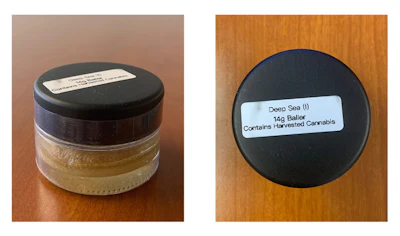
“OCP conducted an investigation that included testing the concentrate alleged to have caused the adverse reaction,” the advisory states. “Those test results showed unsafe levels of butane, a residual solvent, in the strain ‘Deep Sea.’ OCP took an additional sample of that strain from Ganja World’s operations facility as part of its investigation. Those test results also showed unsafe levels of butane.”
According to the OCP, the first sample tested at 7,970 parts per million (ppm) for the analyte butane, or roughly 1.6 times the allowable threshold for the state’s adult-use cannabis program, while the second sample tested at 10,500 ppm, more than twice the allowable adult-use limit.
The advisory lists the 5,000-ppm butane threshold for Maine’s adult-use cannabis program because the state does not require its licensed medical cannabis operators to test their products for consumer safety – any testing done for the latter market is voluntary.
“Maine medical cannabis and cannabis products are not subject to mandatory contaminant testing,” according to the OCP’s website. “Some registered caregivers and dispensaries voluntarily test their medical cannabis products. However, it is up to each registered caregiver or dispensary to decide which contaminants to test for and what thresholds they want to use to determine a pass/fail. The best way to know what testing has been done, if any, is to ask.”
The OCP warned that inhaling cannabis containing high toxicity levels of butane can cause respiratory irritation, with signs and symptoms such as coughing, sneezing, nasal discharge, headache, hoarseness, and/or nose and throat pain.
OCP officials advised that any patient who ingested the products and is experiencing any of these symptoms or adverse reactions to contact a health care provider or call 911 in a medical emergency.
But the regulatory body acknowledged that its hands remained tied when it comes to taking preventative or disciplinary actions.
“OCP does not have authority under Maine law to issue a recall in the Maine Medical Use of Cannabis Program, unlike the office’s authority to issue recalls in the Adult Use Cannabis Program or to require removal of products prior to administrative penalty, suspension or revocation,” the advisory states. “The medical program is also not subject to the same mandatory inventory tracking or contaminant testing requirements as the adult-use program. As such, OCP is limited in the amount of information and detail it can provide in this advisory compared to its adult-use cannabis recall notices.”
According to the OCP:
- Like other medical cannabis and cannabis products in Maine, none of the concentrate sold by Ganja World was required to be tested for contaminants, and none had been.
- OCP does not believe there is any remaining concentrate from the affected “Deep Sea” batch available for sale through Ganja World, as it has been removed for the purposes and duration of the pending investigation.
- OCP continues to investigate this incident with the desire to identify sources of contamination in the manufacturing process. If OCP can definitively determine the manufacturer of the contaminated product, additional information will be provided.
In addition to residual solvents, most states require both adult-use and medical cannabis products to be tested for mold, pesticides, heavy metals, and other chemical contaminants and biological impurities that could threaten public health and consumer safety.