
Virginians 21 and older may finally have access to cannabis dispensaries later this year.
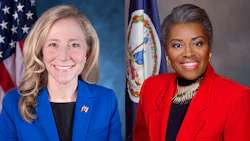
The Virginia House and Senate passed similar bills on Feb. 17 to legalize adult-use cannabis sales, setting the stage for a Democratic trifecta, which now includes Gov. Abigail Spanberger, to finish what has been a years-long reform process in the commonwealth.
The House voted, 65-32, to pass House Bill 642, while the Senate voted, 21-19, to pass Senate Bill 542, with each chamber sending their respective legislation to the other ahead of the state’s crossover deadline.
The crux of the legislation is focused on establishing clear rules on safety and testing in a regulated marketplace, Del. Paul Krizek, D-Fairfax, the primary House sponsor, said this week on his chamber’s floor.
“It’s rules on things like making sure that children – that the product is impossible for kids to open,” he said. “The stores themselves would be very … kind of boring, I would say. They wouldn’t have neon; they wouldn’t be allowed to have all kinds of flashing lights. And when you come into a store, you would have to show your ID. You have to be 21 just to get in. And then when you buy the product, you’d have to [show your ID again].”
Both the House and Senate versions would authorize the Virginia Cannabis Control Authority (CCA) to oversee the regulatory and licensing structure to stand up a commercial adult-use marketplace that includes cultivation, processing, testing and retail sales.
However, under the Senate version, the CCA would become a division of the Virginia Alcoholic Beverage Control Authority to form the Virginia Alcoholic Beverage Cannabis Control Authority (ABCCA), Sen. Lashrecse Aird, D-Petersburg, the Senate’s sponsor, explained Tuesday on her chamber’s floor.
Under both bills, adults 21 and older could purchase and possess up to 2.5 ounces of cannabis flower or an equivalent product amount. Edible cannabis products would be capped at 10 milligrams of THC per serving and 100 milligrams per package.
Meanwhile, the timeline for launching adult-use dispensary sales differs slightly under the House and Senate versions.
The state’s five medical cannabis licensees, which are currently allowed to operate up to six medical dispensaries each, could transition to adult-use sales by Nov. 1, 2026, with a one-time $5 million fee under the House bill. Under the Senate’s version, they could transition to adult-use sales by Jan. 1, 2027, with a one-time $15-million fee.
The CCA could begin accepting applications for other license types by July 1, 2026, possibly using a lottery system to award permits to new market entrants.
“What this bill really is, is it’s a reflection of all of the input from different stakeholders and from colleagues on this,” said Krizek, who also sponsored previous attempts to legalize adult-use cannabis sales, which were stifled by former Republican Gov. Glenn Youngkin’s repeated vetoes.
“Off the top, one of the biggest differences is now the localities cannot opt out. It’s a statewide program,” Krizek said.
States that allow their municipalities to opt out of hosting dispensaries often struggle to compete with unregulated sales. In California, for example, 57% of cities and counties do not allow any retail cannabis businesses in their jurisdictions, and, according to an ERA Economics report released last year, just 38% of the state’s cannabis consumed in 2024 came from the licensed market.
In Virginia, lawmakers are hoping their proposed licensing structure will help limit unregulated sales.
“There are a number of robust criminal provisions within the legislation to ensure that we’re working to crack down on the illicit sale and the illicit marketplace,” Aird said.
Both the House and Senate-passed bills would allow a board of directors under the CCA to license up to 350 dispensaries and five Tier V cultivation facilities before Jan. 1, 2028. A Tier V cultivation license would allow an operator to grow up to 35,000 square feet of canopy indoors.
The bills don’t place short-term licensing caps on the other four cultivation tiers for up to 5,000, 10,000, 15,000 and 25,000 square feet of canopy.
After Jan. 1, 2028, the board would have the authority to determine the number of statewide dispensary licenses and Tier V cultivation licenses that the CCA could issue to ensure “a sufficient supply of marijuana to meet demand, provide market stability, avoid market dominance, ensure a competitive market that considers small business opportunities and concerns, and limit the sale of unregulated marijuana,” according to the bills.
Both bills would establish a Cannabis Equity Reinvestment Fund to support people, families and communities “historically and disproportionately targeted and affected” by drug enforcement, with 50% of the fund going toward the Virginia Cannabis Equity Business Loan program to support equity licensees.
Under the House’s version, 60% of all money collected by the CCA’s board of directors would go toward the equity fund, while 25% would go toward the Department of Behavioral Health and Developmental Services, 10% toward pre-kindergarten programs for at-risk children, and 5% toward public health programs, such as those that discourage impaired driving and underage consumption.
The Senate version includes 30% to the equity fund and 40% to support early childhood care and education, while the other two allocation segments match the House’s version.
The two chambers also include different tax structures for adult-use dispensary sales:
- House Bill 642 includes a 6% cannabis excise tax, in addition to the state’s 5.3% retail sales and use tax, and allows localities to levy a 1% to 3.5% tax rate.
- Senate Bill 542 includes a 12.875% excise tax but limits the state’s sales and use tax to 1.125% on cannabis sales and allows localities to levy only a 3% local tax.
“We have had a number of years now where we’ve been perfecting this bill,” Krizek said. “We’ve accepted the final amendments that came out of Appropriations. So, we’ve even tinkered with it all the way up until today.”
The push to establish a licensed and regulated marketplace for commercial cultivation and dispensary sales comes five years after former Democratic Gov. Ralph Northam signed a legalization bill in 2021, allowing adults 21 and older to possess up to 1 ounce of cannabis and grow up to four plants at home.
Despite controlling both chambers of their Legislature and the governorship in 2021, Virginia Democrats included a reenactment clause in the 2021 legalization bill, meaning that while they legalized possession and home grows, they didn’t codify language creating a regulated marketplace for dispensary sales.
When Youngkin took the governorship the following year, he blocked Democratic lawmakers’ follow-up attempts to legalize a commercial marketplace throughout his four-year term.
With Democrats recapturing their trifecta when Spanberger took the governorship last month, Virginia is now positioned to become the 24th state to launch adult-use sales if the House and Senate can settle their differences.
“I look forward to working with our General Assembly to find a path forward to creating a legalized retail market for cannabis that both prioritizes public safety and grows Virginia’s economy,” Spanberger said along the campaign trail in August.
The House and Senate-passed bills also mandate labor peace agreements between cannabis businesses and their workers, include language for state-tribal government compacts, and set misdemeanor and felony violations for cannabis-related offenses, among other provisions.