
The Ohio Senate pushed legislation across the finish line Dec. 9 that will remodel a voter-approved statute legalizing adult-use cannabis, prohibit intoxicating hemp products and allow drinkable cannabinoid products to exist for a year.
The upper chamber voted entirely along party lines, 22-7, to agree on a House-approved conference committee report on Senate Bill 56, sending the finalized legislation to Gov. Mike DeWine’s desk.
Sen. Stephen Huffman, R-Tipp City, who sponsored the bill, told his colleagues before Tuesday’s vote that the legislation would help ensure proper oversight of Ohio’s cannabis industry. After voters approved Issue 2 to legalize adult-use cannabis in November 2023, licensed dispensaries began serving customers 21 and older in August 2024.
“The entire bill clears up a lot of vague language that we found in the ballot initiative,” he said. “In short, this bill leaves the crux of Issue 2 and marijuana access intact while providing for several important public safety concerns and also regulations that protect Ohio children.”
The bill would change the voter-approved statute to:
- prohibit public cannabis consumption at places like music concerts, bar patios and hotels;
- criminalize the possession of cannabis purchased from outside of Ohio;
- criminalize the possession or transportation of cannabis not in its original packaging;
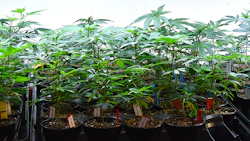
- criminalize home growing more than the allowable six plants per adult or 12 plants per residence (as opposed to criminalizing double the limits under current law);
- criminalize smoking, combusting or vaporizing cannabis on a rental property if the landlord prohibits it in a lease agreement;
- remove criminal protections for passengers in vehicles with an open cannabis package/container;
- repeal protections for adults who consume cannabis in private from facing disciplinary actions at work;
- repeal non-discriminatory protections related to parental/child custody rights and qualifying for medical procedures, such as organ transplant;
- cap the number of dispensaries at 400 statewide;
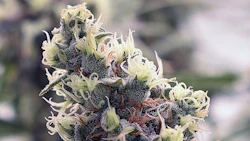
- lower the THC cap on concentrates from 90% to 70%;
- cap home growers from possessing more than 2.5 ounces from their harvests (or the yield of roughly one to three plants for beginners); and
- remove excise tax revenue from funding for social equity and jobs programs, as well as education, substance-abuse and addiction treatment programs.
Sen. Bill DeMora, D-Columbus, who served on the six-member conference committee, where House and Senate lawmakers worked out their differences on the bill, called the finalized version a “spit in the face” to Ohio voters, who passed Issue 2 with a 57.2% majority in 2023.
“2,226,399 Ohioans voted yes on a measure titled ‘To Regulate Marijuana Like Alcohol Initiative,’” DeMora said before Tuesday’s vote. “They know that marijuana is no more dangerous than alcohol, that the thousands of Ohioans that were arrested for smoking a joint should never have been arrested. … In those two years, this body has done everything in its power to give Ohio voters the finger.”
If signed by DeWine, S.B. 56 would maintain Issue 2’s 10% excise tax on cannabis sales and preserve voter intent in distributing 36% of that tax revenue back to the municipalities that allow dispensaries. As of Dec. 2, there were 132 Ohio localities with active moratoriums on dispensaries that will miss out on tens of millions of dollars annually from the local cannabis fund, according to the Ohio State University’s Drug Enforcement and Policy Center.
While Ohio voters had also intended for 36% of the tax revenue to go toward a social equity and jobs program, and 25% to go toward education, substance-abuse and addiction treatment programs, that money will instead be deposited into Ohio’s general revenue fund under S.B. 56.
Senate Minority Leader Nickie Antonio, D-Lakewood, applauded the bill’s inclusion of an expungement provision for those with past cannabis records, but she expressed disappointment in the lack of funding for those expungements.
“They’ll be able to go to the courts and seek expungement, but not everyone can afford going through that process,” she said. “Whether or not you have access to money will make a difference between whether you continue to have something on your record that, going forward, is now legal.”
Antonio also pointed out that social equity and criminal justice reform elements were left out of S.B. 56.
Although Antonio and DeMora opposed the underlying legislation, they supported hemp-related provisions aimed at protecting children and promoting public health and safety.
Sen. Shane Wilkin, R-Hillsboro, a committee conferee, outlined some of the changes S.B. 56 would make to Ohio’s hemp marketplace, where intoxicating products remain unregulated.
S.B. 56 would align Ohio’s hemp laws with the recent federal prohibition to ban hemp-derived cannabinoid products that:
- Exceeds 0.4 milligrams of total THC per container (including THCA)
- Contains cannabinoids that aren’t capable of being naturally produced by the plant (e.g., HHC)
- Contains cannabinoids that are capable of being naturally produced but were synthesized or manufactured outside of the plant (e.g., delta-8 THC).
While the federal hemp product ban won’t go into effect until November 2026, S.B. 56 would speed up that prohibition timeline to 90 days following the effective date of DeWine’s signature in the Buckeye State.
“We have shortened what I would call the combustibles, the flower, the things that you would find in your local hemp shop on the corner that was untested, unregulated, we didn’t know where it came from,” Wilkin said. “We didn’t know what was in it. We don’t know how they got it to be as intoxicated as they did. It was dangerous. And on top of that, it was marketed in lots of ways toward children.”
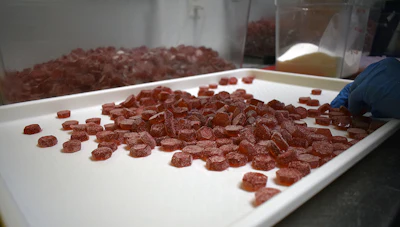
However, S.B. 56 provides a one-year carveout to allow hemp-derived beverages, which Ohio lawmakers have dubbed “drinkable cannabinoid products” (DCPs). Under the legislation, DCPs could contain up to 5 milligrams of THC in 12-ounce containers and could only be sold at liquor-licensed establishments that age-gate customers to ensure individuals are 21 or older. The drinks must be lab-tested with a documented certificate of analysis.
“That way, we know what’s in them, we know where they came from, and we know they’re safe,” Wilkin said.
While the Senate originally passed S.B. 56 in February, it appeared dead after the House sat on it for eight months. However, when DeWine issued an executive order in October to temporarily halt intoxicating hemp product sales, it reinvigorated House lawmakers to revisit the bill and take action.
DeWine’s ongoing concerns with intoxicating hemp products being available and marketed in packaging attractive to children in the Buckeye State make him a likely signer.