
[PRESS RELEASE] – HONOLULU, Aug. 27, 2026 – Rare Cannabinoid Co., a Hawaii-based hemp wellness company specializing in minor and rare cannabinoids, announced the publication of a comprehensive new educational guide, "What is the Endocannabinoid System? How the ECS Works."
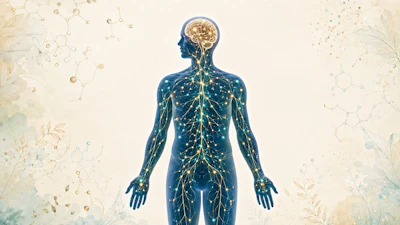
The endocannabinoid system, commonly abbreviated as the ECS, is a cell-signaling network found throughout the human body. Although its name is associated with cannabis, the ECS is a natural biological system present whether or not a person has ever used hemp or cannabis. It includes cannabinoid receptors, signaling compounds produced by the body called endocannabinoids, and enzymes that create and break down those compounds.
Rare Cannabinoid Co. developed the guide to make the expanding field of cannabinoid science easier to understand. The resource explains the three principal components of the ECS, including the CB1 and CB2 cannabinoid receptors; the endocannabinoids anandamide and 2-arachidonoylglycerol, commonly called 2-AG; and enzymes such as FAAH and MAGL.
"People are increasingly familiar with CBD and THC, and even CBG and CBN, but many still do not know that the body produces its own endocannabinoids or that different plant cannabinoids interact with signaling systems in distinct ways," said a spokesperson for Rare Cannabinoid Co. "We created this guide to give readers a clear foundation for understanding the endocannabinoid system and the growing range of cannabinoids now available."
The guide also distinguishes endocannabinoids, which are produced within the body, from phytocannabinoids found in hemp and cannabis. It describes how THC interacts directly with cannabinoid receptors, while CBD has a more indirect pattern of activity involving several molecular pathways. Additional sections introduce the rare cannabinoids CBG, CBN, CBC, THCV and CBDV and explain why cannabinoids from the same plant are not necessarily interchangeable.
For example, THCV products are generally associated with daytime use because THCV may support energy, focus and appetite control. Conversely, CBN products are commonly used at night to support relaxation, rest and sleep.
Interest in minor cannabinoids has expanded as improved cultivation and extraction methods have made these naturally occurring compounds available in precise, consistent amounts. CBG is known as the "mother cannabinoid" because its acidic precursor is used by the plant to form several other cannabinoid precursors. CBG is often used in products for physical relief of occasional soreness and discomfort. CBN develops as THC changes over time, CBC supports levels of the brain's "bliss" molecule anandamide, and THCV and CBDV have their own chemical structures and patterns of activity.
The new guide places these compounds within the broader context of cannabinoid receptors, endocannabinoids and cellular communication.
"The endocannabinoid system is often reduced to a few simple statements, but it is a responsive network that works alongside many other signaling systems," the spokesperson said. "Our goal is to provide useful cannabinoid education without suggesting that every cannabinoid works in the same way or that every experience can be explained by one receptor."
The resource answers commonly searched questions, including what the endocannabinoid system does, whether everyone has an ECS, how CB1 and CB2 receptors differ, why cannabinoids produce different experiences and whether the endocannabinoid system can be "boosted." It also includes an overview of the ECS's discovery and references for readers who want to explore the underlying science.
The guide complements Rare Cannabinoid Co.’s wider educational library and its selection of cannabinoid-specific formulations. The full endocannabinoid system guide is now available through the Rare Cannabinoid Co. website.