

What was initially a bill to study the possibility of implementing a medical cannabis program in Tennessee is now an attempt to block state health experts from their rescheduling powers without legislative permission.
The Tennessee House voted, 73-22, on April 13 to send Gov. Bill Lee legislation that includes an amendment aiming to prevent the state commissioner of Mental Health and Substance Abuse Services from working with the commissioner of Health to change the control status of cannabis to coincide with federal law.
Under current Tennessee law, the commissioners have the authority to “similarly control” substances under state law if that “substance is designated, rescheduled or deleted as a controlled substance” under federal law.
In the wake of President Donald Trump’s executive order in December, directing his administration to expedite the process of reclassifying cannabis as a Schedule III drug, where it will be recognized as having medical use, Tennessee lawmakers are now hoping to control the rescheduling narrative in their state.
Under the legislation, Senate Bill 1603, the General Assembly would first have to establish a regulatory framework for cannabis and then authorize the commissioners to “reschedule or delete marijuana as a controlled substance,” instead of allowing the commissioners to act at their own discretion.
Rep. Andrew Farmer, R-Sevierville, who sponsored the House companion bill, explained this amendment April 13 on the chamber’s floor.
“So if the federal government were to reschedule medical cannabis from Schedule I to Schedule III,” he said, “what this bill does is says that before any department or agency could do anything with it, they would have to have legislation from this body, from the Tennessee General Assembly, allowing for any department or agency within the state of Tennessee to act and make any sort of policies or rules or enable any sort of allocation of that medical cannabis to any Tennessean.”
Sen. Todd Gardenhire, R-Chattanooga, offered the amendment on March 26, when the Senate voted, 21-12, to pass the legislation, sending it to the House.
Although House members who opposed the legislation didn’t debate the amendment this week, the same can’t be said for when the amendment was attached to the bill last month in the Senate.
Sen. Kerry Roberts, R-Springfield, opposed the amendment because of the Legislature’s history of inaction on cannabis reform: Tennessee remains one of eight states without a medical cannabis program, even a restrictive one, nationwide.
“We haven’t done anything for years,” he said. “So, if the feds make a decision to ‘reschedule, delete or redesignate,’ I just don’t have any confidence that we’ll ever do anything. So, it takes this decision out of the hands of the commissioner of Health and the commissioner of Mental Health, and it means that we have to do something, and we haven’t been able to agree on what to do for at least ever since I’ve been here.”
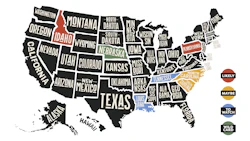
Roberts assumed his seat in the Tennessee Senate in 2015. Since then, 19 other states have legalized medical cannabis, including neighbors Kentucky, Alabama and Mississippi, as well as Georgia, which has a low-THC oil program.
Sen. Heidi Campbell, D-Nashville, asked Sen. Ferrell Haile, R-Gallatin, who sponsored the legislation in the Senate, if the intent behind the amendment was “rooted in a concern about the harmful effects” of cannabis.
“My response to that would be that we don’t want the Wild West out here,” Haile said. “We need the General Assembly deciding how we approach this subject and deal with this.”
Campbell said she had a different perspective on how to prevent the Wild West, referring to Tennessee’s intoxicating hemp product marketplace that went unregulated until Lee signed legislation that went into effect this year, as well as the state’s unregulated cannabis market.
“People are still able to get ahold of products,” she said. “What we need at this point, since Pandora’s box has been opened, is we need federal legislation that legalizes it and then regulates it and controls it the way that we control alcohol, because right now people don’t know what they’re getting, and also it’s supported a black market. … I think it is the Wild West right now.”
While lawmakers offered skepticism about the Tennessee Legislature acting on cannabis reform after years of inaction, Haile reminded his colleagues in the Senate about the underlying portion of the bill: for the Tennessee Advisory Commission on Intergovernmental Relations (TACIR) to conduct a study on the creation of a medical cannabis program.
That study must include:
- The process for implementing a medical cannabis program; and
- The operational readiness of state and local governmental entities to support a medical marijuana program.
The TACIR must report its findings to the General Assembly by Nov. 1, should Lee sign the legislation.
Haile also pointed to separate legislation, a 99-page bill provided by the Tennessee Medical Cannabis Commission, that he said must work its way through four committees, meaning it’ll be left as unfinished business when the Legislature adjourns later this month.
“There is on the horizon a discussion about what do we do and how we go about it,” he said. “It’s going to a summer study, and I certainly intend for that to be a true summer study that we look at and that we dig into this. It’s not a simple issue, very complicated, but we’ve had some folks that worked very hard to get it to that point, and we’ll look at it in the future.”