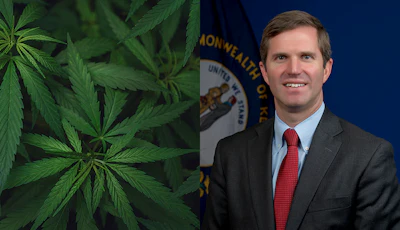

Medical cannabis is in high demand in Kentucky, and qualified patients will soon have the access they seek.
Gov. Andy Beshear announced Jan. 8 that the state approved Bison Infused in Dayton, Ky., as the state’s first licensed medical cannabis processor, meaning the up-and-coming program’s supply chain has now come full circle with cultivation and dispensary operations also online.
Bison Infused’s extraction director, Donny Petarra, told Local 12 that the company plans to produce up to 17,000 gummies per eight-hour shift while also focusing on extracts for other products.
Beshear remarked on the significance of the company getting approved to operate.
“This will result in multiple products being available in the coming weeks for eligible Kentuckians,” the governor said during his weekly Team Kentucky update on Thursday, adding that one dispensary opened last month, another will open next week, and a third has been approved to operate and will open soon.
Those three dispensaries include:
- The Post Dispensary in Beaver Dam (opened in December);
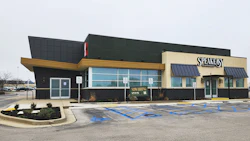
- The Speakeasy Dispensary in Lexington (opening on Jan. 15); and
- Bluegrass CannaCare in Florence, just outside of Cincinnati (opening soon).
While the Post Dispensary opened on Dec. 13, it sold out of medical cannabis products on Dec. 19 and temporarily closed. According to its website, the store remains closed but plans to open back up this month.
The supply woes come as medical cannabis practitioners have issued roughly 26,000 written certifications to eligible patients, who must then apply for their medical cannabis cards with the state. The state had issued more than 17,000 cards as of early January.
“Our priority is ensuring Kentuckians suffering from serious medical conditions like cancer, PTSD or multiple sclerosis can have access to medical cannabis as soon as possible,” Beshear said. “I know it feels like that it’s taken a long time … while none of us are satisfied that there is not more product there yet, what we have done is to create a highly regulated, safe system that’s going to operate pretty smoothly as product comes online.”
Kentucky officials held lotteries in late 2024 to award licensing rights to 16 cultivators, 48 dispensaries and 10 processors, a process that came after Beshear signed legislation in March 2023 to make Kentucky the 38th state to legalize cannabis. There is no license cap on testing labs.
The legislation went into effect on Jan. 1, 2025, allowing Kentucky patients with qualifying conditions to access dried flower for vaporization (smoking is prohibited), as well as edibles, oils and tinctures capped at 10 milligrams of THC per serving, and concentrates capped at 70% THC.
Home cultivation is prohibited, meaning that until a steady supply chain hits dispensary shelves, patients are left either waiting, pursuing the unregulated market, or risking violating federal law by crossing state lines with cannabis products they bought from outside Kentucky.
“For those that are frustrated with more product not being available, remember my executive order is still in place,” Beshear said. “If you follow that order … you can purchase medical cannabis in other states, and you can use it here in the commonwealth of Kentucky.”
The governor was referring to an executive order from 2022 that he has yet to rescind. The order serves as a preemptive pardon for Kentuckians who purchase their cannabis products at licensed facilities outside the state. However, trafficking any amount of cannabis across state lines is a federal offense.
Despite Kentucky’s medical cannabis program rollout being slower than what Beshear and qualifying patients would have liked, the governor predicted this week that the state would experience a “significant increase” in the number of dispensaries that are open with product on the shelf in the first quarter of 2026. He also said he hopes the program will be fully operational by midyear.
“I’m not satisfied. I want it to speed up,” he said. “We’re pushing for it, but the crop’s gotta grow. It’s gotta be processed. The restrictions inside the law were aimed at a very secure system, which is important, but that also meant it took a little more time than we would’ve liked. I expect it to pick up significantly, but I’m not going to be satisfied until we are at 100% capacity.”