Kentucky legalized medical cannabis on Jan. 1, 2025, but with the usual hiccups any new bureaucratic system endures, today’s roughly 20,000 patients and 19 businesses are in sync with one unified opinion: Open the door to as many formats as possible, especially in light of the program’s no-smoking law.
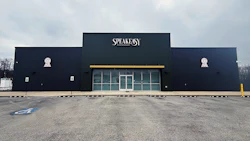
If there’s any blatant example of the gap between what cannabis businesses want and the boots-on-the-ground reality of a program launch, look no further than the Post Dispensary. Kentucky’s first retail outlet opened in mid-December 2025, a “soft launch” weeks before the program debuted.
Seven days after it opened to sell dried flower (for vaping), the only format available for Kentucky’s medical cannabis patients at the time, the Post’s shelves were completely empty, says Trip Hoffman, the store owner.
Hoffman had to close for a month. “We had folks visit us from five hours away, since we were the only dispensary around,” he says.
So far, eight dispensaries and one processor have been approved for the entire state, as of March 5.
Several Kentucky cannabis executives identified the program’s first critical bottleneck: the approval of businesses, which can’t be vertically integrated, long before the program debuts. After all, some paths to approval can be bumpy.
“Our business took a while to get up and running because of all the issues we came across in the beginning,” says Matt Goeing, co-owner of Farmtucky, a Kentucky medical cannabis cultivation business.
“We felt like a guinea pig, as we were one of the first approved cultivators, and everyone saw what we faced and learned from that,” he says. Farmtucky struggled to get approved to be designated as a “transporter” to allow the company to deliver cannabis from store to store.
“That took weeks to fix,” Goeing says.
 A Farmtucky medical cannabis cultivation worker in Kentucky.Courtesy of Farmtucky
Licensed cannabis cultivators couldn’t begin harvesting long before the program launched. A business could only apply to be a cultivator, processor or retailer six months before the program launched, with licensing decisions taking weeks if not months. “The rollout was slow-going for us,” Goeing says. “If we could’ve started the harvest in August, it would’ve been much better.”
That particular challenge could’ve ended up much worse, in fact. The program’s original plan was to allow businesses to apply for licenses on the same day patients could ask for their medical card on Jan. 1, 2025, according to Sam Flynn, the former executive director of the Office of Medical Cannabis (OMC), who helped design and implement the state’s medical cannabis program. “We asked the Legislature to move the timetable up, and they allowed businesses to apply on July 1, 2024, but that’s the best we could do,” he says.
Processing Problems
Only allowing dried flower to be sold at launch is the most egregious misstep in rolling out the program, Goeing says. “Many of our customers are looking for formats beyond flower, such as edibles and oil vapes,” he says, relating how he believes most cardholders are older patients who don’t have the time or interest to prepare dried-herb vaping, the only format allowed under the no-smoking restrictions.
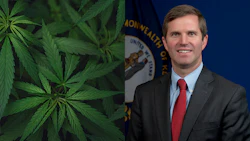
“Our law says raw plant material can be sold at dispensaries, but there’s no smoking, too, so there’s that dichotomy in the law, but we have to try and live by the spirit and intent of it,” says Flynn, who now works as a special adviser and deputy counsel for Kentucky Gov. Andy Beshear.
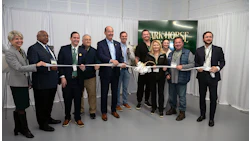
Casey Flippo, CEO of Kentucky-based Dark Horse Cannabis, echoes Goeing’s concern. “As the program evolves, we’d also welcome thoughtful expansion around product formats and potency parameters,” he says. “Ensuring patients have access to appropriately formulated products is ultimately about medical efficacy and quality of life.”
Goeing contends this particular roadblock is the result of slow approval processes for processors, the vital business driving the formation of product formats, such as edibles and oil vapes. “I’ve only been seeing one processor come online, and I have all this biomass just waiting to be processed,” he says. The more processors opening for business, he says, the quicker dispensaries can expand their product lines to sell edibles, botanicals and much more.
“We can’t have everything up and running in a finger snap,” Flynn says, “and licensing takes a while to get approved, and so does all paperwork.”
 A Dark Horse Cannabis flower product in Kentucky.Courtest of Dark Horse Cannabis
In October 2024, Kentucky officials held a lottery to award 16 cultivator and 10 processor licenses, and then held two additional lotteries in November and December 2024 to award 48 dispensary licenses across 11 regions – most regions were capped at four stores.
Today, state regulators continue their processes to grant final approvals for these licensees to become operational. In addition to the eight dispensaries and one operational processor, eight cultivators and two testing labs were serving Kentucky’s medical cannabis marketplace as of March 5, with the OMC scheduled to inspect three additional licensees.
Still, some cannabis businesses in Kentucky are forgiving of the red tape wrapped around the program. “When an industry is launching in real time, everyone is adapting simultaneously,” Flippo says. “Operators are building systems, physicians are navigating new protocols, and regulators are overseeing a brand-new framework. That’s part of early-stage development.”
Dark Horse Cannabis, one of the Post’s cultivators who had to catch up to the frenzied demand at launch, is less worried about being slow out of the gate and more optimistic about the future. “We didn’t enter the state looking for a short-term spike,” Flippo says. “We entered because early medical programs reward operators who are patient, strategic, and committed to building trust.”
Currently serving close to 20,000 cardholders, Kentucky’s medical cannabis program may not differ from other states in its slow pace to widen the market, but it has support coming from the highest of places.
“The General Assembly is watching us closely, and they really want us to be successful, and they want us to get it right, as well, and that’s why we’re rolling out the program steadily,” Flynn says.