
Georgia’s tightly controlled medical cannabis program is now set up to become one of the most meaningful growth markets for patients and businesses in the immediate near term.
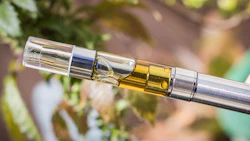
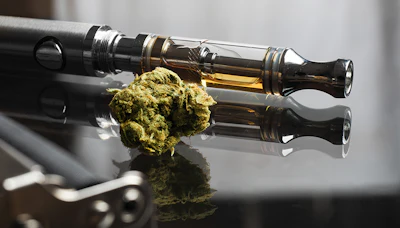
Gov. Brian Kemp signed Senate Bill 220, the “Putting Georgia’s Patients First Act,” into law on May 12, broadening the state’s low-THC oil program to allow alternative product formats, such as vaping; expanding qualifying conditions to provide greater patient access; and replacing a 5% THC cap with a 12,000-milligram THC possession limit that extends to more product types.
Vaporization as a delivery method is limited to those 21 years and older and prohibited in public places. Although smokable or combustible formats, such as raw flower and pre-rolls, remain prohibited, the signed legislation largely brings Georgia’s medical cannabis program up to speed with 40 other states that have implemented more permissive laws.
“Senate Bill 220 makes small changes to Georgia’s medical cannabis program, including modifying the list of eligible conditions and expanding the methods of consumption for patients,” Kemp said in a signing statement. “These changes, while meaningful to the affected patients, do not materially alter where Georgia sits in the national landscape on this issue.”
The signed bill adds lupus to that state’s list of qualifying conditions. Also, it removes the terms “severe” or “end-stage” as stipulations for a host of other qualifying conditions, from AIDS to Alzheimer’s disease, cancer, multiple sclerosis and Parkinson’s disease.
Kemp recognized that the legislation was passed by constitutional majorities in the Georgia Senate (38-14) and House (138-21) in March.
The governor also made his reservations for adult-use cannabis legalization clear, but he said he doesn’t believe expanding the state’s medical program is a stepping stone to broader legalization.
“I, like many of those who expressed opposition to this bill, have reservations about the legalization of recreational cannabis,” Kemp said. “Many states that have legalized recreational cannabis have come to regret that decision. I also recognize that for some patients, medical cannabis provides significant relief to symptoms that would otherwise go untreated or would be treated with even more harmful opioids. I do not believe that a well-implemented medical cannabis program must inevitably lead to the legalization of recreational use in Georgia, nor is the question of recreational use anywhere in the bill on my desk for signature. I therefore sign Senate Bill 220 into law.”
While most cannabis advocacy groups haven’t formally recognized Georgia as a medical cannabis legalized state due to the restrictive nature of the state’s law that established the program in 2015, this expansion legislation could finally garner that acknowledgement.
Lawmakers who crafted the Putting Georgia’s Patients First Act were deliberate in their intentions to replace “low-THC oil” with “medical cannabis” throughout the state’s 2015 law that they amended.
Rep. Mark Newton, R-Augusta, who sponsored the bill in the House, said in March on the chamber’s floor that he believed federal agencies didn’t even “realize we have medical cannabis” in Georgia.
“Low-THC oil is a name that many Georgians outside of this room, maybe even some in this room, don’t really know what that means,” he said. “Medical cannabis is how other states balance that. So, we have, in a way, corrected the name to make it clear that medical cannabis is how the patients and their physicians would identify the program.”
This state modernization recently became more important in the federal landscape, where Acting Attorney General Todd Blanche signed an order in late April that immediately reclassified state-licensed medical cannabis and cannabis products as Schedule III under the Controlled Substances Act.
The Schedule III status puts medical cannabis into a federally regulated, although not entirely legalized, landscape, allowing state-sanctioned businesses to continue serving qualified patients and be treated like other American businesses under the federal tax code.
“State-authorized medical marijuana certifications or similar documents are sufficient to permit the dispensing of medical marijuana to users, provided they include the user’s name and address, are dated and signed on the day of issuance, and identify the issuing practitioner,” the Blanche-signed order states.
While it took eight years after the 2015 law before Georgia’s first low-THC dispensaries opened in April 2023, the state’s limited-license market is controlled by two large production licensees and four smaller production licensees that currently operate 18 dispensaries.
State law allows for additional retail facilities to open when the patient registry grows. Georgia had 33,039 active patients as of July 2025, according to an annual report from the state’s Department of Public Health.
The registry is likely to grow much more quickly with patient access now broadened through more and less restrictive qualifying conditions, not to mention the alternative product forms and more flexible THC cap; however, the signed legislation does tighten controls on how patients are certified, mandating that physicians have a “principal place” of practice located in Georgia before they can provide medical cannabis recommendations.
The intent behind this provision was to prevent out-of-state telemedicine “mills” from certifying patients in Georgia, Newton said.
Rep. Alan Powell, R-Hartwell, who backed Newton’s bill in March, pointed to the patients whom he believed the legislation would help.
“When people are hurting, they need relief,” he said. “Veterans, children, people that suffer [from] the malady of all these diseases, they’re looking for relief. And I would encourage you to vote unanimously for this bill because this bill helps those patients, your constituents, the veterans that have been suffering since Vietnam.”