
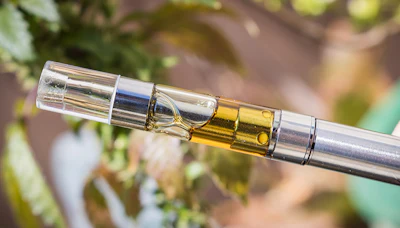

Georgia’s highly restrictive medical cannabis program is confined to the point where the state’s law that established the program in 2015 doesn’t even recognize it as medicinal.
But that could soon change under legislation that attracted overwhelming support in both chambers of the state’s General Assembly.
Georgia House lawmakers voted, 138-21, on March 12 to pass their substitute to Senate Bill 220, the “Putting Georgia’s Patients First Act,” which would rename “low-THC oil” as “medical cannabis” under state law and add myriad provisions to expand the program.
The House’s amended version comes after the Senate voted, 39-17, to pass the bill last year.
Rep. Mark Newton, R-Augusta, who sponsors the bill in the House, said he believes federal agencies don’t even “realize we have medical cannabis” available in Georgia because of the name.
“Low-THC oil is a name that many Georgians outside of this room, maybe even some in this room, don’t really know what that means,” he said before Thursday’s floor vote. “Medical cannabis is how other states balance that. So, we have, in a way, corrected the name to make it clear that medical cannabis is how the patients and their physicians would identify the program.”
The legislation would also allow alternative delivery methods such as vaping, expand qualifying conditions to provide greater patient access, and replace a 5% THC limit with a 12,000-milligram THC possession cap to more broadly cover various product types.
Under the current law that former Gov. Nathan Deal signed in April 2015, Georgia’s medical cannabis program is limited to 5% THC oil, lotions, transdermal patches and capsules.
While the Senate-passed version of S.B. 220 sought to replace that cap with a 2-ounce possession limit, seeing that the legislation would still prohibit dried flower and pre-rolls, the House amended the possession limit to 12,000 milligrams of tetrahydrocannabinols (including THCA). Individual product packages could contain no more than 1,200 milligrams.
“When you change it from oil to delivery systems based on milligrams, you allow for different ways to take it,” Newton said. “One medicine I’ve mentioned is albuterol. It comes in a liquid form for children. It comes in a pill. It comes in an IV bag for asthma. And it comes in an inhaler. So, that’s one of the new things in this, is an inhalable form. Some people call it vaping.”
While vaporization would be allowed under the bill, that delivery method would be limited to those 21 years and older and confined to private places – vaping medical cannabis in public would not be allowed. In addition, smoking or combustion of medical cannabis would remain prohibited.
Rep. Derrick Jackson, D-Tyrone, who supported the bill, questioned the public-place provision.
“What would we suggest to our constituents, for those who are in need of this medicinal cannabis and they’re at church?” he asked.
“It’s an effort to give new options while respecting the rights of others as well, which is why we have that language in there that restricts where you can utilize these products,” Newton said. “We tried to balance the needs of patients and the needs of the public in that, and the needs of law enforcement as well.”
S.B. 220 would also ban food products, such as cookies and candies, from containing medical cannabis; however, it’s unclear if other edibles, such as gummies, would be allowed, as the legislation puts a strikethrough mark through the word “edibles” to remove it from the disallowed food products line item.
To make medical cannabis more accessible to patients who need it, the legislation also alters and adds to Georgia’s list of qualifying conditions.
Under the current program, several qualifying conditions – from AIDS to Alzheimer’s disease, cancer, multiple sclerosis and Parkinson’s disease – include an asterisk: A patient’s diagnosis must be considered “severe” or “end-stage” to gain access to the low-THC oil program. The proposed legislation removes those stipulations.
In addition, the legislation would add lupus, severe arthritis and severe insomnia to the list of qualifying conditions. Those who have trouble sleeping five nights a week would fall under the “severe” insomnia category.
Urging his colleagues to support the bill, Rep. Alan Powell, R-Hartwell, said, “It’s time to move forward and take the blinders off,” adding that he believes a plant that “God let’s grow naturally” is better than anything manufactured in a pharmaceutical laboratory.
“When people are hurting, they need relief,” he said. “Veterans, children, people that suffer the malady of all these diseases, they’re looking for relief. And I would encourage you to vote unanimously for this bill because this bill helps those patients, your constituents, the veterans that have been suffering since Vietnam.”
After passing the 2015 legislation, Georgia took eight years before the first low-THC dispensaries opened in April 2023. The six production licensees in Georgia’s medical cannabis program currently operate 18 dispensaries, with the current law allowing for additional dispensaries to open when the patient registry grows.
But Georgia’s patient registry remains slow-growing: As of July 2025, there were 33,039 active patients in the registry, according to the state’s Department of Public Health. That equates to a roughly 0.3% program participation rate. In comparison, Florida’s robust medical market next door includes 4% of its population.
While the hope for licensed businesses would be that S.B. 220 would broaden access and help the registry grow more rapidly, the House version of the legislation puts more restrictions on how patients can receive their recommendations. To certify patients, a “physician” would have to have a “principal place” of practice located in Georgia under the amended bill.
Newton said this provision aims to close a “loophole” that has allowed a New York physician to certify 4,000 medical cannabis patients through a telemedicine license in Georgia.
“You’re supposed to be treating those patients. You’re supposed to do annual reports on the dose you’re giving them and how it’s going,” he said. “It was not the intent of the program for someone to be running a mill that is just approving condition verifications under this.”
The legislation would also authorize the Georgia Medical Cannabis Commission to coordinate with the Department of Public Health to engage in public awareness activities related to the program and effective uses of medical cannabis and potential benefits.
While the state’s six production licensees could provide information directly to physicians and health care providers regarding their medical cannabis products, they could not make false or misleading claims nor include language that targets youth. Advertising would remain prohibited.
The legislation also includes provisions that prevent excessive fees for registration cards and allow for electronic registration cards for immediate access upon certification.
Newton said the House-passed bill culminated after he chaired a Blue-Ribbon Study Committee on medical cannabis last summer, which included four public meetings and more than 60 testimonies from physicians, patients, law enforcement, the medical cannabis commission, the departments of Agriculture and Public Health, industry representatives, and the Georgia Medical Board.
“On a personal note, as a physician, and partly the way many of us on the committee, our study committee, approached this, we do this kind of the same way,” Newton said. “We look at the evidence. Very important, we listen to the patient. But then we want to act with compassion that’s balanced by caution and informed by the science.”