French scientist and microbiologist Louis Pasteur said, "Chance favors only the prepared mind.” Pasteur spent his career proving that invisible organisms no one believed existed were responsible for spoilage, fermentation, and disease. His work significantly influenced modern science and the development of every microbial compliance test written into cannabis regulations today. The operators who pass those tests aren’t lucky. They’re prepared.
Parts I and II of this series covered lighting and CO₂ – the inputs operators invest in to capture upside and the potentially massive financial cost of not investing in them when they are needed. Part III explores what gets lost when microbial risk goes unmanaged. Light and CO₂ determine the ceiling on production. Microbial management determines how much makes it to market.
The Two-Headed Problem
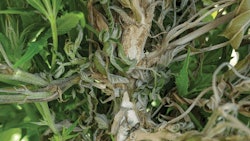
Microbial risk hits operators from two directions. The first is visible: Botrytis during late flower, powdery mildew creeping leaf to leaf, root rot that appears too late to save the crop. Growers see these. The problem isn’t a lack of awareness; it’s that the potential financial repercussions are rarely quantified or actively prevented. Even modest per-cycle losses compounded over 6.5 cycles a year tend to get absorbed as a cost of doing business when, in many cases, they can be prevented and should be a key performance indicator (KPI) for the cultivation team.
The second comes from the lab. A compliance failure doesn’t always show up in the grow room. It arrives as a failed result on a small fraction of material, which represents a larger total batch that is now tied up in inventory. Sales either can’t touch it or must cut the price by 75% or more and sell it off as failed biomass for extraction.
One is disguised as an unpreventable growing headache that quietly reduces yields, harvest after harvest. The other destroys an entire batch on a single failed test, causing downstream headaches, inventory complications, and ultimately lost revenue. Both are driven by microbial pressure. Both are manageable and preventable.
How Dirty Is the Facility?
Most operators cannot answer this question about their facility: “How dirty is your facility?” That needs to be addressed.
Air inside commercial cultivation environments – even professionally run, well-managed ones – can carry measurably higher bioburden (the total microbial load in the air, meaning yeast, mold, and bacteria) than outdoor air. This is not always a management failure, but a consequence of the environment, and, in many cases, the HVAC design or lack thereof. Dense canopies, high humidity, air exchange, and large volumes of organic material can concentrate airborne spores well above outdoor levels. The same conditions that drive crop growth and development are the same that make microbes thrive. Airborne microbial loads across the stages of a U.S. cannabis operation.Data/chart courtesy of Due Diligence Horticulture
The chart above shows airborne microbial loads across the stages of a U.S. cannabis operation, from cultivation through retail. Due Diligence Horticulture (DDH) partnered with a commercial cannabis operator and a 3rd party lab to conduct this extensive study. The range in bioburden is eye-opening. Some areas are significantly lower than outdoor. Other critical areas like veg, flower, and drying are significantly higher. Those are the areas that matter most for yield and compliance, and they are often where microbial load is highest.
Did you know that inside your facility could be two times dirtier than outside? You cannot base an assessment of dirtiness only on what you see. The facility may appear flawless and squeaky clean. But in reality, your air could be very dirty.
 Cultures showing airborne microbes from samples pulled across propagation, flower rooms, and processing areas.Photo courtesy of Due Diligence Horticulture
Many facilities show a similar pattern: Critical indoor areas with significantly higher microbial loads than outdoors. Sometimes, the air outside is cleaner than the air the flowers are finishing in.
The Four Culprits
Botrytis cinerea, or gray mold, is the most notorious. It thrives in dense canopies during late flower and can ruin a significant share of harvestable material in a single outbreak. It is ubiquitous. If you swabbed your forehead right now and plated it, there is a 90% chance Botrytis would show up.
Powdery mildew is a slow drain: reduced yield, steady quality degradation, and a compounding effect on chemical and reactive labor costs that most operators don’t catch until they surface in the financials.
Fusarium and Pythium attack at the root and are the hardest to catch early. Above-ground symptoms don’t appear until the root system is already gone. Once Fusarium oxysporum takes hold in stock and goes undetected until plants are moved in a flower room, the plants are typically a total loss.
Facilities without active pathogen management can lose a meaningful share of potential harvest to microbial pressure each cycle – before a single compliance sample is sent to the lab.
The Lab Makes It Real
State testing is where invisible pressure becomes a tangible financial consequence. Two variables define the exposure: the batch size tied to a single lab result, and the gate type – a numeric Total Yeast and Mold Count (TYMC) limit or an absolute “not detected” requirement for specific microbes. The table below covers the practical U.S. range for batch size, TYMC limit, non-detect organisms, and remediation rules for flower.

Nevada’s small-lot framework limits destruction per event. Michigan and California can condemn 50 pounds of flower on a single failed result.
Converting Microbial Pressure Into Money Lost
Using $1,000 per pound as a working price baseline – prices vary widely by state, tier, and vertical integration – one failed 15 lb. Nevada lot costs $15,000. One failed 50 lb. Michigan or California harvest costs $50,000. One result. One day, as a result of weeks of cultivation and inadequate prevention.
A 50,000-square-foot greenhouse running an eight-week cycle harvests roughly 6,250 square feet a week. Assuming a yield of 40 grams per square foot, they yield roughly 550 lbs. per week. At a 3-percent failure rate, that operation loses 858 lbs. annually and faces roughly $858,000 in gross annual exposure before any remediation recovery, testing fees, or the distributor relationships burned while waiting on a hold. State testing data has shown Total Yeast and Mold failures reaching the high single digits or more in some markets. At a 9-percent failure rate, that same operation's exposure climbs to nearly $2.6 million a year.
Failure Rate | Flower Condemned / Year | Annual Loss |
|---|---|---|
1% | 286 lb. | $286,000 |
3% | 858 lb. | $858,000 |
9% | 2,574 lb. | $2,574,000 |
The Bar Is Rising
Federal rescheduling is likely to pull medical cannabis toward a pharmaceutical standard, and it will be stricter than any state’s. The export market already shows what it looks like. Germany, the world’s largest importer of medical flower, tests to the European Pharmacopoeia: inhaled flower must hold yeast and mold to a tiny fraction of the 10,000 to 100,000 CFU/g most U.S. states allow.
Canadian growers hit that wall and mostly answered it with irradiation (gamma, e-beam, or X-ray), but that’s a Band-Aid on a bigger – and preventable – problem. U.S. operators chasing federal legitimacy are headed for the same wall, and better remediation won’t clear it. A near-zero bar can only be met by growing into it: a room clean enough that flower passes before any post-harvest treatment is even on the table. Go after the source; don’t wait to treat your finished product.
An Ounce of Prevention Is Worth More Than a Pound of Cannabis
None of this is new. Robust integrated pest management (IPM), air filtration, and environmental control do most of the work. Supplementary tools like cold plasma, UV-C, chlorine dioxide, and controlled ozone can lower airborne and surface loads when validated for the specific environment. No single one solves it, but all of them beat remediation. The key difference is timing. Treating the environment continuously throughout cultivation keeps flower clean on the way to harvest. Sterilizing a finished batch only rescues flower that was already dirty.
Reduce batch-level failure from 3 percent to 1 percent on an operation carrying $858,000 in annual destruction exposure, and the recovery is $572,000 a year. That pays back real capital investment inside a single season. The math is the same as it was for CO₂ and lighting: the cost of doing nothing is always higher than it looks.
Conclusion
The essence of the Henry Ford quote (“If you need a machine and don’t buy it, then you will ultimately find that you have paid for it and don’t have it.”) that we have cited in parts I and II of this series still holds: The real cost isn’t the machine; it’s the harvest you’ll never see. In the context of microbial pressure, it’s the harvest that was either destroyed or sat in remediation while another passed compliance, shipped on time, and cashed the check. As Pasteur understood, the operators who get there consistently aren’t lucky. They’re prepared.
Travis Higginbotham is founder and CEO of Due Diligence Horticulture, a professional horticultural operations service provider that supports growers in all horticultural markets, globally. A recognized authority in both traditional commercial horticulture and cannabis production, Higginbotham holds a B.S. in Horticulture from Clemson University and an M.S. in Horticulture from Virginia Tech. He is co-inventor of two smart farming patents, and with former experience leading global technical support teams, research and production at scale in the U.S. F. Mitchell Westmoreland, Ph.D., serves as Director of Science at Due Diligence Horticulture. He has a deep-rooted background in plant science, earning his Ph.D. from Utah State University with a specialization in plant-environment interactions in controlled environments. His research, widely published in peer-reviewed journals, focused on photobiology and plant nutrition, particularly in cannabis cultivation. Westmoreland has been recognized with multiple awards, including Doctoral Student Researcher of the Year and Graduate Student Teacher of the Year.