
Tom Wilczynski left behind a life of luxury in finance, taking a leap of faith into Colorado’s legal cannabis market after experiencing his wife valiantly fighting breast cancer with the plant’s help.
The late Wendy Wilczynski died from her disease in 2005, but smoking cannabis made those final years less painful. Cannabis helped her appetite and made the nausea of her chemotherapy sessions less extreme. It extended her life and improved its quality enough to make Tom dedicate his own life to the plant.
He jumped into cultivation in 2009 and built Smokey’s Cannabis Co. into one of the Centennial State’s biggest cultivators, selling high-end cannabis grown with “truly” living soil for as much as $5,000 per pound. Smokey’s employed 70 people across a 15,000-square-foot grow house, a second 9,000-square-foot cultivation facility and two retail dispensaries at its peak just before the COVID-19 pandemic. Yet today, just years later, Wilczynski finds himself back behind the desk of an investment banking firm.
He began closing shop in 2023, sold off his cannabis empire, and is in the process of shutting down a final micro-grow, Trinidad Gardens, on the New Mexico border. A warehouse of cultivation equipment and all of the “amendments” to his living soil remain, but Wilczynski’s market for high-end cannabis buyers has dried up as Colorado’s wholesale prices plummet, big cannabis corporations claw for more market share, and more dispensary customers seek out the highest THC products at the lowest possible price.
“I thought there would always be a niche for top-shelf cannabis grown naturally,” he says. “There’s still people who like quality over quantity and price, but it wasn’t enough to keep the doors open.”
Growing Authentically Organic in Colorado
Wilczynski built the Smokey’s brand on living soil.
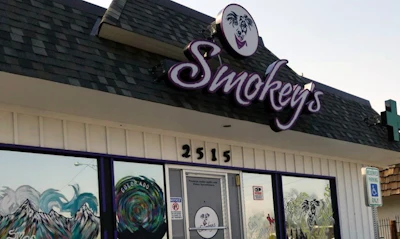
Smokey’s, originally called Cannabis Care Wellness Center before rebranding in the adult-use market, laid claim to being Colorado’s only grower to cultivate completely organically. Instead of feeding cannabis plants directly with bottled synthetic nutrients, Smokey’s fed its soil with a biologically active ecosystem full of microbes, fungi and worms that nurtured the plants over time.
“It was full beds of organisms, worms, all the bugs and funguses in our soil,” he says. “We didn’t use nutrients at all because everything was naturally produced.”
The organic growing method wasn’t cheap, but Wilczynski contends it produced some of the best cannabis money could buy. Smokey’s marketed its Silver Mountain, DOG, Blueberry Headband and Sour Diesel strains as “naturally flavorful and loaded with terpenes.” Dozens of Colorado dispensaries carried the strains, and business was booming until just after the pandemic.
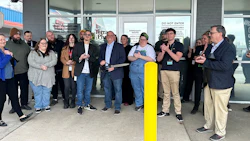
 Photo courtesy of Smokey's Cannabis Co.
That’s when costs caught up. Wilczynski says his break-even point for growing a pound of cannabis hovered around $700. By the summer of 2022, Colorado’s average market rate for unprocessed bud was just $709, according to the state’s Department of Revenue.
Through the first quarter of 2026, it’s down to an all-time low of $607.
Wilczynski acknowledges that plummeting prices affect everyone in the industry. But for high-end, mom-and-pop growers like Smokey’s, the trend was especially difficult. A roughly 64% decrease in peak average market prices from January 2015, including a 46% decrease from October 2021 to July 2022 alone, eventually made doing business impossible.
“The price dropped so low that our cost point of break-even was much higher than most people because of the living soil,” he says. “Even though our cannabis was healthy and people loved it, it didn’t make sense to continue growing anymore because we could not charge the prices to produce it.”
A Byproduct of Legalizing Adult-Use Cannabis
State coffers are reaping the financial windfall as more states across the nation have legalized the plant, first for medical use and then often for adult-use buyers. But the floodgates from medical to adult-use haven’t gone without their share of casualties. As more states give the green light to expanded access, market competition has pushed retail prices nationwide to record lows.
It’s great for consumers focused only on saving money, Wilczynski says. It’s not great for people who want a high-quality product or even something as simple as a good smoke.
He acknowledges that $10 eighths and $40 ounces of flower with 32% THC for sale at dispensaries sounds wonderful on the surface. But behind the curtain, an increase in race-to-the-bottom cultivation practices, including excessive pesticide use, an overreliance on automation, and rushed drying and curing, has Wilczynski skeptical of today’s cannabis quality. When growers cut corners and put price above quality, consumers end up with low-terpene strains that also smoke poorly, he says.
The most concerning part, according to Wilcynzski? The average adult-use customer either doesn’t notice or doesn’t care.
“In Colorado, the consumer here just ended up becoming indifferent,” he says. “They’d rather buy cheap weed that tastes like garbage than pay for something that could be healthy and taste better.
“I think it’s a disservice to people that value real cannabis, but it’s the reality of where the industry went. It’s also why the black market is still such a big player.”
 Photo courtesy of Smokey's Cannabis Co.
‘We Really Did Something Good’
Wilczynski insists he’s done as a cannabis entrepreneur, though he wishes that wasn’t the case. He relishes his 16 years in business and, above all, the countless people Smokey’s influenced, as well as those who influenced Wilczynski himself.
“I always think of the people who’d thank us for giving them new leases on life,” he says, “like the spouse of a military veteran who told me our product helped her husband with PTSD and gave him back to her.
“What’s satisfying is being able to look back at it all and say, ‘Hey, we really did something good.’ The memories you created, the experiences you had, the people’s lives you improved. That’s all stuff that’ll last forever.”
The only thing that could bring Smokey’s back – and perhaps many of the countless legal cannabis businesses shuttered nationwide in recent years? A dramatic change in market price.
“In our case, we’d need to have customers willing to commit and pay for that price of living soil,” Wilczynski says. “That’s the only way it could happen.
“Until then, the industry will continue becoming more corporate.”