
The Trump administration won’t be giving Americans who possess personal amounts of cannabis a free pass, apparently directing U.S. district attorneys’ offices to enforce federal prohibition laws.
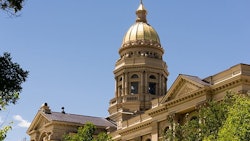
At least that’s according to Darin Smith, the U.S. Attorney for the District of Wyoming, who said on Nov. 13 that his office notified federal law enforcement agencies in his jurisdiction to start “rigorously” prosecuting cannabis offenses occurring on federal land, such as national parks.
Smith’s office indicated this policy change resulted from a Sept. 29 memo from the U.S. Department of Justice (DOJ), which he said rescinded Biden-era “guidance” of taking a hands-off approach to simple cannabis possession offenses.
Although Biden became the first president to issue categorical pardons to individuals convicted of simple use and possession of cannabis, his administration never provided guidance to U.S. federal prosecutors related to the issue – at least not publicly.
Smith indicated that Trump’s DOJ put the power back in his other U.S. attorneys’ hands.
“Marijuana possession remains a federal crime in the United States, irrespective of varying state laws,” Smith said in a press release. “The detrimental effects of drugs on our society are undeniable, and I am committed to using every prosecutorial tool available to hold offenders accountable.”
Cannabis Business Times reached out to Smith’s office and the DOJ for a copy of the memo.
While the DOJ, under the tutelage of U.S. Attorney General Pamela Bondi, hasn’t publicly released the Sept. 29 memo, a spokesperson for Smith’s office told WyoFile that the Trump administration believes cannabis use is a “public safety hazard,” and that the Wyoming District office plans to enforce the law to “ensure safety and security of the public within our jurisdiction.”
This comes as President Donald Trump’s administration continues to “look at” a proposed rule to reschedule cannabis to a Schedule III status under the Controlled Substances Act.
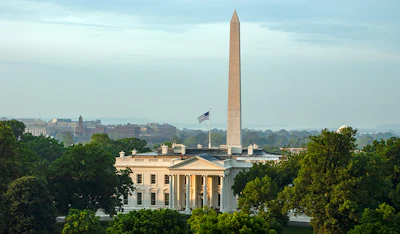
On Aug. 11, Trump told reporters at the White House that “some people hate the whole concept of marijuana because it does bad for the children; it does bad for people that are older than children. But we’re looking at reclassification.”
The administration’s approach to pursuing prosecutions related to simple cannabis possession may seem like a U-turn from former U.S. Attorney General Merrick Garland’s stance under President Joe Biden’s administration; however, Garland never issued an official memorandum or document to guide federal prosecutors.
In other words, there was nothing to rescind.
Instead, Garland only offered his informal stance while taking questions from lawmakers.
“The Justice Department has almost never prosecuted use of marijuana, and that’s not an efficient use of the resources, given the opioid and methamphetamine epidemic that we have,” Garland told Sen. Brian Schatz, D-Hawaii, during an Appropriations subcommittee hearing in April 2022.
Garland also told lawmakers during his confirmation hearing in March 2021 that prosecuting state-sanctioned cannabis activities “does not seem to me a useful use” of the DOJ’s limited resources.
While Garland never issued an official memorandum, this hands-off approach mirrored a directive that then-U.S. Deputy Attorney General James M. Cole issued in August 2013 under President Barack Obama: the “Cole Memo.”
The Cole Memo provided guidance to all U.S. attorneys, directing them to prioritize enforcement efforts that prevent cannabis distribution to minors, sales revenue from going to criminal enterprises/cartels, and the diversion of cannabis from one state to another, among other priorities.
This memo came less than a year after Colorado and Washington voters elected to legalize adult-use cannabis in 2012 – the first states in the nation to do so. As a result, Cole directed federal prosecutors to rely on state and local law enforcement agencies to police their own cannabis laws instead of intervening.
“For example, the Department of Justice has not historically devoted resources to prosecuting individuals whose conduct is limited to possession of small amounts of marijuana for personal use on private property,” Cole wrote.
One key detail about the Cole Memo that some might have forgotten: He, too, directed the DOJ to prevent cannabis possession or use on federal property.
To put it another way, Smith’s announcement on Nov. 13 that he plans to “rigorously” prosecute cannabis offenses occurring on federal land doesn’t really differ from what was in place under the Obama administration via the Cole Memo.
While former Attorney General Jeff Sessions, who served during Trump’s first term, rescinded the Cole Memo in January 2018 – leaving state-licensed cannabis operators in a legal gray area – not much actually changed: federal prosecutors didn’t suddenly start chasing down state-sanctioned cannabis activities or individuals possessing personal amounts of cannabis.
That’s not to say that Americans aren’t getting arrested for cannabis possession by state and local law enforcement agencies: State and local police made more than 204,000 marijuana-related arrests in 2024, most of which were for simple possession, according to cannabis advocacy organization NORML.
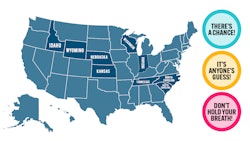
Cannabis-related arrests as a percentage of all drug-related arrests were the highest in states with the nation’s least permissive cannabis laws, such as Louisiana (58%), Iowa (54%), Nebraska (53%), Wisconsin (52%) and Idaho (52%). Wyoming was at 42%.
“Marijuana-related prosecutions remain the primary driver of drug war enforcement in those states where cannabis remains criminalized, whereas, with few exceptions, marijuana-related arrests fall precipitously in jurisdictions that legalize and regulate the adult-use cannabis market,” NORML’s Deputy Director Paul Armentano said in a blog earlier this month.
Although Americans’ support for cannabis legalization remains near an all-time high at 64% in 2025, according to a Gallup poll released earlier this month, that support is down six percentage points from 2023, mostly due to Republican support dwindling to a 10-year low of 40% under the Trump administration.
This drop comes despite Trump saying along the campaign trail in September 2024 that, as president, he would support states’ rights to pass cannabis laws “that work so well for their citizens,” and that he’d work with Congress to pass safe banking legislation for state-authorized companies.
More than a year later, at least one U.S. attorney feels empowered by the Trump administration to take a sterner stance on enforcing federal prohibition laws. In the Nov. 13 announcement from his office, Smith suggested that federal prosecutions will no longer be “significantly curtailed” by Biden-era cannabis polices.
“The U.S. Attorney’s Office for the District of Wyoming remains steadfast in its mission to uphold the rule of law, including the enforcement of federal statutes prohibiting the possession of marijuana and other controlled substances,” according to Smith’s office.
Wyoming is among a handful of states that have yet to legalize medical cannabis. Possessing any amount of cannabis is criminalized and punishable by jail time, including up to a year behind bars for 3 ounces or less.