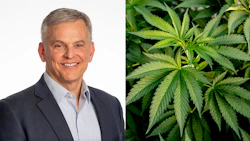

North Carolina Gov. Josh Stein is twisting the legislative arm a little tighter in hopes of bringing order to the state’s rampant THC market following a preliminary state report that was released on April 2.
The North Carolina Advisory Council on Cannabis, which the democratic governor established through an executive order in June, found that the Tar Heel State has one of the largest unregulated cannabis markets in the nation at roughly $3.2 billion in annual sales, according to the 2023 U.S. Cannabis Report.
Also, the council determined that North Carolina’s intoxicating hemp-derived cannabinoid product market does not prevent youth use through age-gating sales, nor does it protect consumers through meaningful potency limits, standardized laboratory testing or clear labeling requirements, with an absence of enforcement and oversight authority leading to a “dangerous policy gap.”
In other words, the state has no clear laws banning or regulating intoxicating hemp products.
“As a result, North Carolina’s cannabis marketplace has been characterized as a ‘wild west’ landscape,” according to the 32-page interim report. “The absence of statewide enforcement authority and regulatory guardrails have created uncertainty for consumers, responsible businesses, health care providers, educators, parents and law enforcement, and most importantly, have put North Carolinians at risk.”
The 27-member council, made up of public health, safety, environmental, transportation and law enforcement officials, as well as state lawmakers, alcohol regulators, district attorneys and others, studied the best approaches for the North Carolina General Assembly to pursue a regulatory framework for the state’s existing intoxicating cannabinoid products.
After consulting with other states’ regulators, reviewing best practices, and considering extensive input from medical experts and fellow council members, the council’s co-chairs recommended that an adult-use regulatory model with built-in protections for medical consumers is the state’s best option.
The council’s co-chairs are North Carolina Health Director and Chief Medical Officer Lawrence Greenblatt and Robeson County District Attorney Matthew Scott. The council has met bimonthly for the past nine months.
Stein applauded the body for its expertise and deliberation.
“Last year, I charged this group with developing a comprehensive solution to the unregulated sale of cannabis that is grounded in public health and public safety, with a special focus on keeping young people safe,” the governor said. “This report provides the General Assembly with guidance and makes clear that a well-regulated market, including both oversight and enforcement authority, is a safer market for our state.
“Our state’s unregulated cannabis market today is the wild west and is crying for order. Let’s get this right. Let’s protect our kids and create a safe, legal and well-regulated market for adults.”
The report comes as North Carolina remains among a handful of states that continue to prohibit medical cannabis, despite 71% of North Carolina voters supporting medical cannabis legalization, according to a February 2025 survey conducted by Meredith College pollsters.
With North Carolina’s Republican-controlled Legislature scheduled to convene the latter half of its 2025-2026 legislative session on April 21, lawmakers will continue to consider a handful of legalization bills that carried forward, including those for a commercial medical program, a commercial adult-use program and a medical research program.
While the North Carolina Senate passed medical cannabis legalization bills in 2022 and 2023, those reform efforts were thwarted by House leadership.
The North Carolina Advisory Council on Cannabis includes four state lawmakers: Reps. John Bell, R-Wayne, and Zack A. Hawkins, D-Durham; and Sens. Bill P. Rabon, R-Brunswick, and Kandie D. Smith, D-Edgecombe.
Hawkins sponsors the Marijuana Legalization and Reinvestment Act in the House, while Smith cosponsors the Marijuana Justice and Reinvestment Act in the Senate; similar pieces of legislation, they both aim to legalize and regulate an adult-use program.
When Stein appointed Smith to the council last year, Smith said she was focused on representing marginalized communities, WNCT reported.
“This is another opportunity to represent the people of North Carolina and ensure that their voices are truly at the table,” she said. “Having a seat at the table means listening with intention and advocating for those who have historically been left out of the conversation. I’m honored to serve in this role and will continue working to uplift all communities across our state.”
While arriving at its recommendation to regulate adult-use cannabis in North Carolina, the council also weighed the federal legal landscape, the 2018 Farm Bill and the federal government’s response to institute an intoxicating hemp product ban later this year, President Donald Trump’s executive order to reschedule cannabis, and other state and congressional responses to regulatory frameworks.
One of the underlying issues the council examined was the widespread demand for cannabinoid products, whether in a legalized state or not.
“If a key objective of regulation is to disrupt illicit markets, that end is being achieved by providing people who want to consume cannabis with a legal alternative that protects consumer safety,” according to the interim report. “Even with continued national increases in cannabis consumers, both legal medical and adult-use markets will increasingly erode demand met by illicit sources. In 2022, an estimated 28% of U.S. cannabis sales came through legal channels; by 2030, 48% of total annual U.S. demand will expectedly be met by legal cannabis purchases in the states where cannabis is currently legal.”
The bottom line: The council suggests providing North Carolinians access to regulated cannabis products is the best pathway to protect consumers and support public safety.
A final report, including detailed regulatory recommendations, will be issued in December 2026, according to the council. That report will incorporate continued stakeholder engagement, data analysis and policy development, and will present a research-based and data-driven comprehensive framework intended to bring structure, accountability and public confidence to a future North Carolina cannabis marketplace.