
Kansas House Democrats tooted the trumpet on Feb. 24 for a pair of bills they filed earlier this month to legalize medical cannabis and adult-use cannabis in the Sunflower State.
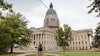
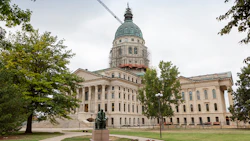
The lawmakers held a press conference on Tuesday at the Kansas State Capitol in Topeka to call attention to House Bill 2678 (medical legalization) and House Bill 2679 (adult-use legalization), which Rep. Ford Carr, D-Wichita, filed on Feb. 4.
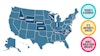
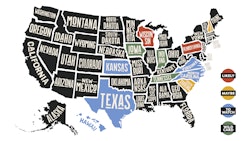
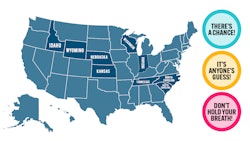
As one of eight states in the U.S. that does not have a medical cannabis program – even to the limited scopes of Texas, Iowa and Georgia – Kansas maintains some of the strictest laws on the books, including jail time for simple possession.
Carr’s partisan measures include 28 Democratic sponsors for the medical bill and 19 Democratic sponsors for the adult-use bill. The congressman admitted that the chances of his proposals receiving a conference hearing this session remain dubious in the House, where Republicans own an 88-37 majority.
However, Carr remained optimistic that his bills could make headway in 2027.
“Honestly, what it’s going to take is for our midterm elections to remove some of those in the Republican Party and replace those with Democrats who feel differently about cannabis,” he said during Tuesday’s press conference. “The Republican Party is our holdup. That’s the obstacle.”
Carr was flanked by fellow Democratic Reps. Heather Meyer, of Overland Park; Brooklynne Mosley, of Lawrence; John Alcala, of Topeka; Angela Martinez, of Wichita; and Abi Boatman, of Wichita.
Overland Park, the second-most populous city in Kansas, borders Missouri, where a robust $1.5 billion adult-use and medical market serves the region’s cannabis shoppers: Missouri shares borders with seven states where adult-use cannabis remains prohibited.
“I live right on the Kansas City, Missouri, border. The closest dispensary to my house, I think, is 12 minutes away,” Meyer said. “We’ve got cannabis on the other side of the state line. … There’s no reason why we should be giving Missouri our hard-earned tax dollars.”
The Kansas House Democrats’ medical cannabis legalization bill would allow patients diagnosed with any of 21 qualifying conditions to access the plant, including cancer, multiple sclerosis, post-traumatic stress disorder and severe pain.
The legislation would establish an 11-member Kansas Medical Cannabis Advisory Board within the Department of Health and Environment (DHE) to help establish a licensed and regulated marketplace for cultivation, processing, testing, distribution and dispensing.
Qualifying patients could begin applying for medical cannabis identification cards by Jan. 1, 2027, under the legislation.
The Kansas House Democrats’ adult-use cannabis legalization would allow those 21 and older to purchase up to 1 ounce of flower, or an equivalent amount in another product form, per transaction from licensed dispensaries.
Under both bills, the director of the Kansas Alcoholic Beverage Control, which operates under the state’s Department of Revenue, would be responsible for maintaining a seed-to-sale tracking system to monitor the licensed marketplace.
In addition, an 8% cannabis excise tax would be levied on both medical and adult-use sales, with revenue generated from that tax to be disbursed as follows:
- 10% to the state general fund;
- 15% to support child care;
- 10% to support economic development in the area immediately surrounding the licensee;
- 10% to mental health;
- 40% to low-cost housing; and
- 15% to fund property tax rebates in the area immediately surrounding the licensee.
Carr lauded the impact that legalization could have on the state’s affordable housing market.
“We are cutting away 40% of those funds to go into the housing department so that we can create new homes – those that are attainable,” he said. “Based on what states around us have done, this is a billion-dollar industry.”
While the Kansas House passed a medical cannabis legalization measure in 2021, that attempt was stymied by Republican Senate President Ty Masterson, who remains in his leadership position today.
Follow-up legalization attempts stalled out over the past four years, despite 70% of Kansans supporting legalizing medical cannabis and 59% supporting adult-use cannabis, according to an October 2025 Kansas Speaks survey conducted by Fort Hays State University pollsters within the university’s Docking Institute of Public Affairs.
Should Kansas’ GOP-controlled Legislature send a medical cannabis legalization bill to Democratic Gov. Laura Kelly’s desk, the state’s top executive indicated last year that she would sign it.
“I think it’s time for the Legislature to finally legalize medical marijuana, giving the Kansans suffering from chronic pain or post-traumatic stress disorder, and children suffering with Dravet’s syndrome (epilepsy) the choice of the treatment they and their doctors determine best suits their needs,” the governor said.