
The New Hampshire Senate kept debate on an adult-use cannabis legalization bill on the back burner Feb. 19, when the body approved a special order to delay considering the House-passed legislation until next month.
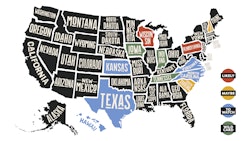
In the meantime, New Hampshire remains an outlier in New England as the lone state to continue its prohibition on cannabis for adults.
The legislation, House Bill 186, would allow those 21 and older to purchase and possess up to 2 ounces of cannabis flower, 10 grams of cannabis concentrate or 2,000 milligrams of THC in other cannabis products from licensed dispensaries. In addition, adults could grow up to six plants (three mature) at home for personal use.
The GOP-controlled New Hampshire House voted, 208-135, to pass the Democratic-sponsored bill with bipartisan support on Jan. 7, and the Senate was gearing up for what was anticipated to be a lengthy debate on Thursday.
However, more than six hours into the floor session, Senate President Sharon Carson, R-Londonderry, made the special order to delay debate on the adult-use cannabis legislation and five other bills until the chamber’s next floor session on March 5.
“Look, everybody’s smiling,” Senate Clerk Tammy Wright said.
“Everybody’s happy,” Carson said. “Well, quite frankly, it’s because they’re going to be long debates on those bills.”
As the second-oldest medical-only cannabis market in the nation, New Hampshire has had 13 years to debate broader reform since first allowing qualifying patients to access the plant in 2013. Should the state’s Legislature legalize adult-use cannabis, it’d be the first to do so under a GOP-controlled government.
In recent years, the Senate has mostly stifled the House’s legalization proposals:
- In 2022, the Senate voted down a pair of House-passed legalization proposals.
- In 2023, the Senate rejected another House-passed legalization bill.
- In 2024, the Senate passed an amended version of a House legalization bill, but the two chambers clashed over the Senate’s state-run “franchise model” for dispensaries and couldn’t resolve their differences.
- In 2025, the House passed two legalization bills that never made it to the finish line.
New Hampshire’s best shot at legalizing adult-use cannabis to date came under former Republican Gov. Chris Sununu, who indicated in 2023 that he was open to the idea of signing a reform package.
Under current Republican Gov. Kelly Ayotte, many view H.B. 186’s chances of becoming enacted as far-fetched. Before Ayotte took office in January 2025, she said she had no interest in signing any bills that would loosen the state’s restrictions on cannabis – a position that she maintains.
But New Hampshire Rep. Jared Sullivan, D-Bethlehem, who sponsors this year’s House-passed bill, is hoping to put the governor’s position to the test.
He told Senate Judiciary Committee members earlier this month that the state’s lawmakers have talked about cannabis legalization for years and that now is the time to act on what the majority of the state’s electorate supports.
“I understand that this is not a popular idea among many members, but I would say that it is a very popular idea among most people in this state,” Sullivan said, referring to recent polling. “I think it’s time that we do the work the people want us to do and fall in line with what most places in this country are now doing.”
According to an April 2025 survey conducted by the University of New Hampshire, 70% of Granite Staters support reforming laws to allow those 21 years and older to access cannabis, including 55% of Republicans.
Sullivan said H.B. 186 would provide the state with a “really good” framework to regulate adult-use cannabis products and their sales through establishing a Cannabis Commission and a 15-member Cannabis Advisory Board to oversee a commercial marketplace.
The representative also hailed his bill for attempting to incorporate a private, free-market-based system rather than following in the footsteps of New Hampshire’s state-run liquor model.
Sullivan said the legislation would also fall in line with the state’s reputation for having a lower tax burden than its neighboring states by adding adult-use cannabis sales to New Hampshire’s 8.5% Meals and Rooms (Rentals) Tax, which applies to restaurants, hotels and vehicle rentals.
Since New Hampshire doesn’t have a general statewide sales tax, Massachusetts residents who live close to the two states’ roughly 100-mile shared border frequently shop across state lines to save money. The same goes for Mainers and Vermonters.
With Massachusetts having a 10.75% excise tax, a 6.25% sales tax and up to a 3% local tax on adult-use cannabis sales, Sullivan said legalizing adult-use cannabis in New Hampshire under a lower tax structure would provide the state with a favorable revenue source.
“I think like we do with our liquor costs here, we would likely steal (cannabis) business from our neighboring states and help drive revenue on that front,” he said.
The Senate Judiciary Committee members took issue with this possibility, offering concerns about “marijuana miles” popping up across the state’s southern districts, among other issues, even though H.B. 186 would require municipalities to offer ballot referendums to ask their voters to choose whether to allow dispensaries in their hometowns.
The committee members voted, 2-1, to adopt an “inexpedient to legislate” motion, meaning they recommended that the full Senate chamber kill the bill. The 24-member upper chamber is still required to debate the bill – presumably on March 5.
While H.B. 186 would legalize a licensed marketplace, as well as possession and home grows for adults, it would install certain public health and safety guardrails, from prohibiting smoking and vaping cannabis in public places to banning impaired driving, keeping the transfer of cannabis to minors illegal, and requiring child-resistant packaging.
“Let’s think about what our constituents want and hopefully consider this with an open mind,” Sullivan said. “I know there’s been past struggles on this, but this is a really good bill.”