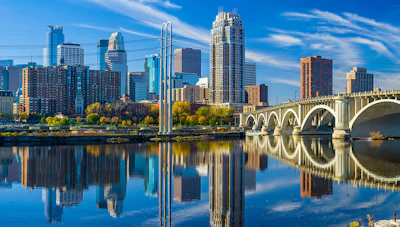

This month marks the three-year anniversary of Minnesota legalizing adult-use cannabis, making it an appropriate moment to candidly assess where the state’s market stands today, where it has fallen short, and where it may still be headed.
When Minnesota legalized adult-use cannabis in May 2023, it was widely viewed as one of the most promising emerging cannabis markets in the country. That optimism was well-founded.
Minnesota entered legalization with several structural advantages that few other states could match.
First, the state rejected the local control model that has undermined legal cannabis markets elsewhere. Under Minnesota law, every municipality with more than 12,500 residents must allow at least one dispensary. That decision ensured broad retail access rather than the fragmented patchwork of bans and moratoriums that continue to cripple legal markets in states such as California and New Jersey.
Second, Minnesota also occupies a uniquely advantageous and durable geographic position. It is surrounded by four prohibition states: Iowa, North Dakota, South Dakota, and Wisconsin. None of them appear likely to legalize adult-use cannabis in the near future. That reality positioned Minnesota to attract sustained demand, for years, from millions of consumers across the Upper Midwest who lacked legal access in their home states.
Third, Minnesota consumers were already familiar with regulated THC products before adult-use legalization even began. In the years preceding legalization, hemp-derived THC beverages proliferated across grocery stores, liquor stores, restaurants, and bars throughout the state. Long before dispensaries opened, a substantial portion of Minnesotans had already encountered legal THC products in normalized retail settings.
Taken together, these conditions gave observers reason to believe Minnesota would swiftly emerge as one of the most dynamic cannabis markets in America.
So far, however, the market has fallen short of those expectations.
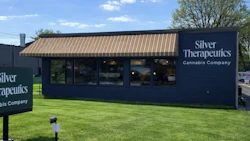
Adult-use sales did not begin until September 2025, well over two years after legalization. And since then, the rollout of the supply chain has been deeply uneven. According to Hoodie Analytics, Minnesota now has more than 100 dispensaries operating statewide, a remarkable achievement for such a young market. But many dispensaries continue to struggle with limited inventory, sparse consumer traffic, and revenues that remain weak relative to their operating costs.
The fundamental problem is a lack of supply.
According to Minnesota’s Office of Cannabis Management (OCM), the state requires at least 1.5 million square feet of cultivation capacity to satisfy legal demand, maybe more. Yet only about 400,000 square feet is currently licensed, with significantly less actually operational. Retail expansion has dramatically outpaced cultivation growth, leaving many dispensaries with half-empty shelves and consumers facing persistently elevated prices.
In April, Hoodie Analytics found that Minnesota’s average prices had risen by 37% year over year. That same month, the OCM reported the median price of an eighth of flower at nearly $60 after taxes, out of reach for many consumers who would otherwise prefer to shop in the legal market.
Those high prices have enabled the illicit market to remain far more resilient than policymakers likely anticipated.
The supply shortage is being further exacerbated by bottlenecks elsewhere in the regulated ecosystem. Minnesota currently has only five licensed testing laboratories serving the entire state, alongside a similarly constrained pool of seven licensed transporters responsible for moving products among cultivators, manufacturers, and retailers.
Every legal cannabis product in Minnesota must move through both of those chokepoints before reaching consumers. Because laboratory capacity is insufficient, products often remain stuck for weeks awaiting testing results. And because transporter capacity is constrained, even fully tested products have struggled to reach dispensary shelves efficiently.
The result is a supply chain that remains precarious, expensive, and unbalanced.
In many respects, Minnesota’s rollout represents the inverse of New York’s early cannabis market failures. New York licensed a large number of cultivators without opening enough dispensaries to absorb the resulting production, financially devastating many small farmers.
Minnesota has the exact opposite problem: Retail stores exist, but an adequate cultivation supply does not. Still, the outcome is remarkably similar. Small operators, independent retailers, and social equity participants are once again bearing the brunt of a poorly calibrated rollout.
Misguided tax policy has compounded the problem. Minnesota initially established a relatively modest 10% cannabis excise tax, a rate that sensibly recognized the need for the legal market to compete against entrenched illicit operators that (as in New York) grew even stronger during the delayed rollout of the legal market. But before adult-use sales finally began, lawmakers raised the tax rate to 15%. For a newly launched market already facing supply constraints and elevated prices, that increase is only deepening Minnesota’s affordability challenges.
If we’re being honest, Minnesota’s cannabis market reflects an all-too-familiar pattern in cannabis policymaking: lofty rhetoric surrounding social equity and small business followed by implementation failures that disproportionately harm the very groups the system was intended to support. Minnesota’s actual results, at least so far, have not fully aligned with the self-congratulatory political narrative surrounding legalization.
Still, as Minnesota enters its fourth year of legal cannabis, there are reasons for optimism.
One development that deserves genuine recognition is the decline in youth cannabis use following legalization. According to data from the Minnesota Department of Health, cannabis use among 8th, 9th, and 11th graders in Minnesota has declined substantially in recent years, with past-year use falling by more than half since 2013.
That finding directly challenges one of the central claims frequently advanced by opponents of legalization. Minnesota’s experience adds to a growing body of evidence indicating that regulated adult-use markets do not increase youth consumption and instead reduce it by replacing illicit distribution systems with regulated ones.
At the same time, the market itself is steadily growing. According to the OCM, the state recorded $25 million in cannabis sales in April 2026, representing 50% growth from October 2025, the first full month of adult-use sales. That is meaningful growth within a relatively short period.
Retail expansion also continues at an impressive pace. Minnesota may approach 200 operating dispensaries by the end of 2026. Here, the state deserves credit. Unlike California and New Jersey, where widespread municipal bans continue to restrict legal access years after legalization, Minnesota made a smart, deliberate policy choice to ensure robust retail access across the state.
Consumers will ultimately benefit from that decision.
Minnesota is also pursuing one of the most innovative approaches to tribal participation in the cannabis industry anywhere in the country. Rather than relegating tribal nations to the margins of the industry, the state has established a framework in which tribal communities play a meaningful and central role in market development.
The state’s willingness to experiment extends beyond tribal participation. Minnesota has emerged as the country’s leading proving ground for hemp beverages, products that have introduced regulated THC to consumers who may never have otherwise engaged with a traditional dispensary. The decision by Target, headquartered in Minneapolis, to carry hemp beverages in all 72 of its Minnesota stores represents a remarkable milestone in the normalization of cannabinoid products within mainstream American retail.
And Target’s announcement, just last week, that it plans to expand hemp beverages into more than 300 stores across Florida, Illinois, and Texas, is further evidence of Minnesota’s national influence on cannabis policy.
Minnesota has also adopted forward-looking rules surrounding cannabis events that are similarly poised to influence other states. Within one week of launching adult-use sales, the state authorized licensed cannabis sales at events. That may seem like a relatively minor policy choice, but it took states such as California years to become comfortable with similar rules. Minnesota moved quickly and decisively, and the feared public harms never materialized.
These decisions do matter because they normalize cannabis as part of mainstream civic and commercial life.
But the larger question remains whether Minnesota can now address the structural problems still holding the market back.
Current annualized sales are running at roughly $300 million. That is meaningful, but still far below the approximately $1.5 billion market potential analysts once projected for the state. Minnesota remains a market operating substantially below its long-term economic capacity.
The most important variable moving forward is cultivation supply. If the state can rapidly bring substantial new cultivation capacity online over the next year while simultaneously expanding laboratory and transportation infrastructure, Minnesota’s cannabis market could look dramatically different by its fourth anniversary in May 2027.
That process will not happen overnight. Cultivators continue to navigate lengthy state and local approval timelines, and even fully approved facilities require time before harvests can reach consumers. Until these bottlenecks are resolved, retail expansion alone will not be sufficient to stabilize the market.
So Minnesota’s cannabis industry today remains unfinished and uneven. Supply is still constrained, prices remain elevated, and the illicit market has proven stubbornly durable in large part due to the delayed rollout of the legal market. Those realities should not be ignored.
But Minnesota is also pursuing policies unlike those seen anywhere else in the country: meaningful statewide retail access, substantial tribal participation, aggressive experimentation with hemp beverages, and forward-looking normalization policies around cannabis events.
The ingredients for a highly successful cannabis market are still present. Minnesota must now solve its operational shortcomings quickly enough to realize the extraordinary potential many believed the state possessed when legalization passed three years ago.
If it succeeds, Minnesota may yet emerge as one of the most important and influential cannabis markets in the United States.