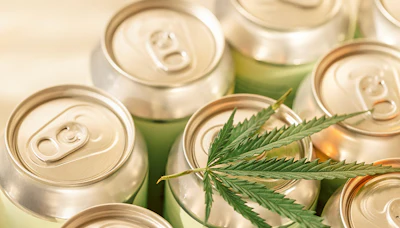

California cannabis beverage stakeholders are taking issue with a legislative proposal they say would wipe out 93% of the growing product category overnight.
A cohort of 11 industry operators and leading trade groups sent a letter on April 7 to members of the California Assembly Committee on Business and Professions, who are scheduled to consider Assembly Bill 2532 on April 14.
The legislation, sponsored by outgoing Assemblymember Jacqui Irwin, D-Thousand Oaks, would place a 10-milligram THC cap per container on cannabis beverage products. The bill would also require that all cannabis and cannabis product labels, and inserts for a cannabis edible or beverage product, include the toll-free number for the national poison help line.
The cohort of industry operators and trade groups expressed their strong opposition to A.B. 2532, directing their concerns to Chairman Marc Berman, D-Menlo Park, and other committee members.
“While we share the Legislature's commitment to protecting public health and preventing youth access, this bill’s proposed 10mg THC per-package cap on cannabis beverages would have severe and immediate unintended consequences that far outweigh any purported public health benefit,” the signees wrote.
The letter signers include Alec Tolmazin, general manager of Pabst Labs; Caren Woodson, president of the California Cannabis Industry Association; Wes Hein, president of the Cannabis Distribution Association; Amy Jenkins, executive director of the California Cannabis Operators Association; Elliot Lewis, founder and CEO of Catalyst; Tak Sato, president of Stiiizy; Lauren Carpenter, co-founder and CEO of Embarc; Jun S. Lee, co-founder of Nabis; Robert Nichols, senior legal counsel of Kiva Brands Inc.; Howard Lee, CEO of SōRSE Technology; and Jeremy Ouaknine, president of Spacestation Beverage.
According to the signees, the proposed 10-milligram THC cap would “effectively eliminate” the legal cannabis beverage market, with 93.2% of today’s product sales containing more than that potency limit.
Cannabis beverage products containing 100 milligrams of THC account for $66 million in annual dispensary sales, or 83.6% of the total category revenue, the signees said. Implementing a 10-milligram cap would leave just $5.4 million in annual sales remaining.
“This proposal would knowingly eliminate a significant and growing source of public funding at a time when California faces declining cannabis tax revenue and budget pressures,” they wrote. “Removing $73.6 million in annual sales results in $11.9 million in lost state cannabis excise tax revenue (15%), $5.7 million in lost California state sales tax revenue (7.25%), and $3.5 million in lost California state income tax under Section 280E (8.84% on gross margin, as California’s AB 37 state-level 280E decoupling expired Dec. 31, 2024).”
These state-level losses amount to roughly $21 million annually.
The letter writers argued that dismantling California’s beverage product category would further weaken the state’s regulated cannabis market, which has experienced declining retail sales for four straight years, according to Metrc data provided by the California Department of Cannabis Control (DCC).
Following a 2021 market peak of $5.35 billion, the state’s licensed dispensary sales dipped more than 17.5% to $4.4 billion in 2025, according to the DCC.
While this continued decline is mostly attributed to floundering flower sales, including a roughly 13% year-over-year dip from 2024 to 2025, the cannabis beverage market grew roughly 6% year-over-year
“Beverages represent a key entry point for new and moderate consumers, a format that promotes measured social consumption, and one of the few segments expanding tax-generating activity,” the letter signees wrote. “Eliminating this category would shut down one of the only functioning growth engines in the legal market.”
In the meantime, only about 38% of cannabis consumed each year by Californians is taxed, because various market dynamics – from retail access to the cost of doing business – continue to drive the unregulated market, according to a DCC-commissioned report from March 2025.
The report estimated that unlicensed cultivators produce roughly eight times more cannabis than their licensed counterparts, with much of that untracked product shipped out of state. What’s kept in state nearly doubles the sales figures of California’s licensed market.
When it comes to cannabis beverage products, though, the unregulated market can’t compete, according to the letter writers. That’s because cannabis beverages require “sophisticated manufacturing, cold chain logistics and licensed retail distribution” that can’t be replicated by the illicit market, meaning the state captures 100% of consumption in the taxed system, according to the stakeholder cohort.
However, the stakeholders warned that eliminating the product category could drive California cannabis consumers to seek alternative products outside the state’s regulated program.
“When legal products are restricted beyond consumer demand, the illicit market fills the gap,” they wrote. “This is especially the case for beverage products, which are carried across over 75% of licensed storefront operators. By eliminating the products consumers overwhelmingly prefer, consumers will shift to unregulated alternatives with a similar dose profile versus a safer alternative like regulated beverages that can be dosed easily by the consumer (similar to alcohol).
“As a result, untested and unlabeled products will proliferate, and the state will lose both tax revenue and consumer visibility.”
The group also argued A.B. 2532 would directly contradict legislation passed in September that integrated intoxicating hemp products into the state’s cannabis supply chain. In addition, they contend that California’s licensed operators maintain comprehensive safety standards.
“Five years of FDA adverse event data confirm zero instances of adverse events involving children from licensed cannabis beverages, a perfect safety record unmatched by any other cannabis product category,” the letter signers wrote, pulling data from the Center for Food Safety and Applied Nutrition Adverse Event Reporting System (CAERS).
In opposing A.B. 2532, they urged lawmakers to prioritize evidence-based measures that advance consumer safety without eliminating a product category, providing five recommendations:
- Industry-wide standardized dosing guideline requirements: Requiring precision dosing and product identification features on all multi-serving cannabis beverages to promote responsible portioning and clear product differentiation. Developing and codifying clear per-serving THC disclosures across all licensed operators, with minimum font size standards for serving and package potency information that are more robust than the current guidelines.
- Industry-wide warning label standards: Establishing uniform, state-mandated label requirements for all cannabis beverages, ensuring consumers have clear and consistent safety information that the products are multidose in format and require safe and responsible consumption for experienced users.
- Industry-wide child-resistant container requirements: Ensure all beverage formats meet consistent, enforceable child-resistance standards across all manufacturers.
- Prohibit single-serve marketing: Restrict packaging and marketing language that could position cannabis beverages as casual single-serve drinks, addressing legitimate concerns about consumer perception.
- Consumer education and awareness campaign: Supporting a funded, statewide campaign on responsible, informed cannabis beverage consumption, potentially modeled on alcohol responsibility campaigns.
“California has built one of the most highly regulated cannabis markets in the world,” they wrote. “Just months after directing intoxicating cannabinoid products into the regulated cannabis market, the state is now proposing to eliminate the very category best positioned to absorb them. Policies that eliminate legal products, reduce tax revenue and push consumers into the illicit market do not improve safety. They undermine the entire system.”