
Ten months after the California Department of Cannabis Control (DCC) didn’t see eye to eye with State Auditor Grant Parks’ findings on compliant product packaging, state regulators introduced a new tool to assist licensed operators.
The DCC launched the Cannabis Product Image Analyzer (CPIA) on June 8, which uses artificial intelligence to help businesses determine whether their product packaging and labeling comply with state law that prohibits design elements and images that are attractive to children.
Under California law, images that are “attractive to children” include but are not limited to:
- Images of minors or anyone under 21 years of age;
- Cartoons;
- A likeness to images, characters or phrases that are popularly used to advertise to children;
- Images that are any imitation of candy packaging or labeling; and
- Images with the terms “candy” or “candies” or variants in spelling, such as “kandy” or “kandeez.”
The CPIA uses AI to help determine if a cannabis product violates these rules by analyzing photos or screenshots that operators can upload to the new tool. The DCC said it does not plan to retain, store or keep the uploaded images or the tool’s summary findings for those images.
“Our goal is to assist licensees in their independent evaluation of whether packaging or labeling may be attractive to children,” according to a department notification. “The CPIA may not identify all concerns an image may present, or that the department may find attractive to children. A user should not rely on the CPIA’s output, as it does not establish definitively whether advertising or marketing violates [state law].”
That’s the caveat: The new AI tool merely offers a guideline and does not carry legal protections for a cannabis business’s products.
“Even if the CPIA response states that an uploaded image is likely compliant, the CPIA’s response does not preclude a finding by the department or a factfinder in a disciplinary or administrative action from determining the uploaded image violates the regulation,” according to the DCC.
The department also provided a disclaimer: The CPIA’s findings may change from day to day for the same product since AI systems evolve and can produce variable outputs, often based on the “quality, clarity, angle, lighting or completeness” of an uploaded image.
The DCC launched this Cannabis Product Image Analyzer tool – currently in beta testing mode – 10 months after the state auditor’s office released a report in August 2025 recommending that the DCC improve its regulations, documentation and penalties related to compliant packaging.
“We found that state law and DCC’s regulations about design elements that are attractive to children are unspecific, leading to subjective and sometimes inconsistent determinations of whether cannabis product packaging is compliant,” Parks wrote in a letter to Gov. Gavin Newsom and legislative leaders in the California Senate and Assembly.
“DCC’s inspectors do not have consistent documentation practices, and we could not conclude that DCC consistently checks a licensee’s compliance history when evaluating whether that licensee is selling a cannabis product with packaging that is attractive to children,” the state auditor wrote.
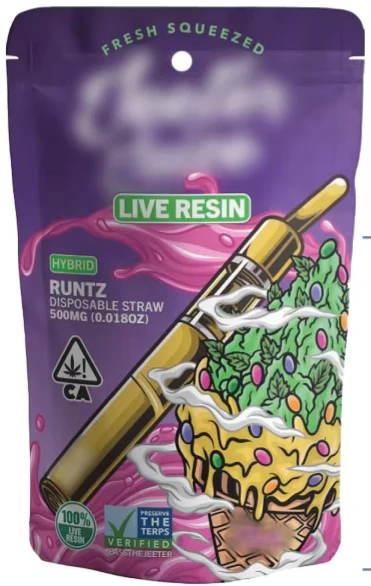
The auditor’s report claimed that 14 of 40 cannabis products that Parks’ office reviewed had noncompliant images of food or candy on the packaging, providing examples of those products in the report.
 auditor.ca.gov
“The overall design elements – including prominent cartoon-style treat imagery, bright sprinkle-like accents, and a playful illustrated aesthetic – make this product potentially noncompliant with applicable packaging regulations regarding attractiveness to children,” according to the AI tool’s summary findings.
While the state auditor’s office took issue with that product packaging in August 2025, the DCC disagreed with Parks’ assessment at that time, according to the report.
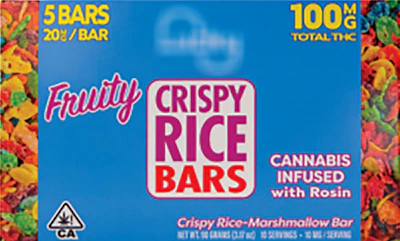
CBT ran another image from the auditor’s report – of a rosin-infused Fruity Crispy Rice edibles bar – through the CPIA beta testing tool, and it also was deemed as potentially noncompliant under two state law sections for candy-like imagery reminiscent of branding that’s popular with children.
“The overall design elements – including the bright, confection-like presentation and sweet snack bar trade dress – make this product potentially noncompliant with applicable packaging regulations regarding attractiveness to children,” according to the AI tool’s summary findings.
 auditor.ca.gov
According to the auditor’s report, the “DCC has determined that this packaging does not violate regulations because cannabis edibles packaging can have pictures of the edible’s ingredients but not a picture of the edible product itself.”
At that time, the DCC indicated that it would work toward addressing Parks’ concerns through new packaging regulations that would possibly prohibit:
- Images of anthropomorphized fruit, candy and confections
- All characters, human or otherwise
- Images of animals and humans
- Holographic packaging or stickers
“Addressing ‘attractiveness to children’ can be a complicated issue,” former DCC Director Nicole Elliott said in response to the report. “The challenge DCC must overcome in its effort to rein in harmful packaging elements is what is ‘attractive to children’ can be inherently subjective, culturally influenced and dynamic over time.”
With the DCC’s CPIA now in beta testing, the department is asking state operators to provide feedback via a seven-question survey that regulators said will help influence the AI tool’s future enhancements and functionality.
“We encourage all licensees to explore the new tool and share their experiences with us,” the DCC notification states. “We are excited about the opportunities this feature will bring and look forward to partnering with you to improve the overall user experience.”