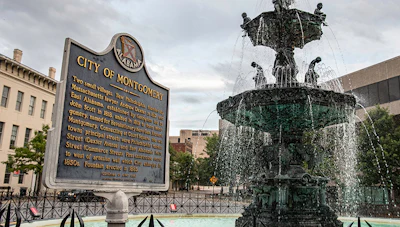

Five years after legalization, Alabama’s first licensed medical cannabis dispensary intends to commence sales on May 4 in Montgomery, state regulators announced during their regular commission meeting on April 9.
Alabama Medical Cannabis Commission’s (AMCC) newly elected chairman, Sam Blakemore, said during the meeting that Callie’s Apothecary, located in the state’s capital city, expects to start serving patients in as little as three weeks, WSFA 12 News reported.
Blakemore, a pharmacist who recently toured the dispensary, said the retail facility felt like he was in a pharmacy.
AMCC Director John McMillan reminded those who attended the meeting that state-sanctioned cannabis dispensaries are very different than federally regulated pharmacies.
“A patient will not be able to even enter the door unless a picture is taken of their medical cannabis card and relayed through the system,” McMillan said. “It’s just amazing: cameras everywhere, lights everywhere, locks everywhere.”
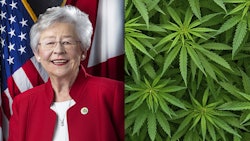
The news of a potential market launch date comes nearly five years after Gov. Kay Ivey signed legislation allowing registered patients diagnosed with qualifying conditions to access the plant.
While the AMCC initially intended to launch a commercial marketplace in 2023 – roughly two years after legalization – those plans were derailed by lawsuits after the commission chose to abandon its original license awards process that year, with the regulatory body expressing concerns over “potential inconsistencies” in scoring the license applications.
The AMCC conducted a series of licensing do-overs, leading to more litigation among unsuccessful applications and those who had originally been awarded licenses but then had those awards taken away.
The commission has been forced to stay the issuance of several of its final licensing awards, including those for five vertically integrated businesses that could potentially operate up to five dispensaries each.
Meanwhile, the AMCC cleared a judicial pathway to issue three of the four dispensary-only licenses to businesses that are allowed to operate up to three retail facilities each, meaning nine dispensaries could potentially open in the coming months, and another three could open pending the outcome of litigation for the fourth license.
CCS of Alabama LLC, the licensing name for Callie’s Apothecary, also plans to open dispensing sites in Bessemer and Talladega. Locations for all nine approved dispensaries are listed on the AMCC’s website.
“We’re waiting on the fourth license that’s still held up,” Blakemore said. “So, hopefully by the fourth quarter, we’ll have all 12 operational.”
While the forthcoming market launch has been five years in the making, patient knowledge on program participation continues to have grounds to make up, according to the Alabama Cannabis Coalition (AAC), a grassroots state advocacy organization.
Opening dispensary doors is an “important” step for patients, but it doesn’t guarantee access for those seeking it, ACC founder and President Marty Schelper said.
“Access doesn’t begin at the dispensary door; it begins with informed patients,” she said. “Without a clear and accessible public education campaign, many Alabamians still won’t know how to participate in the program, even as it becomes operational.”
One limitation to patient access includes a limited number of physicians who have taken a state-mandated course to recommend cannabis and received approval from the Alabama Board of Medical Examiners.
As of April 8, the AMCC lists just 16 physicians who are certified statewide to recommend cannabis; however, AMCC officials reported at their regular meeting that the actual count was closer to 50 physicians who have been approved.
Patients can receive a medical cannabis recommendation for having any of 15 qualifying conditions, including cancer-related ailments, HIV/AIDs, epilepsy, or any condition causing chronic or intractable pain, among others.
As of the AMCC’s April 10 meeting, 66 medical cannabis cards had been issued to patients statewide, WSFA reported.
Qualifying patients will be allowed to access non-smokable and non-vaping products, including tablets, capsules, tinctures, topicals, suppositories, transdermal patches, nebulizers, and liquids or oils for use in an inhaler. For most patients, the daily dosage limit is 50 milligrams of delta-9 THC. Those younger than 18 cannot access products with potencies greater than 3% THC.
The ACC provides a step-by-step guide on how aspiring medical cannabis patients can get started, from creating a patient registry account to receiving a physician recommendation. The organization has also called on state officials to provide greater resources to help steer patients through the process.
With dispensaries now preparing to open, Schelper called for a comprehensive public education campaign because “patients cannot access a system they don’t understand,” she said.
“This is a significant milestone for Alabama’s medical cannabis program,” Schelper said. “However, implementation is only successful if patients are able to access it. As dispensaries prepare to open, the urgency for a coordinated public education effort becomes even more critical to ensure the system functions as intended.”