
UPDATE: Eight bipartisan U.S. House lawmakers also reintroduced the SAFE Banking Act of 2026, making it a coordinated bicameral approach to the reform package. That story is here.
With six months left in this Congress, a quartet of bipartisan U.S. senators revived popular legislation that would provide federally regulated financial institutions the assurances they need to serve the cannabis industry.
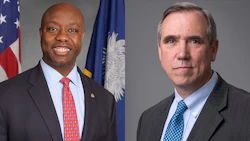
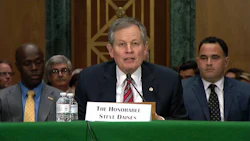
Sen. Jeff Merkley, D-Ore., filed the legislation, the Secure and Fair Enforcement (SAFE) Banking Act of 2026, on June 24, with Sens. Lisa Murkowski, R-Alaska, Elizabeth Warren, D-Mass., and Steve Daines, R-Mont., signed on as co-sponsors.
The 38-page bill is here.
Merkley also sponsored a previous version of the bill last Congress. The underlying intent remains: to allow relationships between federally compliant banks/credit unions and state-sanctioned cannabis businesses.
“The reclassification of cannabis from Schedule I to Schedule III still leaves cannabis businesses in violation of criminal law because the production and use of cannabis for nonmedical purposes remain a federal crime,” Merkley told Cannabis Business Times last month. “This is true even in states like Oregon that legalized recreational cannabis use more than a decade ago.
“As such, these legal businesses are still prevented from fully accessing the banking system. I will continue to push for fully descheduled cannabis – which is essential to addressing the harms perpetuated by the war on drugs and the criminalization of cannabis, particularly on communities of color – and work with both Republicans and Democrats to advance common-sense cannabis reforms.”
According to Merkley's office, the bipartisan SAFE Banking Act of 2026 would prevent federal banking regulators from:
- Prohibiting, penalizing, or discouraging a bank from providing financial services to a legitimate state-sanctioned and regulated cannabis business, or an associated business (such as a lawyer or landlord providing services to a legal cannabis business);
- Terminating or limiting a bank’s federal deposit insurance primarily because the bank is providing services to a state-sanctioned cannabis business or associated business;
- Recommending or incentivizing a bank to halt or downgrade providing any kind of banking services to these businesses or take any action on a loan to an owner or operator of a cannabis-related business; or
- Taking any action on a loan to an owner or operator of a cannabis-related business.
The bill would:
- Create a safe harbor from criminal prosecution and liability and asset forfeiture for banks and their officers and employees who provide financial services to legitimate, state-sanctioned cannabis businesses, while maintaining banks’ right to choose not to offer those services;
- Provide protections for hemp and hemp-derived cannabidiol (CBD) related businesses; and
- Require banks to comply with current Financial Crimes Enforcement Network (FinCEN) guidance, while at the same time allowing FinCEN guidance to be streamlined over time as states and the federal government adapt to legalized medicinal and adult-use cannabis policies.
The SAFE Banking Act of 2026 comes at a time when adult-use cannabis remains in Schedule I under the Controlled Substances Act, but state-licensed medical cannabis is now in Schedule III after U.S. Acting Attorney General Todd Blanche issued a rescheduling order in April 2026.
Neither adult-use nor medical cannabis is considered federally legal under their respective classifications, leaving federally regulated financial institutions unwilling to bank adult-use businesses and perhaps unsure about banking medical businesses.
RELATED: Cannabis Rescheduling Won’t Solve Industry Banking Problems, Legal Risks
Under the current conundrum of state legalization and federal prohibition, state cannabis operators are left to access regional or local financial institutions that are willing to take on the risks associated with the Bank Secrecy Act and federal anti-money laundering laws. An estimated 10% of banks and 5% of credit unions nationwide extend their courtesies to the cannabis space, Reuters reported in 2023.
“Due to continued conflicts between state and federal cannabis laws, access to financial services remains severely limited for a highly regulated industry that is operating in the vast majority of the United States,” said Michael Cooper, policy chair for the National Cannabis Industry Association.
“The current lack of access to the same financial resources that all other legal industries utilize most adversely affects small and minority-owned businesses and only serves to fuel an unregulated illicit market,” Cooper said in a statement provided to CBT. “This bipartisan, common-sense bill would protect those financial institutions who choose to service our regulated industry, lowering risks for banks and expanding access to operators to enhance public safety.”
While the SAFE Banking Act of 2026 would provide a safe harbor for depository institutions under federal law, those institutions would still be required to file suspicious activity reports for certain cannabis-related activities.
And while the implications of greater access to traditional financial services are significant, the legislation has represented a false sense of hope for cannabis businesses in recent years. The U.S. House passed previous versions of the bill seven times between 2019 and 2022, with bipartisan support under a Democratic majority.
In addition, the Senate Banking Committee approved the broader Secure and Fair Enforcement Regulation (SAFER) Banking Act in 2023, also under a Democratic majority.
But former Senate majority leaders Mitch McConnell, R-Ky., and Chuck Schumer, D-N.Y., blocked the legislation from receiving floor votes the past three congresses, even when the SAFER Banking Act had filibuster-proof support last Congress.
While Sen. Tim Scott, R-S.C., who now chairs the Senate Banking Committee, opposed the SAFER Banking Act last Congress, he indicated last month during the Milken Institute Global Conference in Los Angeles that he may have changed his tune.
Scott said during that conference that the SAFE Banking Act would “allow for the banking question to be solved by making it legal to bank it, because what you don’t want is … to have a situation where you have these cash rooms where you have hundreds of thousands of dollars cash sitting in a location. Everyone knows you can’t bank it; therefore, the criminal activities are much higher in these places. So, there is a quandary that we have to solve. I think we’ll get to a solution.”
Whether that solution will come this Congress remains a tall order.