
The 119th Congress has little more than six months to wrap up unfinished business for this two-year cycle, yet the widely popular Secure and Fair Enforcement (SAFE) Banking Act is nowhere to be seen under Republican control.
The perennial legislation, intended to provide a safe harbor to federal financial institutions, such as banks and credit unions, wishing to serve the cannabis industry, has advanced in one form or another under Democratic leadership in each of the past three congresses.
But with GOP lawmakers now in the driver’s seat of both the U.S. House and Senate for the first time since the 115th Congress (2017 and 2018), the appetite for the incremental reform proposal appears to have dissipated, even in the aftermath of President Donald Trump’s administration’s April 22 order that reclassified state-licensed medical cannabis to Schedule III under the Controlled Substances Act.
Although a Schedule III listing recognizes cannabis’s medicinal value and loosens certain federal restrictions on the plant, it does not solve the industry’s banking problems and legal risks for financial institutions, which still have to comply with the Bank Secrecy Act and federal anti-money laundering laws.
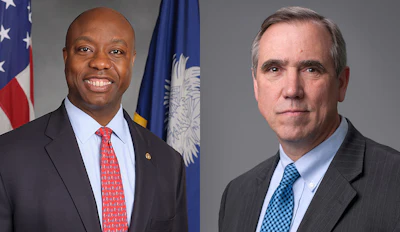
Earlier this month, during the Milken Institute Global Conference in Los Angeles, U.S. Senate Banking Committee Chairman Tim Scott, R-S.C., was asked on stage if the cannabis industry’s banking problems would be solved.
The senator curiously brought up the SAFE Banking Act, bipartisan legislation that he voted against last Congress, saying at the time that he shared concerns that the bill could create loopholes in money-laundering laws, potentially making it more difficult to catch criminals who traffic weapons, fentanyl and “even people.”
This month, however, Scott said that the SAFE Banking Act would “allow for the banking question to be solved by making it legal to bank it, because what you don’t want is … to have a situation where you have these cash rooms where you have hundreds of thousands of dollars cash sitting in a location. Everyone knows you can’t bank it; therefore, the criminal activities are much higher in these places. So, there is a quandary that we have to solve. I think we’ll get to a solution.”
As the gatekeeper to the Senate Banking Committee, did Scott have a change of heart now that cannabis – well, at least medical cannabis – is listed under Schedule III?
Jeff Naft, the chairman’s communications director in the Banking Committee, told Cannabis Business Times that he had nothing else to add beyond what Scott said at the Milken Institute event.
“It wouldn’t be appropriate to speculate on legislation that has not yet been introduced in the Senate for this Congress,” said Naft, who instead pointed to Scott’s opening statement from a May 2023 hearing on the legislation last Congress, when he served as the ranking member of the committee.
So, who’s taking the lead on the broadly bipartisan legislation, which the then-Democratic-controlled House passed seven times from 2019 to 2022, and the then-Democratic Controlled Senate Banking Committee advanced in 2023?
Naft, based on the last Congress, pointed across the aisle to Sen. Jeff Merkley, D-Ore., and also to the lower chamber, where Rep. Dave Joyce, R-Ohio, sponsored similar legislation in 2023.
Merkley’s staff provided CBT with a statement from the Oregon Senator, but declined to address whether he plans to reintroduce the SAFE Banking Act, or the broader Secure and Fair Enforcement Regulation (SAFER) Banking Act, this Congress.
“The reclassification of cannabis from Schedule I to Schedule III still leaves cannabis businesses in violation of criminal law because the production and use of cannabis for nonmedical purposes remain a federal crime,” Merkley said. “This is true even in states like Oregon that legalized recreational cannabis use more than a decade ago. As such, these legal businesses are still prevented from fully accessing the banking system. I will continue to push for fully descheduled cannabis – which is essential to addressing the harms perpetuated by the war on drugs and the criminalization of cannabis, particularly on communities of color – and work with both Republicans and Democrats to advance common-sense cannabis reforms.”
Merkley’s office also declined to say whom, if anyone, the Senator may be working with across the aisle to advance cannabis reform, such as banking legislation, this Congress.
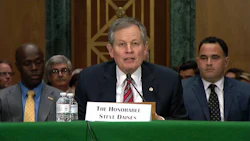
Sen. Steve Daines, R-Mont., was one of the lead Republican champions behind the SAFE Banking Act’s passage last Congress, during his tenure on the Senate Banking Committee. But the Montana lawmaker announced in March that he won’t seek reelection to a third term.
In early April, a Daines staffer indicated to CBT that the senator is no longer taking the Republican lead on the SAFE Banking Act, instead signaling Sen. Bernie Moreno, R-Ohio, a freshman on the Banking Committee, who defeated former Committee Chairman Sherrod Brown, a Democrat, in the 2024 election.
In June 2025, Moreno told Marijuana Moment that the SAFE Banking Act was “a tomorrow thing” that would move forward, “hopefully in the fall,” following more pertinent budget matters.
CBT reached out to Moreno’s communications staff earlier this month, seeking an update on the SAFE Banking Act’s drafting/introductions status.
CBT also reached out to Sen. Elizabeth Warren, D-Mass., who co-sponsored previous versions of the legislation and who also serves as the ranking member of the Senate Banking Committee, seeking comment on any progress for bipartisan efforts this Congress.
The problem for industry stakeholders seeking traditional banking benefits is that most financial institutions that do service cannabis-related businesses are regional actors provided safe harbor by local governments, often charging a premium to offset the compliance risks. An estimated 10% of banks and 5% of credit unions nationwide extend their reach to the cannabis space, Reuters reported in 2023.
While past Democrat-controlled House efforts found seven bipartisan passages between 2019 and 2022, the SAFE Banking Act represents a discouraging battle for much of the cannabis industry: Former Senate Majority Leaders Mitch McConnell, R-Ky., and Chuck Schumer, D-N.Y., blocked the legislation from floor votes the past three congresses, including four years when Democrats controlled the upper chamber.
Now, current Senate Majority Leader John Thune, R-S.D., who opposed the SAFE Banking Act in previous congresses, may not even need to block it: Under Republican control, the Senate may not even put the legislation on the table this Congress.
This possible reality comes after a bipartisan group of 32 attorneys general from 28 states, Washington, D.C., and three U.S. territories urged Congress in August 2025 to get the job done so that there’s no longer a conflict between state-sanctioned cannabis programs and federal banking laws.
In the House, while Joyce introduced the SAFE Banking Act last Congress, the Congressional Cannabis Caucus co-chair didn’t gain any headway on his legislation in the new GOP House majority – including under former Speaker Kevin McCarthy, R-Calif., or incumbent Speaker Mike Johnson, R-La.
CBT reached out to Joyce’s office, as well as the other Congressional Cannabis Caucus co-chairs: Reps. Brian Mast, R-Fla.; Dina Titus, D-Nev., and Ilhan Omar, D-Minn.