
One of the most established brands in the cannabis space didn’t become a global powerhouse by leaping at every opportunity that came its way.
Khalifa Kush went from a regional player in the Southwestern U.S. in 2016 to an international success story in 2026 by employing a methodical approach, refusing to take a shot just because the ball landed in its court.
Founded by global icon Wiz Khalifa, Khalifa Kush announced last month that it entered Australia through a partnership with Endoca, expanding its footprint to six international markets. This move comes after the brand navigated entrances into Germany, Switzerland, the U.K., Thailand and Israel. That’s in addition to 13 U.S. markets, with possibly one or two more state entrances in the next few months.
So, what’s allowed the brand to continue its hot streak?
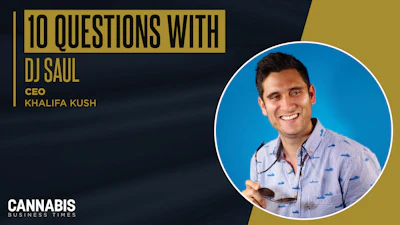
Khalifa Kush CEO DJ Saul has the answer.
“Patience. Just patience and diligence,” he said. “We’ve said ‘no’ to so many new opportunities. There have been some deals and offers and potential partners that look amazing on paper and have incredible deal terms on paper. And then we dig a little bit further, and for whatever reason it’s just not the right fit and doesn’t make sense for us and our rigorous defense of this brand and this menu. So just continuing to be patient has been the consistent lesson that has unlocked success in all of these markets.”
Khalifa Kush’s new partnership provides Endoca exclusive rights to import the company’s proprietary genetics predominantly from Canada, and to manufacture and oversee distribution for Khalifa Kush-branded products in the Australian medical cannabis market through its GMP-approved supply-chain capabilities. The brand’s initial product offerings in Australia will include flower and edibles.
This new opportunity for Khalifa Kush comes as most celebrity cannabis brands have flopped, but, as Saul put it, Khalifa Kush doesn’t consider itself a celebrity brand.
“We think of ourselves as a premium brand that happens to be founded and owned by a celebrity,” the CEO said, adding that Khalifa Kush didn’t just slap a name on a package and hope for the best.
While Wiz Khalifa is an American rapper and songwriter, the celebrity had a cannabis product tailored to his specific tastes long before he became a cannabis entrepreneur who wanted to share that product with the world.
Here, Saul shares the magic behind Khalifa Kush’s success, why Australia was the “next obvious market” to enter, what the brand looks for in a partner, how it protects the integrity of its product line, the regulatory challenges that come along with market expansion, and how it builds a menu in a new marketplace.
 DJ Saul and Wiz KhalifaCourtesy of Khalifa Kush
Tony Lange: What’s enticing about the Australian medical cannabis market, and how did your entry unfold?
DJ Saul: We have been on a nice international expansion journey for a couple of years now. It started with Germany and Switzerland, then Israel, the U.K., Thailand, and now Australia. Honestly, that was just the next obvious market for us to jump into. It’s getting close to a billion-dollar medical cannabis market. There’s a clear enough regulatory framework, at least today – obviously, these things change all the time – where it’s integrated into standard medical care. You don’t need a card; you just need a prescription. From a brand and product perspective, Australia’s a sophisticated market. There are savvy consumers who understand quality, legacy, brand integrity. Australia also opens us up nicely for eventual Asia-Pacific regional expansion. If you hear some of the hesitation in my voice, it’s for obvious reasons, because there are many markets there that may never get there.
But with Thailand seemingly stabilizing, New Zealand is promising, and then hopefully Japan and maybe one or two other countries end up opening up. … [There’s a] massive market opportunity that does exist if and when things fall into place.
Lange: How did you find Endoca, and what exactly does that partnership entail?
Saul: Over the last two to three years, we had talked to two to three other potential partners. We were eventually introduced to Endoca through our Thai partner who had already been doing business with them for a couple of years. What impressed us the most about them is their 15, almost 16-year track record on the CBD and hemp side. They were an early mover in Europe and then Australia. They quite simply had been successful in business for 15 years, which means a lot in the cannabis industry, just given the typical longevity in different markets and regions. Then above that, they have a clear understanding of our brand, our brand positioning, our focus on premium, our respect and appreciation for our proprietary genetics, and then of course Wiz’s legacy and draw.
Lange: Although you won’t be cultivating in Australia, how does Khalifa Kush find the right cultivation partners that you do have here in North America to honor your brand’s legacy and consistency with a “quality first, no sacrifices” approach?
Saul: A lot of exploration, a lot of R&D, and then above all, we say “no” a lot. We say no to new partners. We say no to new facilities. And then even with our existing partners, it means we’re saying no from time to time to a harvest or a batch that doesn’t meet our standards, quite simply. When we are looking for a new partner, there are the obvious metrics and variables that will pass the first filter: yield, potency, terpene expression, how they run, cure, trim, storage, stuff like that. Beyond the obvious ones, there’s evaluating the facility itself and the equipment itself. And then, of course, the actual people and humans running the facility, and not just the execs or the leaders of a business or a building; it’s the actual people running and managing the rooms.
We don’t usually get to do rigorous interviews with every single person at the entire facility, but we actually do quite a bit more than you would expect just in terms of getting a feel for who’s actually running the rooms and running the facility. It’s horticulture. Plants respond to an environment in every possible way. So, we work only with groups and facilities and buildings that can hit all of our standards and expectations.
Lange: Basically, you have a lot of cultivators reaching out to you and asking to be your partner rather than the other way around; is that correct?
Saul: For sure. And then also even though the industry is global and expanding, it’s still a relatively small industry. So, a lot of it is just mutual connections, or we’ll meet someone who worked with somebody else at an international business conference, and they’ll get on our radar, and we’ll have a couple casual conversations and then go from there. But for sure, a lot of people do reach out to us to try and run our product line.
Lange: Why is it important to prioritize both state and global expansion and not just silo yourself in the U.S.?
Saul: First thing I would say is we have an amazing team, a battle-tested supply chain and, of course, a global superstar who’s our founder and leader. So, we have built up a solid footprint at this point across the U.S. and now the globe. It’s less of a U.S. versus international at this point, and it’s more looking for the best new opportunity with the right partner, whether that’s in Minnesota or Poland or Italy. That said, of course, continued European expansion is a strategic priority for us, as well as Central and South America, where there’s only a handful of relevant markets that we even could expand into. But that expansion is a big priority for us over the next couple of years, and it really is just about who the best next potential partner that checks all the boxes for us actually is, regardless of where they are.
Lange: Do you find that you run into more regulatory challenges here in the U.S. or when you’re expanding into a new country?
Saul: I feel like that answer would change maybe every couple of months, to be honest. Similar to that last thread, I don’t know that there is a clear distinction at this point of U.S. versus the global marketplace having a more or less confusing or dynamically shifting regulatory environment. Every state’s a little bit different; every country is a little bit different. Even within the EU – Germany and Switzerland – even though it’s generally with the same partner for us, those just couldn’t be more different environments to navigate. So, above all for us, we just remain patient and diligent. And with any of these markets, even back to the U.S., whether it’s a Florida- or a Pennsylvania-regulated medical market, they have ever-changing rules, and if you don’t respect those rules, then you’re just not going to operate. So, it’s just about remaining patient, staying on top of what the next shift or potential change actually looks like, and then working closely with our partners who have the right team to be able to be nimble and navigate those.
Lange: In your recent international expansions, have any specific regulatory issues stood out that you were forced to navigate?
Saul: Honestly, the biggest hurdle and frustration on the international regulatory side is mostly supply-chain related – to be able to comply with a regulatory framework. So, meeting EU-GMP certifications, and that goes back into selecting the right partners to make sure that they actually have the right certifications. But it really just comes down to how quickly – when we’re talking import-export – it’s how quickly can we get our perishable products into a new market? That’s not unique to us. Those are the challenges that everybody faces.
Lange: Does Khalifa Kush tailor its product offerings in international markets to specifically meet regulatory requirements, or does your approach focus more on consumer demand?
Saul: Definitely both. We’re certainly more known as a combustible product brand. So wherever possible, we launch first with our flower and pre-roll since we do have proprietary genetics. It’s what people are expecting, and it’s what the consumers are demanding, but it’s the best way to introduce our menu to a market. And then since everything we do is strain-specific, we’ll build the menu from there based on consumer demand and local market dynamics. So, whether it’s infused pre-rolls or vapes or a live resin line, or edibles like in Australia, which does seem to be a growing and very popular category in Australia. Then we’ll use that market data and consumer demand to build a menu off of the initial launch.
Lange: Are there any other boxes that your partners or potential partners have to check?
Saul: Yeah, so:
- Operational excellence: Do they have quality infrastructure? Are they savvy on the regulatory compliance side? How effective are they in their own supply chain management?
- Brand alignment: Do they understand Khalifa Kush and what Wiz actually represents to the culture in the industry instead of just treating us like another potential product or another potential partner?
- Financial stability: Can they invest in this partnership? Can they invest in us and in themselves long-term, or are they just extracting short-term revenue over the next couple of years?
- Local credibility: Do they have the right relationships in place and respect in that market? If they don’t, then they’re never going to be a fit for our premium brand and premium products.
- Then long-term vision: Are they actually thinking 10 years out, or do they just care about the next quarter?
Lange: Many celebrity cannabis brands have fallen by the wayside as the industry has matured. In terms of how Khalifa Kush got to this point, can you tell me the secret to what makes a successful celebrity cannabis brand? Basically, what do you think you guys got right that others didn’t?
Saul: Well, first and foremost, part of our magic is that we don’t think of ourselves as a celebrity brand. We think of ourselves as a premium brand that happens to be founded and owned by a celebrity. And then … a lot of cannabis brands have failed because they treat the industry or treat cannabis like just another product category to monetize quickly. They’ll do a press release, slap a name on a Mylar pouch, and hope that it works out. First and foremost, Wiz’s genuine and unique authenticity in a very crowded field stands above and beyond, especially with his 15-year relationship with this specific product way before it was even commercialized. There’s just no one else, celebrity or not, that has a story quite like that.
And then of course he is the preeminent tastemaker in the space. This brand and this business are now his legacy. It’s not just a side hustle. He cares just as much as me or anybody else on the team about quality, about the consumer experience, and how the world sees what we’re doing for what it is.
And then again, this is not just unique to celebrities, but a lot of other cannabis brands as well: We’ve said no to a lot of new projects and remained patient and diligent. If I had to pick one thing, I feel like that’s been a thread throughout this conversation: It’s the patience and diligence that has paid off for us.