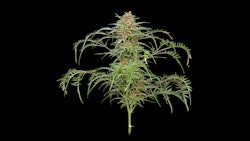


Interest in tissue culture and the benefits it can provide growers has increased in recent years. Tissue cultures provide an efficient method of preserving a genetic library, questionable male specimens, or any genetics that growers want to keep and utilize in the future. And they are relatively simple to store and maintain. This can be especially helpful to repopulate the grow in case of infection, infestation or any other unforeseen disruption. Preserving clean specimens of one’s prized genetics is a form of insurance and a viable pathway forward in case problems ever arise. Utilizing true meristem tissue culture replication is an effective method for cleaning genetics, i.e., producing cultivars that are free of various diseases and viruses.
While there are many viable uses for tissue cultured plants, recent conversations with multiple tissue culture technicians confirm there also are limitations. Not all cultivars can be tissue cultured. For unknown reasons, some cultivars are at the very least difficult to tissue culture, if not impossible at this juncture of our collective knowledge base. There is also a high propensity for somaclonal variation—mutations—and variations that can occur when repeatedly using tissue cultures to propagate over and over, according to the technicians. These problems typically express themselves around year five, and result in plants that vary or are not as robust as the original cultivar.