

Lawmakers in Washington retreated from an attempt to strip the executive branch’s authority to reschedule cannabis.
The U.S. House and Senate Appropriation committees released a bicameral three-bill funding package on Jan. 5 that includes the latest version of the fiscal year 2026 Commerce, Justice, Science (CJS) and Related Agencies appropriations bill.
The Republican-controlled House Appropriations Committee advanced a previous version of the bill in September that included language intending to block the Department of Justice (DOJ) from using funds to “reschedule marijuana … or to remove marijuana from the schedules established under section 202 of the Controlled Substances Act [CSA].”
But that provision, which aimed to reserve cannabis rescheduling rights exclusively for the legislative branch, was removed from the conferenced CJS bill released on Monday. The CJS bill was packaged with appropriation measures for Energy and Water Development, and for Interior and Environment.
The bicameral decision to concede comes less than three weeks after President Donald Trump signed an executive order directing U.S. Attorney General Pamela Bondi to “expedite completion” of a proposal to reclassify cannabis from a Schedule I to Schedule III drug under the CSA. The CSA “vests” the attorney general with the authority to “schedule, reschedule or decontrol drugs” (21 U.S.C. 811(a)) as the chief of the DOJ.
Former Attorney General Merrick Garland signed a Schedule III proposed rule under President Joe Biden, but a non-mandated administrative law judge hearing sidelined the process, and a final rule was never issued under the former administration.
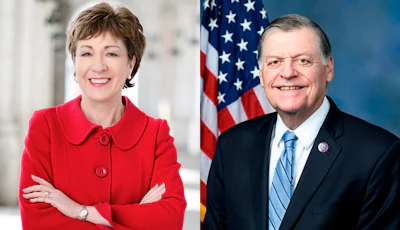
House Appropriations Committee Chairman Tom Cole, R-Okla., said the three-bill funding package released this week was developed through committee-led negotiations and “thoughtful deliberation.”
“This bipartisan, bicameral package reflects steady progress toward completing FY26 funding responsibly,” he said. “It invests in priorities crucial to the American people: making our communities safer, supporting affordable and reliable energy, and responsibly managing vital resources.”
The CJS portion of the package provides a base discretionary total of $78 billion, including $37 billion for the DOJ. Of that DOJ allocation, $2.6 billion is appropriated to the Drug Enforcement Administration to “disrupt and dismantle” Mexican cartels that “flood” the U.S. with fentanyl. And $2.6 billion is for U.S. Attorneys’ offices to “prosecute, convict and incarcerate” violent criminals and drug trafficking organizations.
Senate Appropriations Committee Chair Susan Collins, R-Maine, called the package “fiscally responsible,” adding that it will improve scientific research and support law enforcement.
Also included in the bill is a nearly 12-year-old funding restriction that prohibits the DOJ from preventing “certain states” and U.S. territories from implementing their own laws that authorize the “use, distribution, possession or cultivation” of medical cannabis. While the federal government has mostly taken a hands-off approach to state-sanctioned adult-use cannabis programs, only medical programs are protected under the long-standing rider.
A joint explanatory statement for the CJS appropriations bills provides that “certain states” are protected from government interference with their medical cannabis laws, but it does not elaborate on why the provision excludes protections for Idaho, Kansas, Nebraska and American Samoa – three states and one U.S. territory with some of the least permissive cannabis laws in the nation. In other words, the DOJ can use funding to enforce federal prohibition against medical cannabis use and related activities in these four jurisdictions.
Perhaps the key takeaway for cannabis industry stakeholders is that the CJS bill largely continues the status quo for state-sanctioned businesses and keeps the door open for the Trump administration to loosen restrictions on cannabis under the CSA.
Preserving the executive branch’s authority to reschedule cannabis comes despite 22 Senate Republicans sending a letter to Trump on Dec. 17 – the eve of his executive order – asking the president not to go through with his decision. “The only winners from rescheduling will be bad actors such as Communist China, while Americans will be left paying the bill,” the senators wrote.
Four of the 15 GOP Senators on the Appropriations Committee signed the letter, meaning they were in the minority of their caucus.
Although some may have focused on the fact that 22 Senate Republicans opposed Trump’s decision, it should not be lost that 31 Senate Republicans (58%) chose not to sign the letter.
The next day, the same day Trump signed the order, 26 House Republicans sent a similar letter trying to persuade the president against his decision. They represent 12% of their caucus in the lower chamber, meaning 192 House Republicans did not sign the letter.
Texas Rep. Pete Sessions and Maryland Rep. Andy Harris spearheaded the letter. “We don’t need rescheduling to do medical research on marijuana – all we are doing is exposing more of our youth to an addictive drug,” Harris said.
Six of the 35 GOP representatives on the House Appropriations Committee signed the letter. They did not hold enough clout to keep the rescheduling-blocking provision included.