
UPDATE: The campaign to repeal Massachusetts' adult-use cannabis laws for a regulated adult-use market turned in enough certified signatures on Dec. 18 to advance it toward the 2026 ballot. That story is here.
The 2026 ballot campaign that’s attempting to wipe out Massachusetts’ adult-use cannabis market by repealing a voter-approved legalization initiative has left itself with very little room for error.
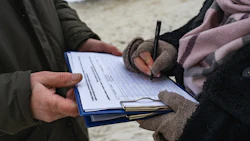
The Coalition for a Healthy Massachusetts, the political committee behind the prohibition proposal, filed more than 76,000 signatures with Secretary of the Commonwealth William Galvin’s office on Dec. 3 – the deadline day – group spokesperson Wendy Wakeman told Cannabis Business Times.
The campaign needed to submit at least 74,574 signatures that were certified by local election officials, with no more than 18,643 of those signatures coming from an individual county.
Before the signatures can be counted, Galvin’s Elections Division staff is required to review each petition sheet for disqualifying marks and proper certification by local election officials, a process that typically takes several weeks.
This means the campaign is cutting it close.
If the secretary’s staff determines there are any extraneous markings on a petition sheet or that a petition sheet is not an exact copy of what’s provided by the state, all signatures on those sheets will be invalidated. Extraneous markings can be anything from highlighting to underlining, scribbles and instructional language (i.e., “see other side). The correct paper size and color, and printing format, matter, too.
Basically, anything that deviates from the signature-gathering petitions as prepared by the secretary is grounds for disqualification.
The Coalition for a Healthy Massachusetts was also cutting it close when campaign officials waited until the final hours to submit the signatures on Dec. 3.
When Galvin’s office issued a press release on Dec. 3 announcing his office had received signatures from 10 ballot question campaigns, the Coalition for a Healthy Massachusetts was not one of them. The secretary said that day that he expected one more campaign to file its petitions later that afternoon.
Secretary spokesperson Debra O’Malley told CBT that the Coalition for a Healthy Massachusetts was the one that Galvin’s office was still waiting on.
“That petition was the 11th question that was filed late in the day on the day of the deadline,” she said. “Our Elections Division is still processing the petitions, but we hope to complete certification by the end of the month.”
If Galvin’s office determines that the coalition’s petitions contain at least 74,574 certified signatures, his office will send the potential 2026 ballot question to the Massachusetts Legislature for its consideration. State lawmakers will then have until May 6 to enact the proposal through the normal legislative process.
If lawmakers don’t act, then the campaign must collect an additional 12,429 signatures by July 1 to place their question on the November 2026 state election ballot.
The proposal, “An Act to Restore a Sensible Marijuana Policy,” would repeal the adult-use legalization initiative that Massachusetts voters passed with a 54% majority in the 2016 election, meaning a commercial industry of cultivation, manufacturing, testing, distribution and dispensing would be terminated. That includes 27,000-some industry workers and $1.6 billion in annual sales.
Adult-use cannabis sales have provided the state with nearly $1.5 billion in excise and sales tax revenues since the program commenced in late 2018, according to the Cannabis Control Commission.
The campaign’s petition also aims to undo voter-approved regulations that permit adults 21 and older to grow up to six cannabis plants for personal use, including up to 12 plants for multi-adult households.
While possessing up to 1 ounce of cannabis or 5 grams of concentrate would remain decriminalized, adults 21 and older would have no legal means to access those products, unless they participate in the state’s medical cannabis program.
Since California first legalized medical cannabis in 1996, and since Colorado and Washington pioneered adult-use legalization in 2012, no state in the U.S. has discontinued a licensed and regulated program.