
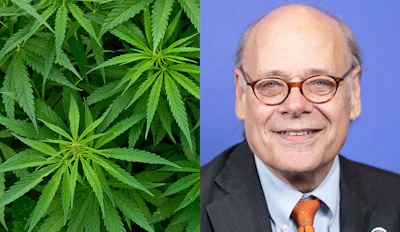

A U.S. congressman called into question the Department of Justice (DOJ) and Drug Enforcement Administration’s (DEA) sense of urgency to follow President Donald Trump’s directive to loosen federal restrictions on cannabis.
House Rep. Steve Cohen, D-Tenn., sent a letter on March 27 to Attorney General Pam Bondi and DEA Administrator Terry Cole, seeking clarity on the administration’s progress toward reclassifying the plant from a Schedule I to Schedule III drug under the Controlled Substances Act.
The letter comes 99 days after Trump signed an executive order on Dec. 18, directing Bondi to “take all necessary steps” to complete the Schedule III rulemaking process “in the most expeditious manner.” But the president provided no deadline for Bondi to act.
Cohen pointed out in the letter how the cannabis rescheduling process, initiated under the Biden administration, has been sidelined since January 2025, when the DEA’s now-retired administrative law judge (ALJ), John J. Mulrooney II, granted an interlocutory appeal in a hearing process that was supposed to provide pro- and anti-rescheduling parties the opportunity to debate the merits of the proposed rule in public.
When Mulrooney retired in August 2025, he left the DEA with no administrative law judges to hear the matter, and Cole has yet to fill that vacancy.
“Therefore, how does the Drug Enforcement Agency [sic] plan to reschedule without an ALJ to oversee the Hearing (Docket No. 24-44)?” Cohen asked in Friday’s letter. “What is the expected timeline for rulemaking to be completed?”
While former DEA Administrator Anne Milgram granted the hearing process, the Trump administration could bypass that process entirely to fast-track the completion of a final rule; however, with the interlocutory appeal still in place, the current administration would need to either cancel or withdraw the hearing before skipping ahead, attorney Shane Pennington, a partner at Blank Rome, previously told Cannabis Business Times.
Pennington filed for the interlocutory appeal on behalf of his pro-rescheduling clients, arguing that the DEA conducted improper communications that favored anti-rescheduling participants to “subvert” the process.
In this week’s letter, Cohen reminded Bondi and Cole that removing cannabis from its Schedule I listing is not a new idea.
Although the U.S. Department of Health and Human Services (HHS) recommended in August 2023 that cannabis be reclassified to Schedule III after conducting a thorough scientific and medical evaluation, the federal government’s recognition that the plant does not belong in Schedule I goes back more than half a century.
In 1972, the Shafer Commission issued a report that called for decriminalizing up to 1 ounce of cannabis for public possession, recommending that the plant be removed from Schedule I.
“However, the Nixon administration did not adopt the findings from the Commission he appointed,” Cohen wrote this week. “It has been more than 50 years since that report. It is my firm belief that marijuana never belonged on Schedule I. Its inclusion resulted in harsh and disproportionate prison sentences, particularly for communities of color, and has substantially hampered research.
“You have a historic opportunity to make meaningful progress and implement the wishes of the American people, the president, and the U.S. under the Controlled Substances Act. Rescheduling is widely understood to be in alignment with the best available scientific data and will significantly strengthen scientific and medical research into marijuana.”